Guides
Pricing carpet cleaning services so the margin survives in 2027
How to price carpet cleaning services from your own cost lines, built up in six steps, with every figure left as a variable you fill in yourself.
What to take away
- Build the price from the bottom. A price copied from a competitor is a guess about somebody else's costs.
- Six steps get you from a blank page to a defensible number, and step three is the one everyone skips.
- Margin is what is left after fixed cost, not after solution. Confusing the two is why busy months still feel thin.
- Re-run the build whenever the vehicle, the wage, the territory or the fuel bill changes.
Step one: fix the unit
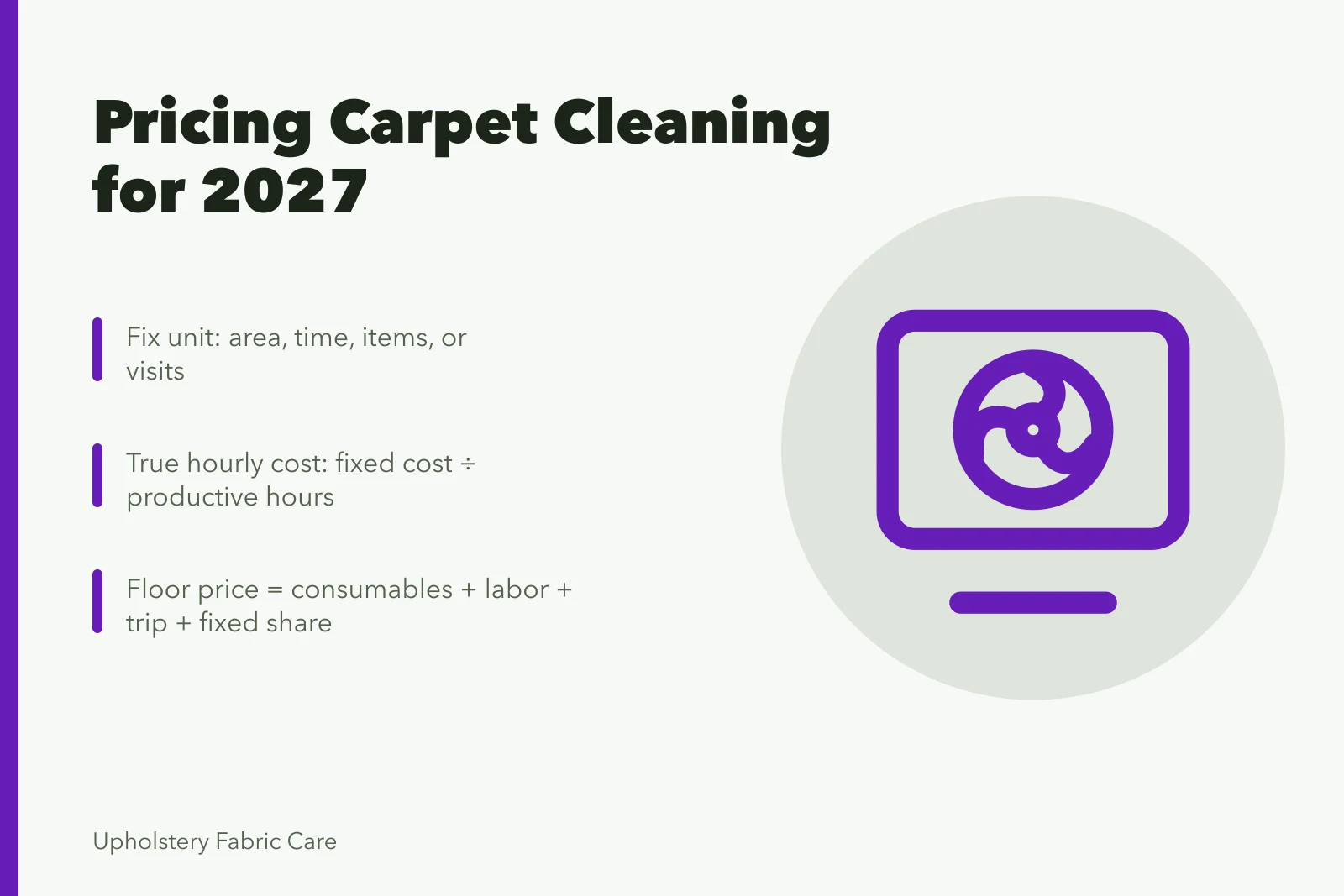
Decide whether you are selling area, time, items or visits before you price anything. The unit determines what a customer can argue about later. The full comparison of units sits in the pricing and profit guide.
Step two: find your true hourly cost
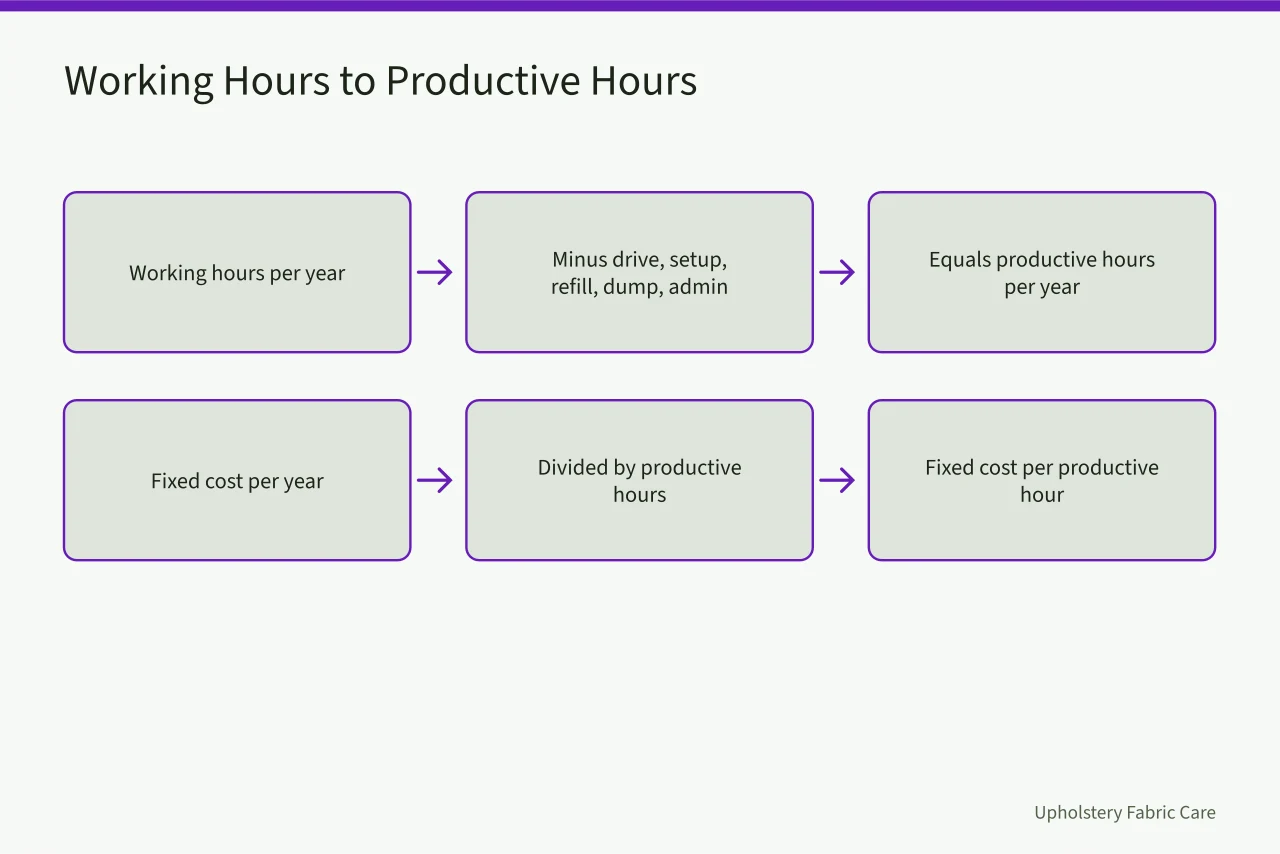
- working hours per year = weeks worked times days per week times hours per day
- productive hours per year = working hours minus drive, setup, refill, dump and admin time
- fixed cost per year = insurance + registration + vehicle + finance + phone + software + storage + accounting
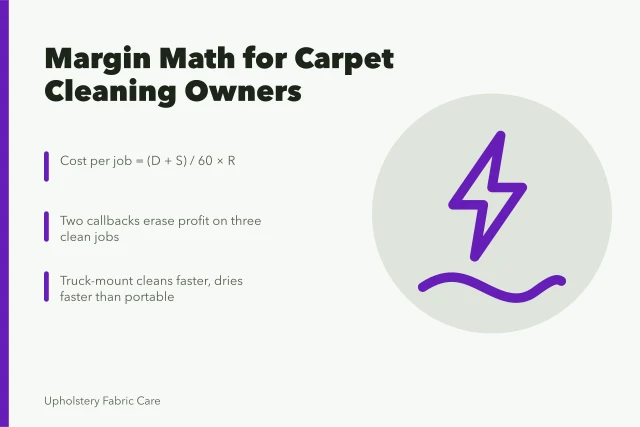
- fixed cost per productive hour = fixed cost per year divided by productive hours per year
Productive hours are always fewer than working hours, and the difference is larger than owners expect. That gap is why a full calendar can still lose money.
Step three: load the labor rate
The wage is not the labor cost. Add employer taxes, insurance attributable to headcount, paid time off and the hours paid but not billable.
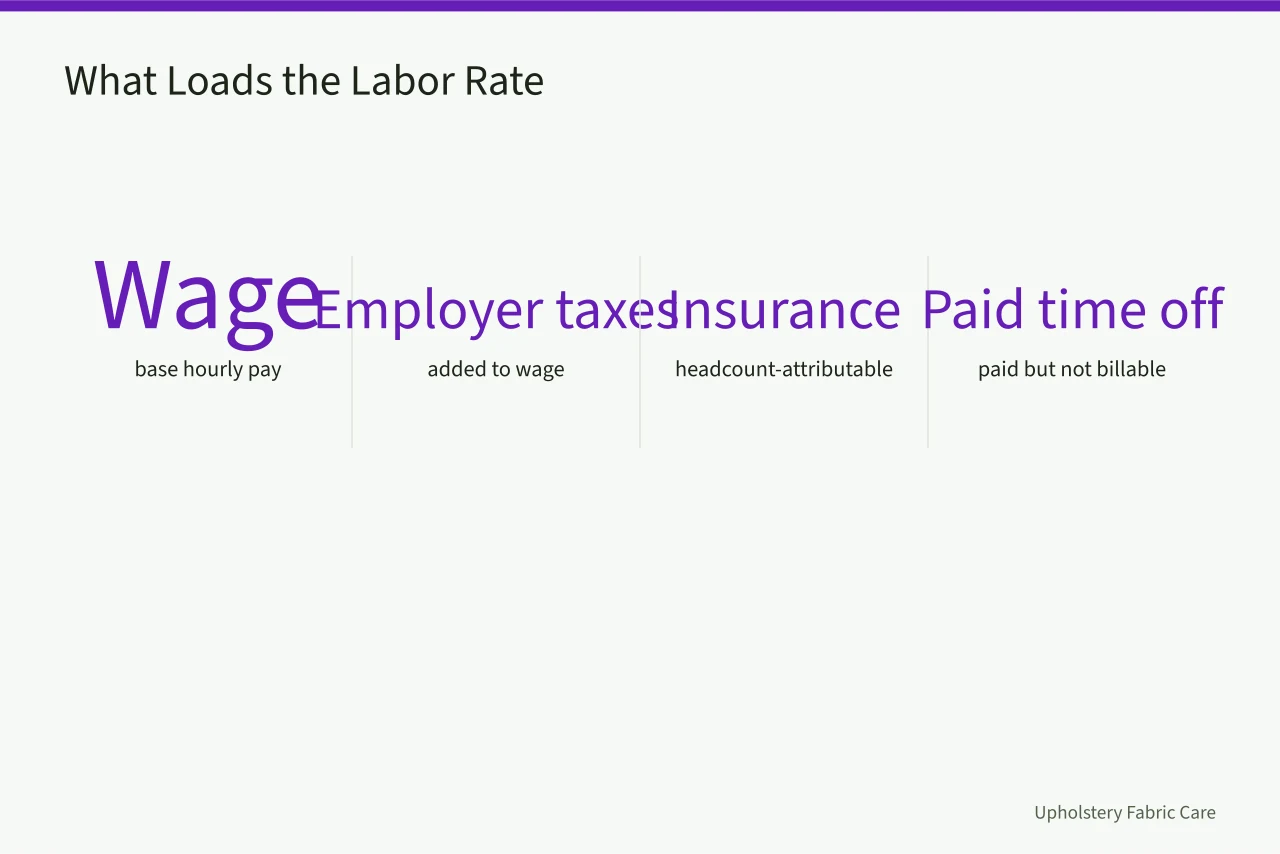
- loaded hourly labor = wage plus employer costs, divided by the share of paid hours that are productive
Where you are the only technician, do this anyway and pay yourself a rate. A business that only works because the owner is unpaid is not priced, it is subsidized. Area wage tables to sanity-check the wage sit in the BLS occupational employment statistics.
Step four: cost one representative job
Pick a job you actually do often, not an average of everything.
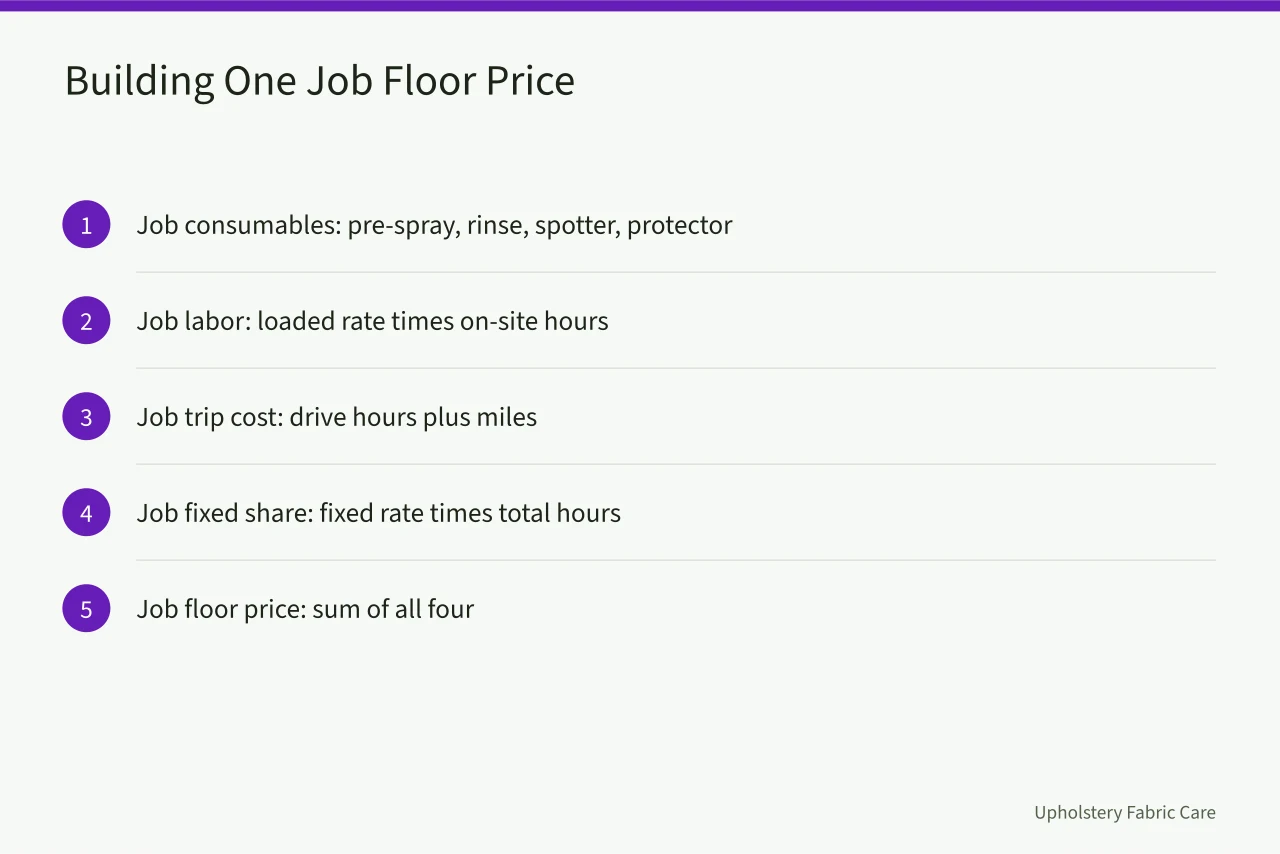
The floor price is not your price. It is the number below which the job costs you money.
Step five: add the margin you intend to earn
- price = job floor price divided by (1 minus target margin)
State the target margin as a decision, then check it against what the market will actually pay. Where the two disagree, the answers are to change the job mix, change the territory, or change what the job contains. Cutting the margin to close the gap is the one option that solves nothing.
Step six: build the rest of the list from that one job
Price every other service as a ratio to the job you costed. Stairs are hand work with a lower production rate. Upholstery is per item and per code. Restorative work carries pre-vacuum, dwell and drying time. Route visits carry almost no trip cost when the route is dense.
| Job type | What moves it away from your reference job |
|---|---|
| Traffic area residential | Less area, same trip, so the trip share rises |
| Whole floor residential | More area on one trip, so the trip share falls |
| Stairs and landings | Hand work, low production rate per hour |
| Single upholstery item | Code check and test time before any cleaning |
| Commercial route visit | Trip cost shared across several stops |
| After-hours commercial | Unsocial hours in the loaded labor rate |
What the price has to survive
A quoted price meets three tests in the field. It has to survive discovery, when the technician finds a fiber or a soil condition that changes the job. It has to survive a callback, because a return visit consumes hours the price did not include. And it has to survive being explained.
Discovery is handled by a clause, not by absorbing the work. Callbacks are handled by finding the cause, which is usually over-wetting, skipped pre-vacuuming or a wicking-prone fiber. Explanation is handled by the pricing being real.
A price you cannot explain in one sentence at a doorstep is a price you copied.
The machine you own sets the production rate all of this assumes, which the equipment and setup guide treats in detail.
Who can deliver the job at that rate is the ladder in the hiring and training guide.
What you may advertise about the price is constrained by the FTC advertising guidance for small business and by anything your state adds, which the licensing and compliance guide covers. How the price is presented to a customer is a marketing decision handled in the marketing and growth guide.
Federal recordkeeping expectations for the underlying figures are described in the IRS small business recordkeeping guidance.
Common questions
How often should the build be re-run?
Whenever an input moves: a new vehicle, a wage change, a fuel change, a territory change, or a new machine. Twice a year otherwise.
What if my floor price is above the local going rate?
Then either your cost base is heavier than theirs, or your productive hours are lower, or the going rate is not profitable. Find out which before you match it. The usual culprit is drive time.
Should the customer see this arithmetic?
No, but you should be able to answer any question it produces. A customer asking why stairs cost what they do deserves the production rate answer, not a shrug.
Is a percentage discount ever safe?
Only against a price you built. A discount off a number you copied is a discount off an unknown.