Guides
The quality routine of a carpet cleaning business
A carpet cleaning quality routine starts with fiber and cleaning code, then records the test, the method and the drying result that decide a callback.
What to take away
- Quality is decided before the wand moves: fiber, cleaning code, and a colorfastness test on a hidden area.
- Record the test result, the prespray dwell time, and the drying time. A callback you cannot explain costs the second visit.
- Browning and wicking are the two most common callbacks, and both are drying problems, not cleaning problems.
- Viscose and rayon upholstery change the job. Some pieces should be referred out rather than cleaned.
- A truck-mount decides which jobs you can accept. Route density decides whether they pay.
Identify before you quote
Ask the customer what the fiber is, then check the backing or a cushion seam yourself. Wool, nylon, polyester and olefin tolerate most wet methods. Cotton and viscose are the ones that change the plan.
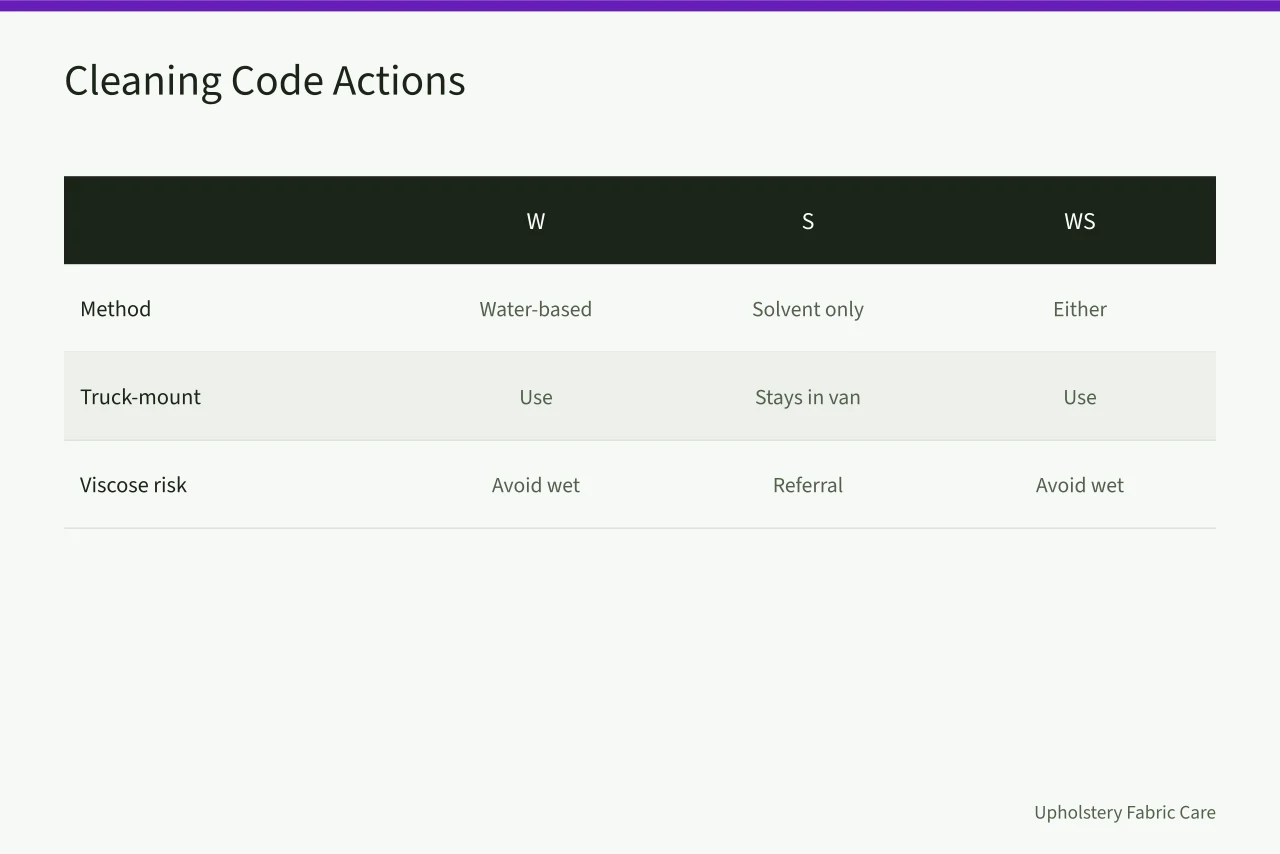
The cleaning code is usually a tag under a cushion or on the frame: W for water-based, S for solvent only, WS for either, X for vacuum only. Code X gets vacuumed and nothing else. Code S means your truck-mount stays in the van.
Viscose loses strength when wet and can brown or distort. If the code says S and the fiber is viscose, that piece is a referral, not a job.
Test before any wet method
Pick a hidden area: under a cushion, behind a skirt, inside a seam allowance. Apply your prespray there, wait the dwell time on the label, blot with a white towel, and look for dye transfer.
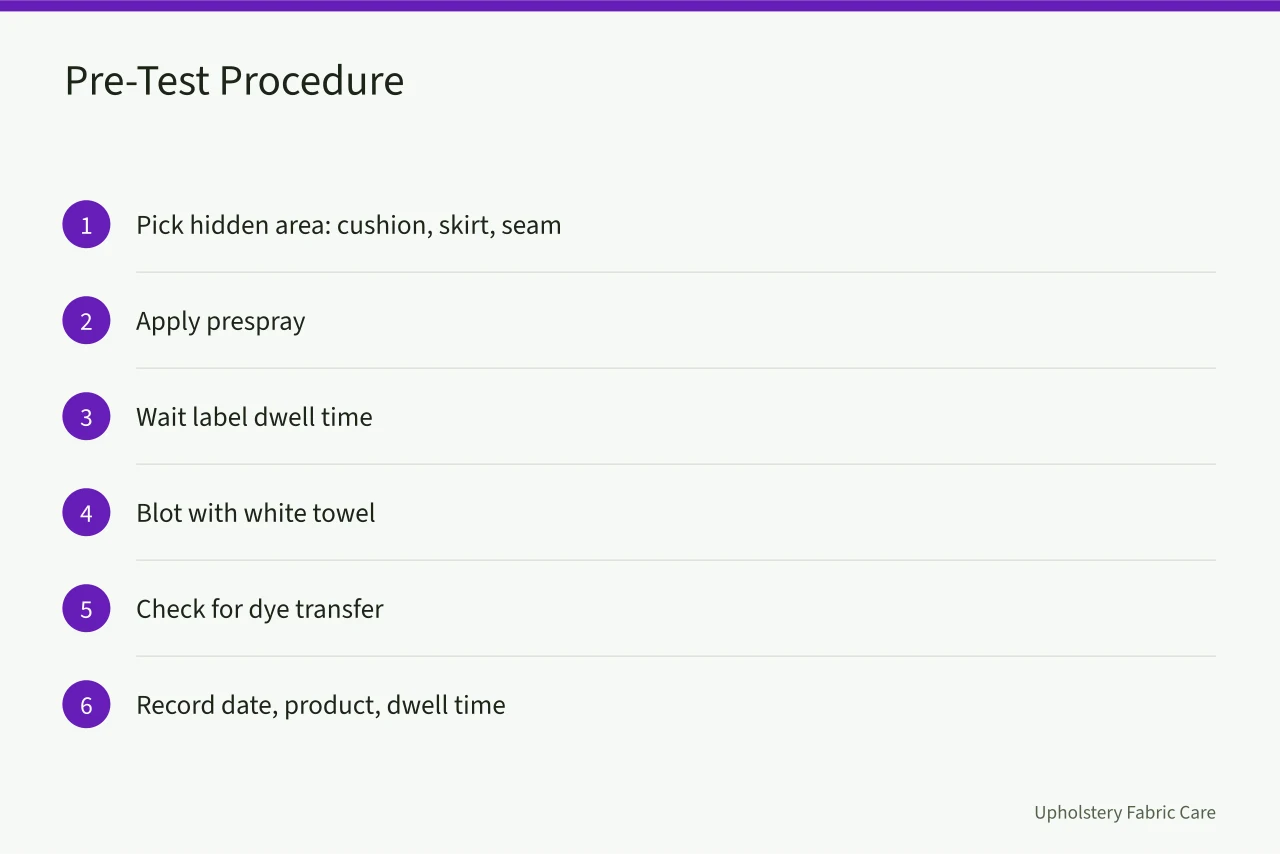
A test that bleeds means you change method or decline. A test that passes goes in the job record with the date, the product, and the dwell time you used.
Dwell time is a step, not a pause. Follow the label, then start the wand. Rushing it is why some jobs come back.
Method, wand technique and drying
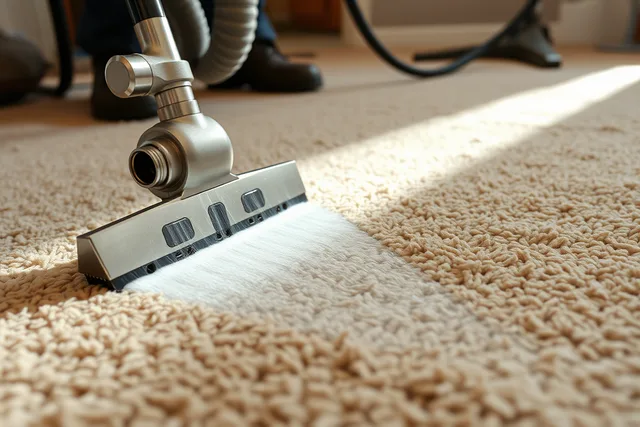
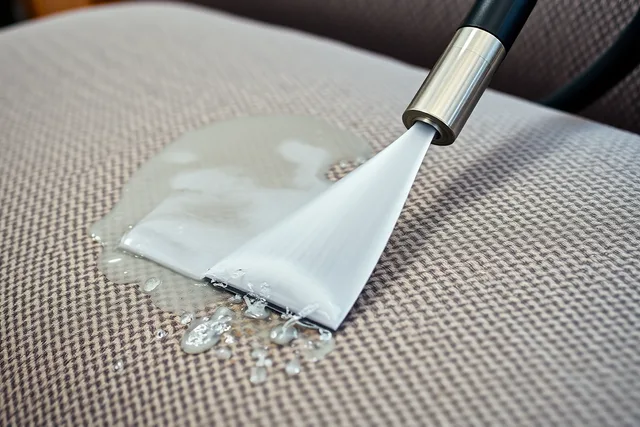
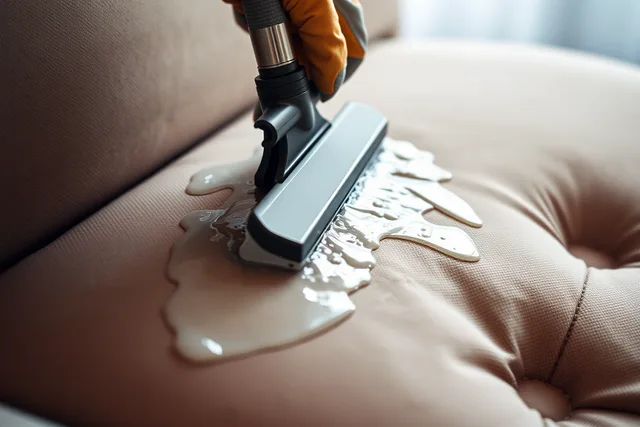
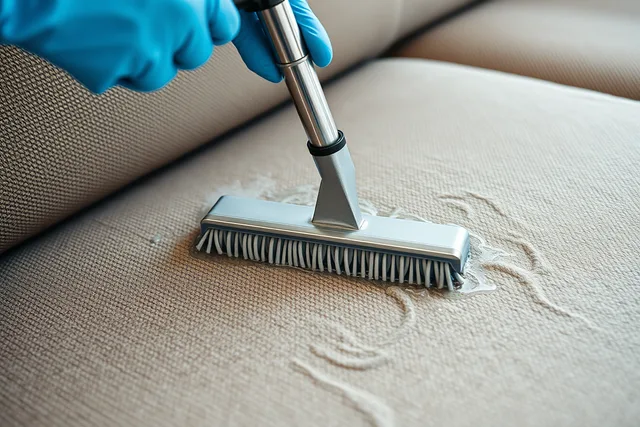
Hot water extraction cleans deeply and leaves the most water. Low-moisture encapsulation and dry compound leave less, which matters on wool and on upper-floor commercial work.
Over-wetting is the technician's error, not the machine's. Keep the wand moving, use dry passes, and stop when the water coming up runs clear.
Drying is where quality is won. Air movers on the wet area, HVAC running, and a target of a few hours rather than overnight. A carpet that dries slowly browns at the edges and wicks soil back up the tufts.
| Callback | Usual cause | Fix in the routine |
|---|---|---|
| Browning at edges | Slow drying, overwetting | More airflow, fewer wet passes |
| Wicking at seams | Deep soil pulled up as it dries | Dry passes, second light pass after drying |
| Dye bleed | No test, wrong method | Test every piece, record the result |
| Stiff or crunchy pile | Residue from too much prespray | Label dilution, rinse thoroughly |
Protector goes on after the carpet is dry, and only where the customer agreed to it. Record it on the invoice so the next visit knows.
Scheduling and the small-job problem
A truck-mount needs driveway access, a water source and somewhere to run the hose. That decides which addresses you can serve, and it decides which jobs you quote at all.
Set a minimum charge that covers setup, travel and drying time, not just the square footage. A two-room job across town can cost more in drive time than it earns.
Route density fixes this. Cluster jobs by postcode and day so the second job starts twenty minutes from the first. The scheduling guide covers how to build those runs without leaving gaps.
Where the work is, and which areas support a route, is the subject of the markets breakdown.
Records that answer a callback
Keep the pre-inspection form, the test result, the product label, the dwell time and the drying time for every job. When a customer calls back, the record tells you whether the cause was method, drying or something you were never told about.
Chemical records follow the OSHA hazard communication standard, and the physical hazards of the work are set out in the OSHA cleaning industry guidance. What to keep for tax is in the IRS records guidance.
Common questions
How do I know if a fabric is viscose?
The tag, the manufacturer's specification, or a burn test done by someone trained to read it. If you cannot confirm it, treat it as viscose and refer it.
Can I clean code S upholstery with a low-moisture method?
Only if the manufacturer says so. Code S means solvent, and the label on the piece is the authority, not the method's marketing.
Why does a carpet brown after cleaning?
Water and soil move to the surface as it dries. Faster drying and a thorough rinse prevent most of it.
What is the minimum charge for?
Setup, travel, and the drying time you cannot bill separately. Price the visit, not the room.