Guides
Best Upholstery Protector Sprays for Pet Owners
Best upholstery protector sprays for pets compare Scotchgard, ForceField, Guardsman and Vectra on odor, drying time and US price. Safety notes are covered.
What to take away
- Scotchgard Fabric & Upholstery Protector is the most common first spray for pet owners who want a low-cost EPA-registered label.
- ForceField Fabric Protector is easier to live with for accident-heavy sofas because it dries with less solvent odor.
- Guardsman and Vectra 16 make sense when a furniture warranty or a specific synthetic fabric calls for a matching treatment.
- No protector replaces fast blotting after pet urine or vomit; all four lose performance once a stain sets.
What is being compared
The best upholstery protector spray for pets is not the same for every couch. This article compares four sprays sold in US stores: Scotchgard Fabric & Upholstery Protector, ForceField Fabric Protector, Guardsman Fabric Defense and Vectra 16 Fabric Protector. They are not interchangeable. Some are aerosols, some are pump sprays, and each behaves differently on polyester, cotton blends and nylon.
If you are still deciding between fabric and leather before treating a couch, the Leather vs Fabric Couch Cleaning breakdown shows what long-term care really costs.
Pet owners should also separate protection from stain removal. A protector slows penetration. It does not lift old urine, food residue or body oil from the cushion core.
Criteria that matter for pet owners
The right spray for a sofa next to a dog crate is not the right spray for a rarely used armchair. Pet owners should weigh three things: how long the room needs to air out, whether the product is safe to use around animals after drying, and how well it slows urine from soaking through the top fabric.
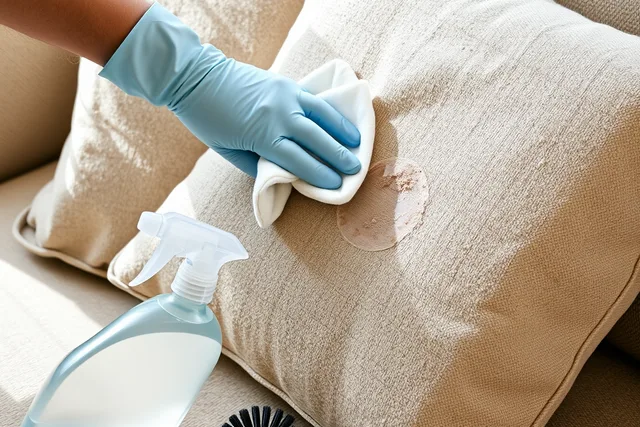
A protector forms a stain repellent layer on the yarn surface. Most sprays use fluoropolymers or silicone to make liquid bead up, which buys a few extra minutes to blot the spot.
The CDC's guidance on healthy pets says pets should stay off upholstery until chemical sprays fully dry, especially in homes with cats that groom their paws.
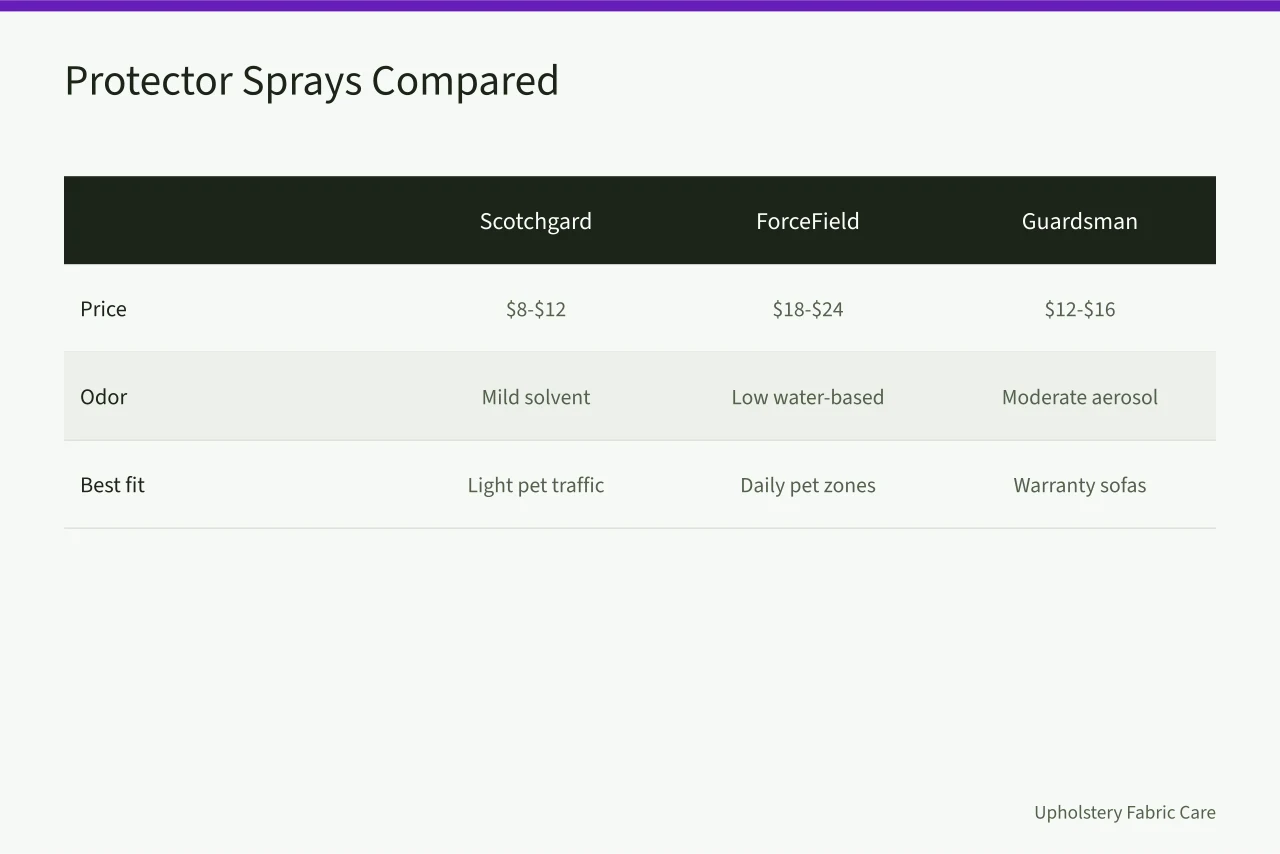
| Product | US price range | Odor during application | Best fit |
|---|---|---|---|
| Scotchgard Fabric & Upholstery Protector | $8 to $12 for a 10 oz can | Mild, short-lived solvent note | Polyester and cotton-blend sofas with light pet traffic |
| ForceField Fabric Protector | $18 to $24 for a 22 oz pump | Low, water-based | Daily dog and cat zones that need a fast return to the couch |
| Guardsman Fabric Defense | $12 to $16 for a 12 oz can | Moderate, aerosol carrier | Furniture still under a protection plan or warranty |
| Vectra 16 Fabric Protector | $35 to $45 for a 16 oz pump | Noticeable solvent, needs ventilation | Heavy-use synthetic fabric and upholstery that cannot be wet-cleaned |
For a finished microfiber couch that already has water marks, the How to Clean Water Stains Off a Microfiber Couch guide helps before you seal the surface.
This is a comparison, not a ranked list. Each spray is the right answer for a different kind of household.
Option by option
Scotchgard Fabric & Upholstery Protector
Scotchgard is the benchmark because it is sold in most US home centers and has an EPA-registered label for fabric protection. It sprays from an aerosol can, covers roughly a 10-foot sofa with one can if applied evenly, and dries in two to four hours in a normally ventilated room. It is the right answer when you want a low-cost first layer and do not mind keeping pets out of the room for the afternoon.
ForceField Fabric Protector
ForceField is a water-based pump spray that pet owners choose for couches near litter boxes or dog beds. It has almost no solvent smell after it dries, so the room is usable sooner. The right case for ForceField is a home with multiple pets and frequent small accidents, where you need to treat the fabric every four to six weeks.
Guardsman Fabric Defense
Guardsman is often bundled with furniture purchases and can be required for warranty claims on newer upholstery. It applies from an aerosol or pump and works on most synthetic blends. The right case is a new sofa still under a protection plan, because the matching product keeps the paperwork simple if a claim is filed.
Vectra 16 Fabric Protector
Vectra 16 is a solvent-based pump spray aimed at high-traffic synthetic fabric such as auto upholstery and commercial seating. It needs longer ventilation, but it leaves a firmer feel on nylon and polyester. The right case is a pet owner who wants one spray for both the couch and the back seat of a car used for dog transport.
Where each one wins
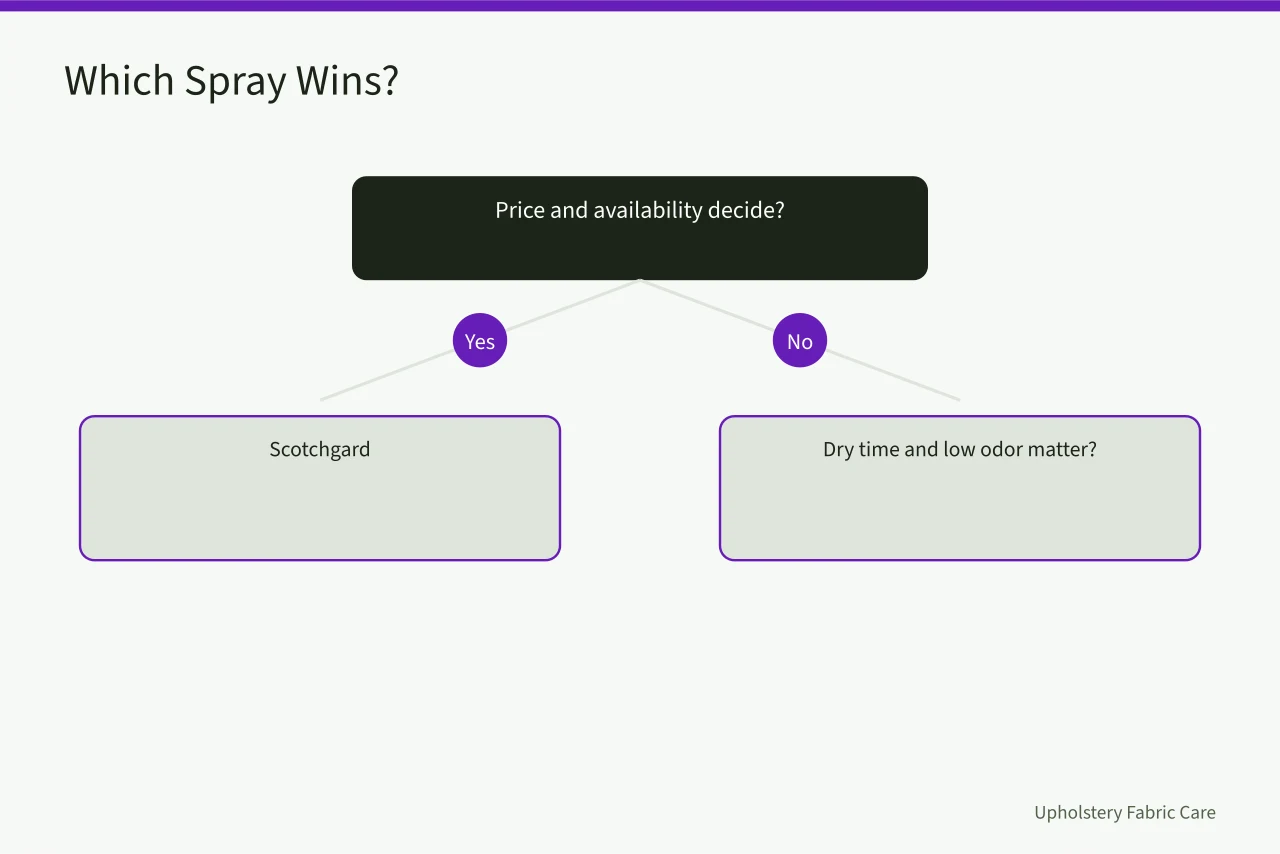
Scotchgard wins when price and availability decide the purchase. ForceField wins when dry time and low odor matter most. Guardsman wins when a warranty or protection plan is already in place. Vectra 16 wins for high-wear synthetics and vehicles.
A spray should match the room. A basement sofa with poor ventilation calls for a low-odor pump spray. A formal living room with a wool blend may do better with a product the furniture maker already approved.
Either way, the spray is only half the job. Regular vacuuming and prompt blotting keep the barrier working longer.
The cost of a spray is small next to a professional cleaning. Before treating every cushion, check What Upholstery Steam Cleaning Costs Per Room so you know the alternative.
What none of them solve
The shared limit is simple: a spray slows liquid, it does not remove it.
None of these sprays can repair a urine stain that has already set in the cushion or pad. They also cannot eliminate ammonia odor from dried pet accidents. When urine reaches the foam, only an enzyme treatment or replacing the fill removes the source.
They also fail on heavily soiled fabric. Pet dander, oil and dirt build a film that stops the protector from bonding. Clean the fabric first, then treat it.
Common questions
Do I need to keep pets out of the room after spraying?
Yes. Let the fabric dry fully, usually two to four hours for aerosols and up to six hours for solvent-based sprays. Open windows and run a fan if the room has poor airflow.
Can I use these sprays on a pet bed?
Only if the product label includes pet bedding and the fabric tag allows it. Many protectors are not rated for surfaces that pets lick or sleep on for long periods.
How often should I reapply a protector?
Light-use sofas can go six to twelve months between treatments. Accident-heavy couches may need a fresh coat every four to six weeks, especially after a deep cleaning.
Will a protector remove existing dog urine smell?
No. Protectors are barriers, not cleaners. Use an enzyme cleaner first, then see Remove Dog Urine Smell from Couch Cushions for Good for the full method before reapplying.