Guides
Upholstery Cleaning Company vs DIY in Toronto: Which Is Worth It?
Upholstery cleaning company vs DIY Toronto: compare CAD costs, care codes, time, and Ontario consumer rules so you can choose the safer route for your sofa.
What to take away
- Professional upholstery cleaning in Toronto costs an illustrative $120 to $260 CAD for a sofa, while DIY products and rentals run $15 to $60 CAD, but price is not the only axis.
- Fabric care codes (S, W, WS, X) decide whether water or solvent is safe; ignoring a code can shrink or damage upholstery.
- A Toronto cleaning company is the right answer for large pieces, pet urine, or suspected colour bleeding.
- DIY is the right answer for small fresh spills on W or WS fabric when you can control moisture and dry quickly.
- Ontario's Consumer Protection Act, 2002 gives a 10-day cooling-off period for door-to-door cleaning contracts over $50.
What is being compared
Full-service upholstery cleaning by a local Toronto company versus DIY cleaning at home. A professional service uses truck-mounted or portable extraction. DIY uses rental machines, hand tools, or spray cleaners. Both target the same sofa, loveseat, or sectional. The difference is labour, equipment, and liability. Toronto's condos and row houses create the same goal: remove soil without ruining fabric.
The criteria that matter
Four factors separate a hired service from a weekend DIY job. They are cost, time, fabric risk, and consumer protection. A care label on the frame uses a code: S means solvent only, W means water safe, WS means either, X means vacuum only. The table below uses illustrative Toronto ranges, not quotes from any one business.
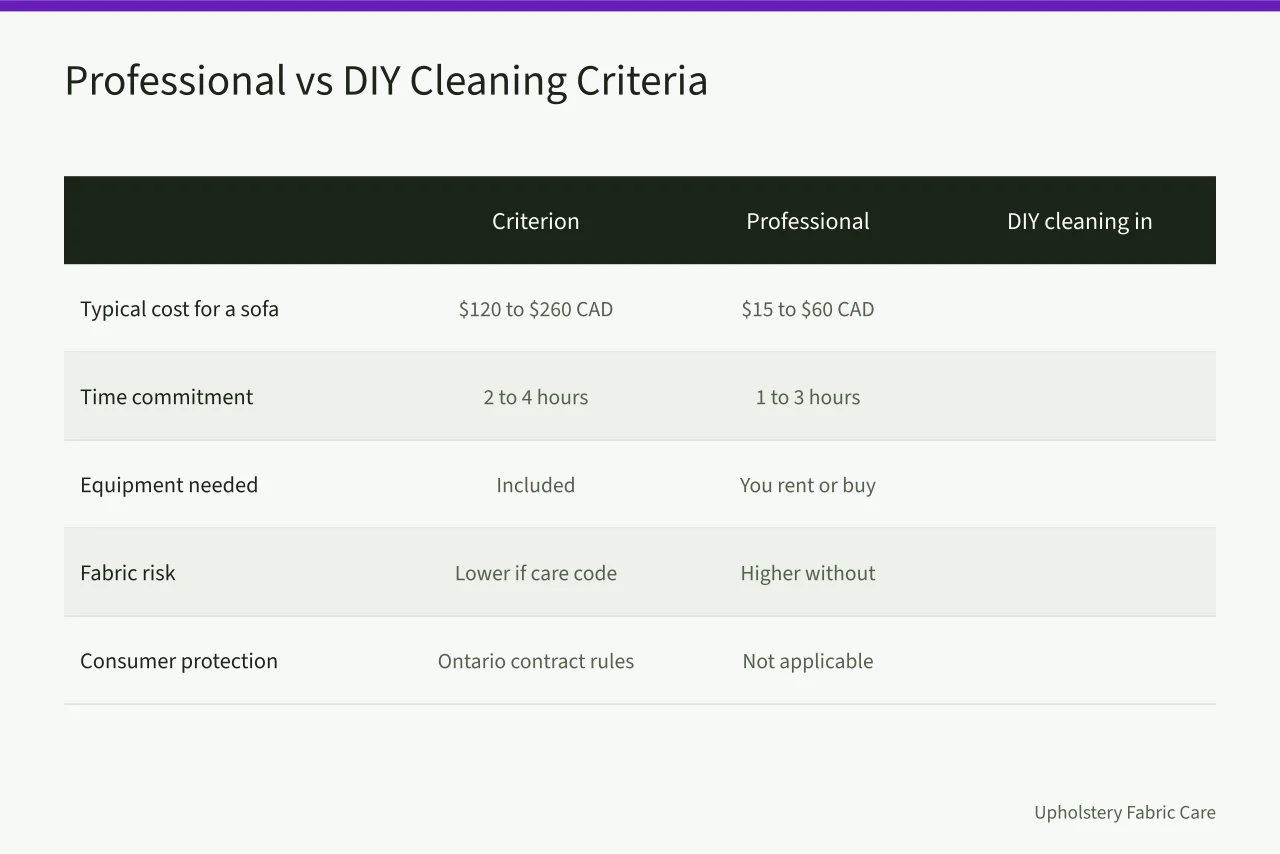
| Criterion | Professional cleaning company | DIY cleaning in Toronto |
|---|---|---|
| Typical cost for a sofa | $120 to $260 CAD (illustrative range) | $15 to $60 CAD for products or rental |
| Time commitment | 2 to 4 hours including drying | 1 to 3 hours active work |
| Equipment needed | Included | You rent or buy |
| Fabric risk | Lower if technician follows care code | Higher without care-code training |
| Consumer protection | Ontario contract rules apply | Not applicable, product returns only |
Ontario consumer rules for cleaning contracts
Ontario's Consumer Protection Act, 2002, summarised by federal consumer affairs, sets a 10-day cooling-off period for direct agreements over $50.
Under Ontario's Consumer Protection Act, 2002, a contract signed in your home for cleaning services over $50 can be cancelled within 10 days. The company must give you a written cancellation notice. This rule does not apply to a DIY purchase from a store.
Professional upholstery cleaning in Toronto
A local technician inspects care labels, pre-vacuums, spots, extracts, and dries. The cost range above does not include deodoriser add-ons, which some Toronto companies quote separately. Some techs also apply a fluoropolymer protector after drying. For wool pieces, the guide Clean a Wool Couch explains moisture limits. If the problem is pet urine, professional extraction plus enzyme treatment usually beats surface sprays. This route costs more, but it shifts fabric risk to the company.
DIY upholstery cleaning in Toronto
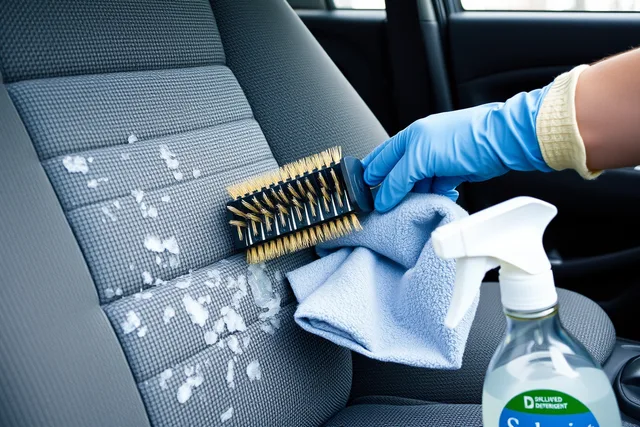
Start with the care tag. Then work in this order:
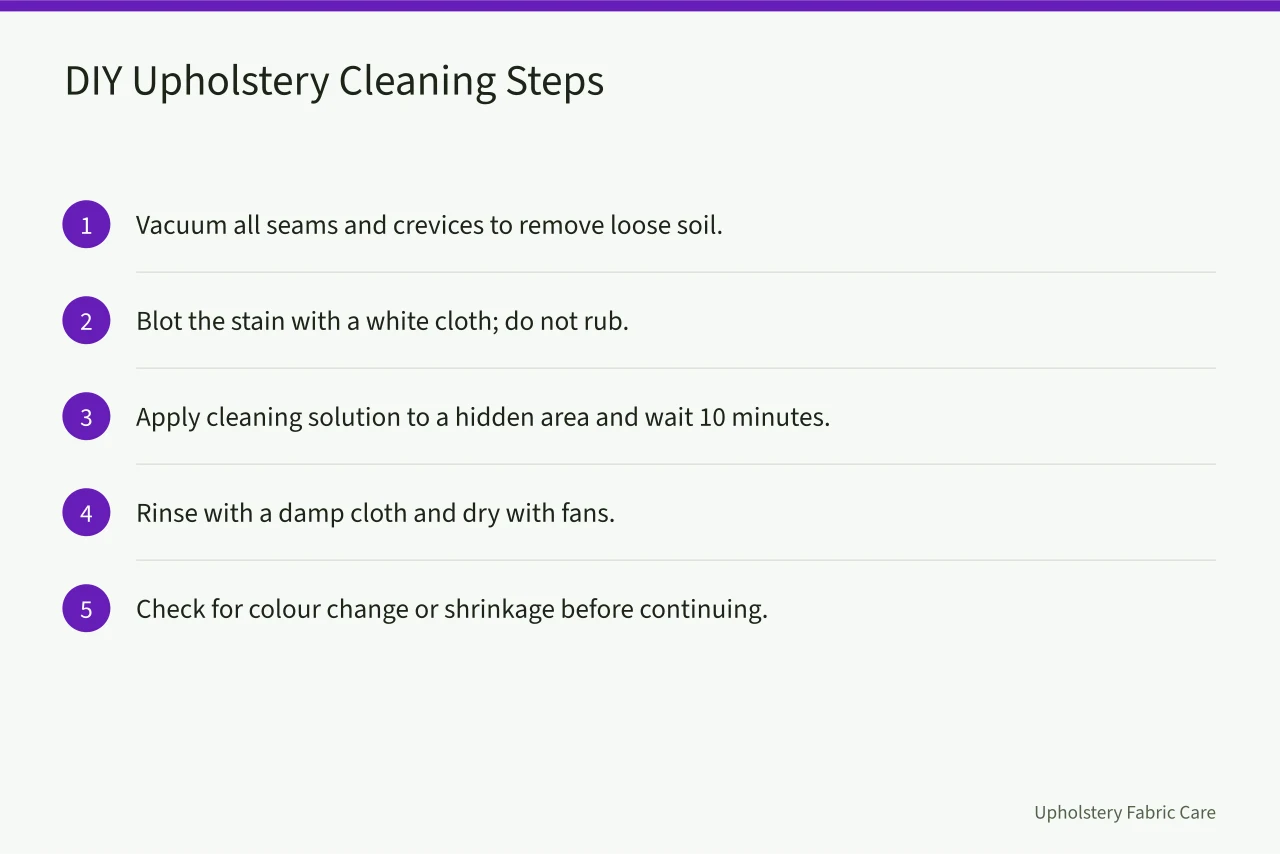
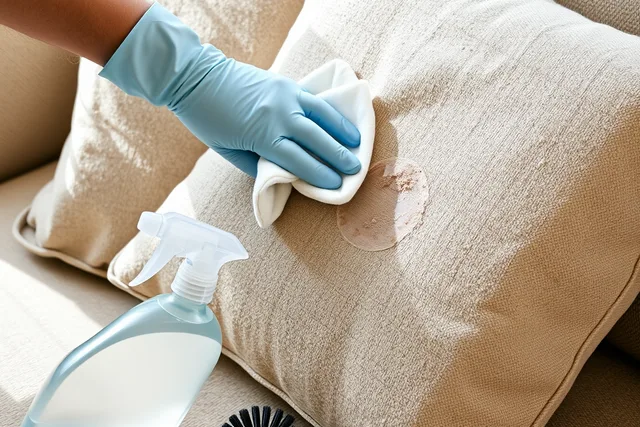
DIY works on small fresh spills, light soil, and water-safe fabrics. Over-wetting leaves water marks or shrinks wool. A Toronto hardware store rents a machine for $30 to $50 CAD per day, but it will not dry the piece.
For microfiber water stains, the article Clean Water Stains Off shows a low-risk sequence. Typical Toronto costs are $15 to $60 CAD for a spotter or rental, but you also buy your own time and drying space.
Example: a Toronto condo spill
A tenant spills latte on a polyester sofa at 7 a.m. The care tag reads WS. She blots, applies a water-based spotter, and dries with a small fan. Total cost is $18 and the sofa is dry by 9 a.m. The next month the same sofa has pet urine in the cushion. She calls a Toronto company, pays $210, and gets extraction plus enzyme treatment. The difference is not skill; it is depth and drying power.
Where each one wins
A professional company wins when the sofa is large, light-coloured, wool, or leather. It also wins when the stain is pet urine or coffee with cream. You pay for extraction, drying, and a third party who can be held accountable under Ontario consumer law. Some Toronto buildings require written proof of professional cleaning before a deposit return. DIY wins when the spill is under a cup, the fabric code is W or WS, and you can dry the piece within two hours. For a longer cost comparison between fabric types, Leather vs Fabric Couch Cleaning shows how maintenance spending changes over years.
What none of them solve
Neither a Toronto company nor a careful DIY job can reverse fading, permanent dye transfer, or a worn weave. Old pet urine that has soaked through the pad may still return in humid weather. Some odours live in the wood frame, not the fabric. See Remove Dog Urine Smell for why cushion-core replacement is sometimes the only fix. Both options also need repeat visits or reapplications for heavy traffic. This is the shared limitation: no method restores fabric that has lost fibre strength.
Common questions
What is a fair price for professional upholstery cleaning in Toronto? Expect an illustrative $120 to $260 CAD for a sofa; sectionals, wool, and odour treatments cost more. Ask for a written quote before booking.
Does Ontario have a cooling-off period for couch cleaning contracts? Yes. Direct agreements signed at your door can be cancelled within 10 days under Ontario's Consumer Protection Act, 2002.
Is DIY upholstery cleaning safe for every fabric? No. Use water-based solutions only on W or WS fabrics; S and X codes need solvent-only or vacuum-only care.
Can a Toronto company remove pet urine smell better than DIY? Often yes, because professional extraction and enzyme treatment reach the cushion core better than surface sprays.