Guides
Remove Dog Urine Smell from Couch Cushions for Good
Remove dog urine smell from couch cushions with an enzyme soak, a dry time that matters, and a check for the pad. Steps, recovery, and when to call a pro.
What to take away
- Enzyme cleaner, not vinegar or baking soda, does the actual work. Uric acid crystals need a bacterial enzyme to break them down, and Wikipedia's page on urine explains why the smell returns when only the surface is treated.
- The cushion core and the decking under it hold most of the odor. Treating the cover alone leaves the source in place.
- You need a soak, not a spray. The liquid has to reach the depth the urine reached.
- A dry time under 24 hours prevents the musty secondary smell that gets blamed on the dog.
- If urine has reached the foam core or the couch frame, replacement or a professional extraction is the honest answer.
Check the cushion before you start
Find the care code on the tag under the cushion. W means water-based cleaner is allowed. S means solvent only. WS takes either. X means vacuum only, and you should not put liquid on it at all.
Most microfiber and polyester covers are W or WS. Wikipedia's article on microfiber covers how the fibers hold and release liquid, which is why blotting beats rubbing on these covers.
Unzip the cover if it zips. Look at the foam. Fresh urine sits near the surface. Old urine has wicked into the core and left a tide line.
The sequence
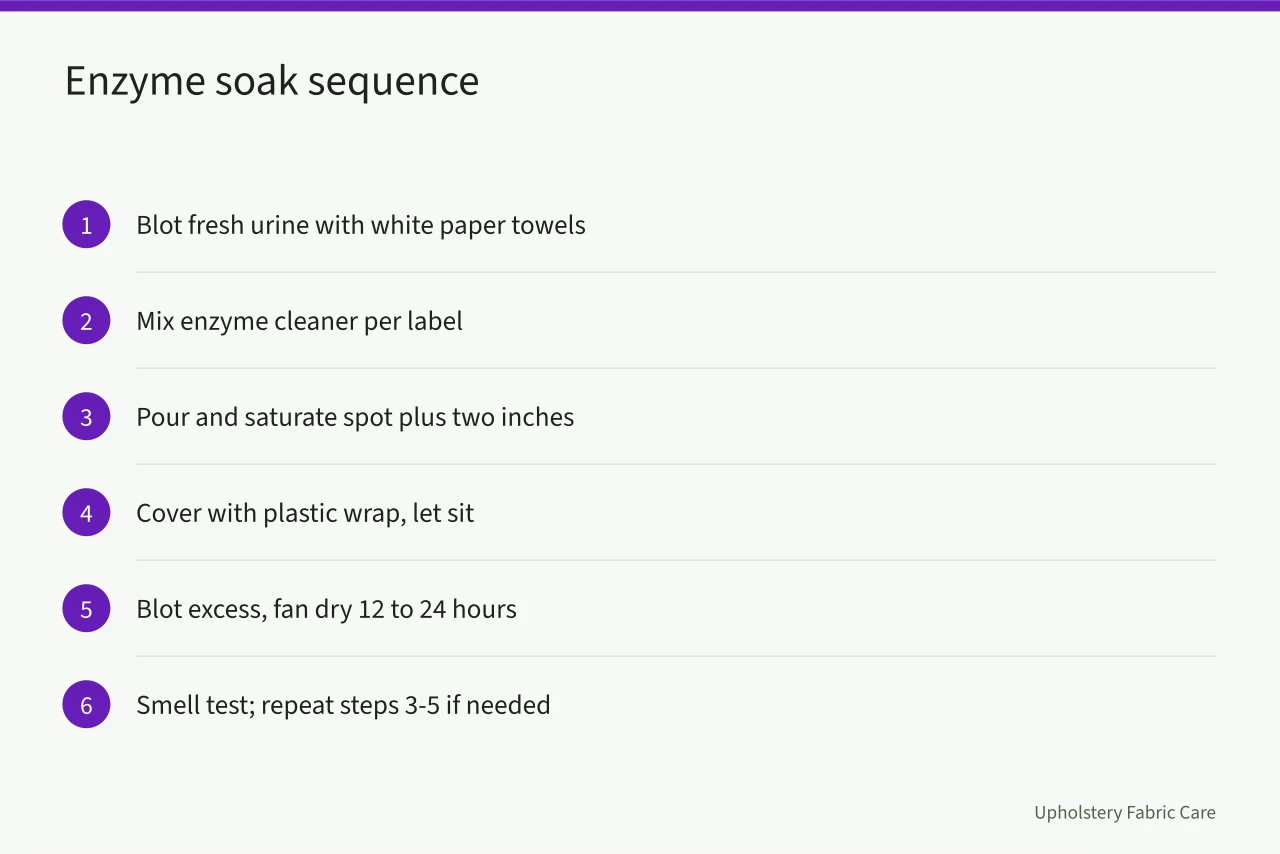
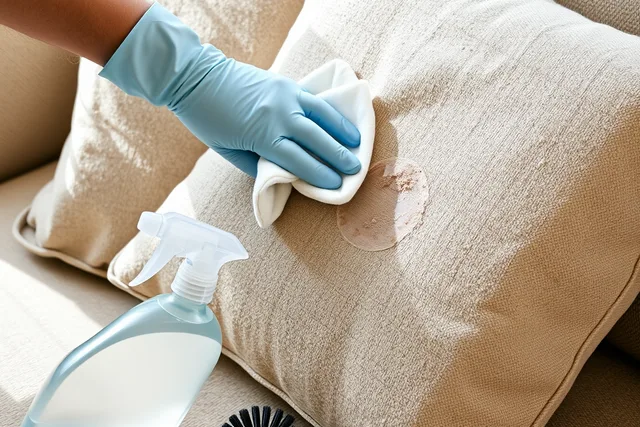
- Blot fresh urine with white paper towels, pressing down, changing towels until nothing transfers. Do not rub.
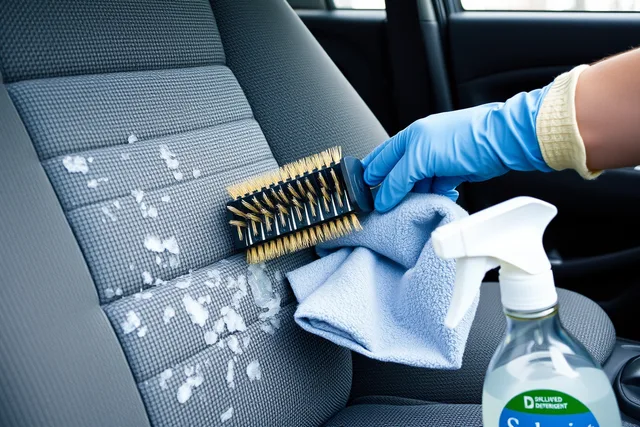
- Mix the enzyme cleaner per the label. Nature's Miracle Urine Destroyer runs about $12 to $18 for 32 oz at Petco and PetSmart. Rocco & Roxie Stain & Odor Eliminator runs about $20 to $25 for 32 oz on Chewy and Amazon.
- Pour, do not spray. Saturate the spot until it is wet to the same diameter the urine spread, plus two inches.
- Cover the wet area with plastic wrap and let it sit. The enzymes need contact time.
- Blot the excess, then set a fan on the cushion. Aim for dry in 12 to 24 hours.
- Smell the cushion at nose distance after it dries. If you still catch it, repeat steps 3 through 5 once.
The step that decides the result
Step 3 is the one that separates a fix from a cover-up. A spray bottle puts a fine mist on the surface, and the urine is not on the surface anymore. It has moved down through the cover, into the foam, and often onto the decking under the cushion.
Pour enough that the fabric is visibly wet and stays wet for the contact time on the label. Most enzyme products ask for 10 minutes to several hours. Follow the bottle, not a habit.
If the cushion is thick, flip it and treat the other side too. Urine travels with gravity.
How to check each step came out right
- Blotting: the last paper towel comes away with no yellow tint.
- Soak: the wet ring is wider than the original stain.
- Dry time: the cushion is dry to the touch within 24 hours.
- Smell test: no ammonia note at nose distance, and none when you press the fabric.
- Second smell test: no odor after the cushion sits in a warm room for an hour.
That last check matters. Warmth releases volatile compounds, and Wikipedia's article on odor explains that masking agents fade while the source keeps off-gassing.
The CDC's hygiene guidance is worth reading for the surface-cleaning side of a pet accident, especially if anyone in the house has allergies.
When a step goes wrong
The smell comes back after drying. This is the common failure, and the recovery is a second soak, not a stronger product. Mix fresh enzyme cleaner and repeat step 3. Old urine that has dried into crystals can take two or three passes.
The cover has a ring after drying. Water-based cleaner left a tide mark. Dampen the whole panel evenly with distilled water and dry it flat with a fan, not a hair dryer.
The foam still smells. The cover is clean and the core is not. Enzyme liquid will not reliably reach the center of a 4-inch foam cushion. Replacement foam cut to size is the practical fix.
The color lifted. Stop. Test any further product on the back of the cushion first, and check the care code again.
When to hand it to a professional
Call a pro when urine has reached the frame, when the couch has a musty smell that survives two enzyme treatments, or when the cushion core is saturated through. Sub-surface extraction with a hot water unit reaches depth a pour-and-blot cannot.
Ask the technician whether they use an enzyme pre-treatment before extraction. Extraction alone pulls liquid out; it does not break down uric acid crystals, which is the point of enzyme chemistry in the first place.
For context on what that service costs and how it is priced, see what upholstery steam cleaning costs per room.
Products worth keeping on the shelf
Show the numbers
| Nature's Miracle Urine Destroyer | $12–$18 |
|---|---|
| Rocco & Roxie Stain & Odor Eliminator | $20–$25 |
| Simple Solution Extreme Stain & Odor Remover | $14–$20 |
| Angry Orange Pet Odor Eliminator | $18–$24 |
Prices are illustrative ranges from U.S. retail listings and move with promotions. Buy the enzyme type, not the scent. A product that lists enzymes on the label and gives a contact time is doing the work you need.
Keeping it from happening again
Wash the cover on the gentle cycle if the care code allows water, and dry it flat. A waterproof crib pad or a washable furniture cover under the cushion protects the foam, which is the part you cannot clean.
If the couch is older and the cushion foam is already compromised, compare replacement against the cost of a new piece. Our breakdown of leather vs fabric couch cleaning cost covers how that math runs over several years.
Common questions
Does vinegar neutralize dog urine? No. Vinegar shifts the pH and can mask the smell for a day, but it does not break down uric acid crystals. The odor returns when humidity rises.
How much enzyme cleaner should I use on one cushion? Enough to soak the cover through to the depth the urine reached. For a standard seat cushion that is often 8 to 16 oz, applied in stages rather than all at once.
Can I use a steam cleaner instead? Steam can kill bacteria and lift residue, but heat above roughly 140 F can set protein stains. Use an enzyme soak first, then extract if you have the equipment.
Will the smell come back in humid weather? Only if the source is still there. Uric acid crystals re-release odor when moisture returns, which is the standard test for whether the treatment actually worked.