Guides
Leather vs Fabric Couch Cleaning: Which Costs Less Over Time?
Leather vs fabric couch cleaning cost comes down to what you clean, how often, and who does it. Here is how the two materials compare over ten years.
What to take away
- Leather usually costs less to clean because spills sit on the surface, while fabric absorbs them and often needs professional extraction.
- Routine fabric cleaning runs about $150 to $300 per couch in most US metros; leather conditioning runs about $75 to $200, according to typical published service ranges.
- Leather loses on repair. A tear or a cracked panel can cost $300 to $800 to fix, while fabric can often be re-covered or spot-treated for less.
- Neither material is cheap if you ignore it. Both fail faster from neglect than from the material itself.
What is being compared
This compares the ten-year cleaning and upkeep bill for a typical three-seat couch, one in leather and one in a woven fabric such as polyester microfiber or a cotton blend. It does not compare purchase prices, because those swing with brand and hide quality.
The figures below are illustrative ranges drawn from published US service pricing, not quotes for your address. Local labor, access, and soil level move them.
The criteria that matter
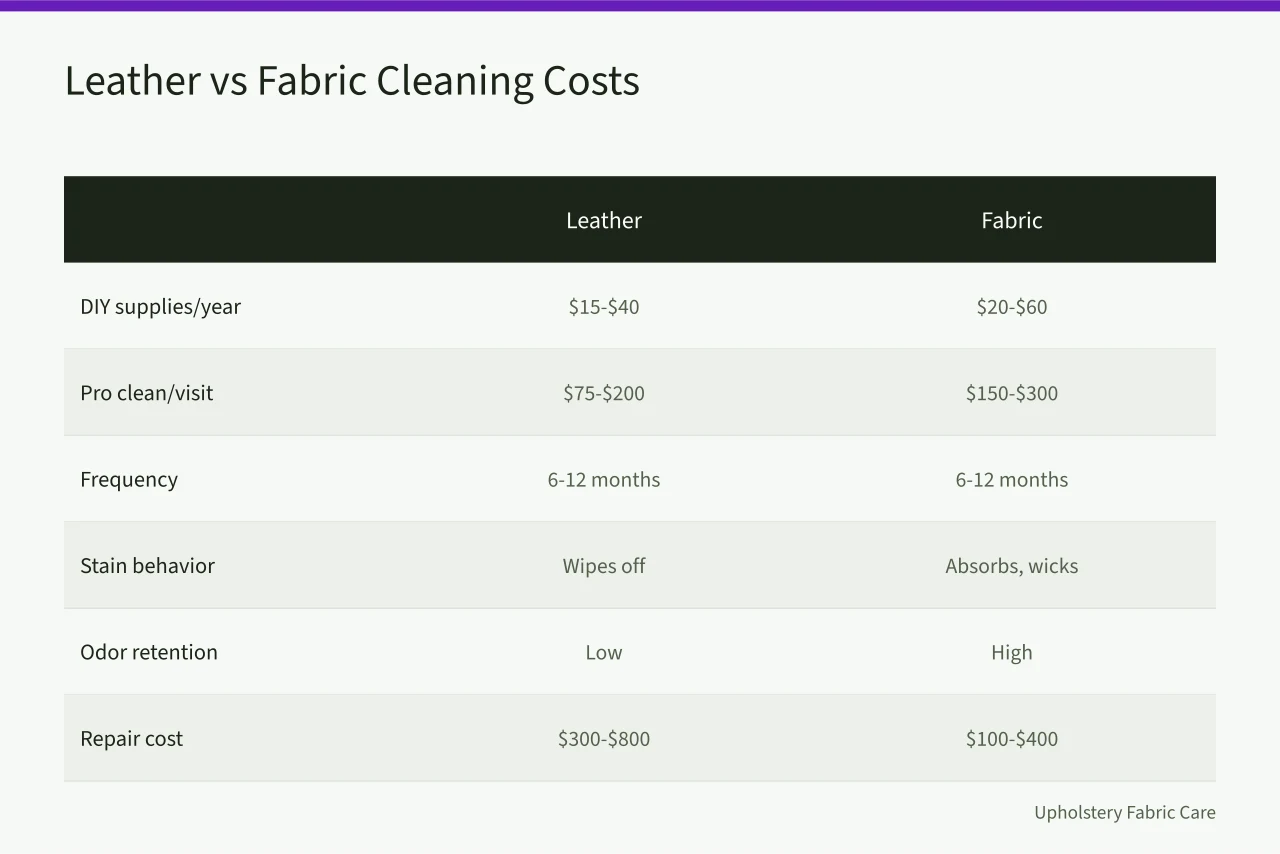
| Criterion | Leather | Fabric |
|---|---|---|
| Routine clean, DIY | $15 to $40 in supplies per year | $20 to $60 in supplies per year |
| Routine clean, professional | $75 to $200 per visit | $150 to $300 per visit |
| Cleaning frequency | Every 6 to 12 months | Every 6 to 12 months, more if pets |
| Stain behavior | Sits on top, wipes off | Absorbs, can wick |
| Odor retention | Low | High, especially urine |
| Repair after damage | $300 to $800 per panel | $100 to $400 re-cover or patch |
| Expected service life | 10 to 15 years | 7 to 12 years |
Leather's edge is labor, not materials. You clean less aggressively and less often, so the professional invoice is smaller.
Option by option: leather
Leather is a skin, and most finished leathers carry a top coat that keeps liquid out. A spill becomes a wipe, not a soak. That is why the leather couch cleaning cost stays low in a house with kids or a clumsy dog.
Conditioning matters. Dry leather cracks, and a cracked panel is the expensive failure. A $15 bottle of conditioner applied twice a year is the cheapest insurance in this comparison. The background on leather explains how tanning and finishing affect how much moisture a hide tolerates.
Option by option: fabric
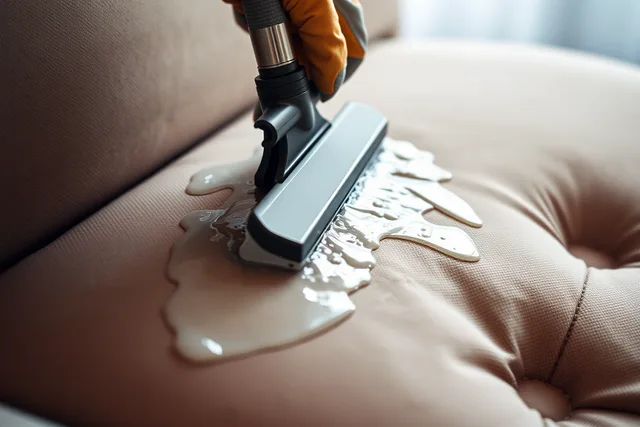
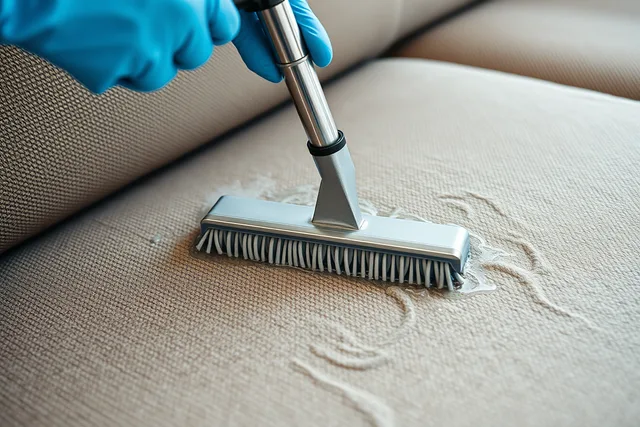
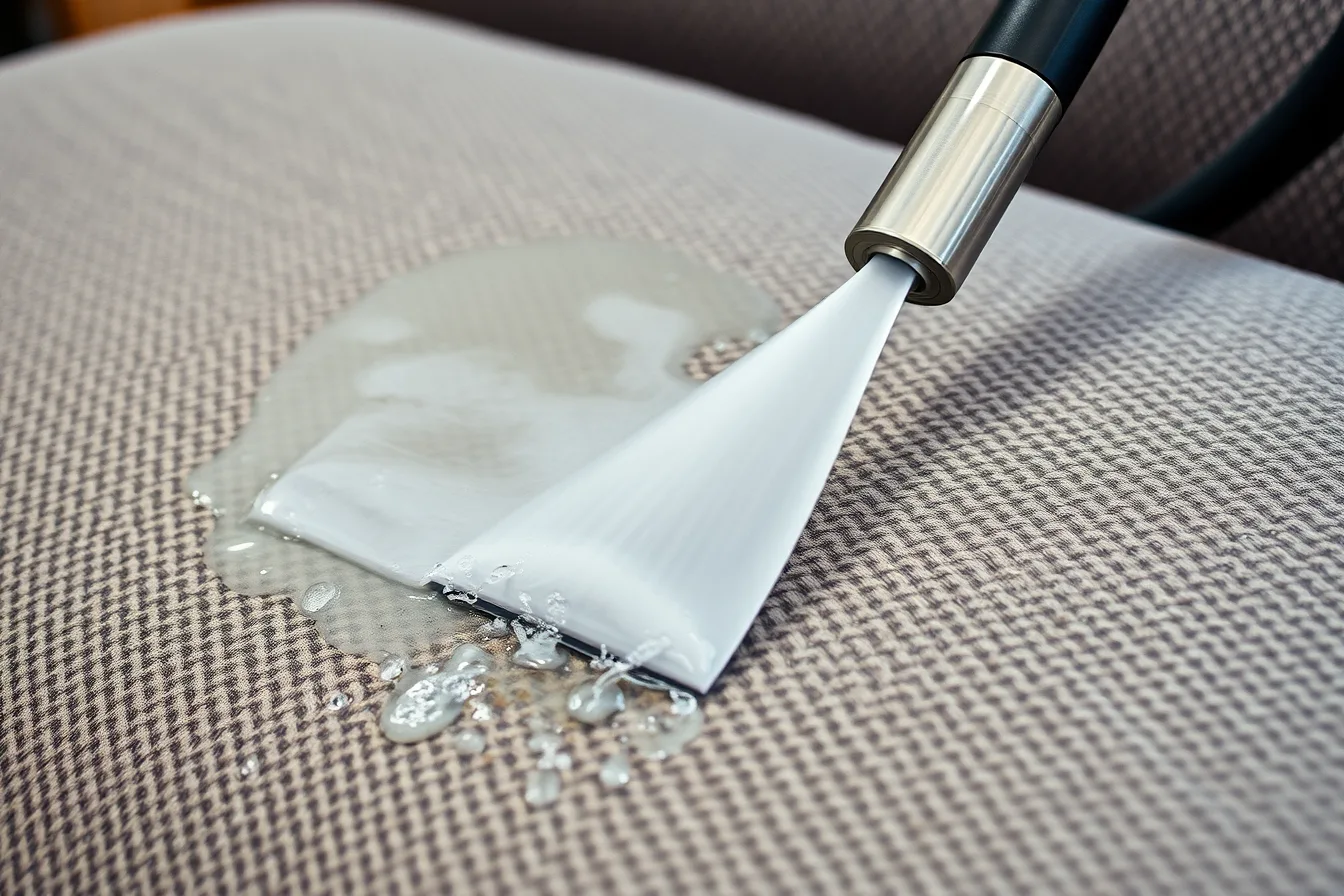
Fabric is a sponge with a weave. Coffee, pet urine, and body oils travel into the padding, and surface wiping does not reach them. That pushes most fabric owners toward professional hot water extraction once a year.
The fabric couch cleaning cost is higher per visit and the visit does more. Extraction pulls soil from the cushion core, which is why odor leaves with it. If you own a microfiber couch, learn the water rules first, because the wrong method leaves rings: how to clean water stains off a microfiber couch.
Pet owners face the widest swing. A single urine accident can add $100 to $250 in enzyme treatment if it reaches the cushion core. The CDC hygiene guidance is the right starting point for cleaning after an accident, and it applies to both materials.
Where each one wins
Leather wins on routine cost, stain response, and odor. If your household has toddlers, pets, or a habit of eating on the couch, leather's lower annual bill usually holds.
Fabric wins on repair and on comfort in cold rooms. A worn arm or a pulled seam on fabric is a patch or a re-cover. On leather it is a panel replacement, and color matching is hard.
Fabric also wins when the damage is emotional rather than physical. A fabric cover can be replaced in a color you like. A leather couch with a scar tends to stay a leather couch with a scar.
A worked ten-year comparison
Assume one professional clean per year and one moderate repair in year six.
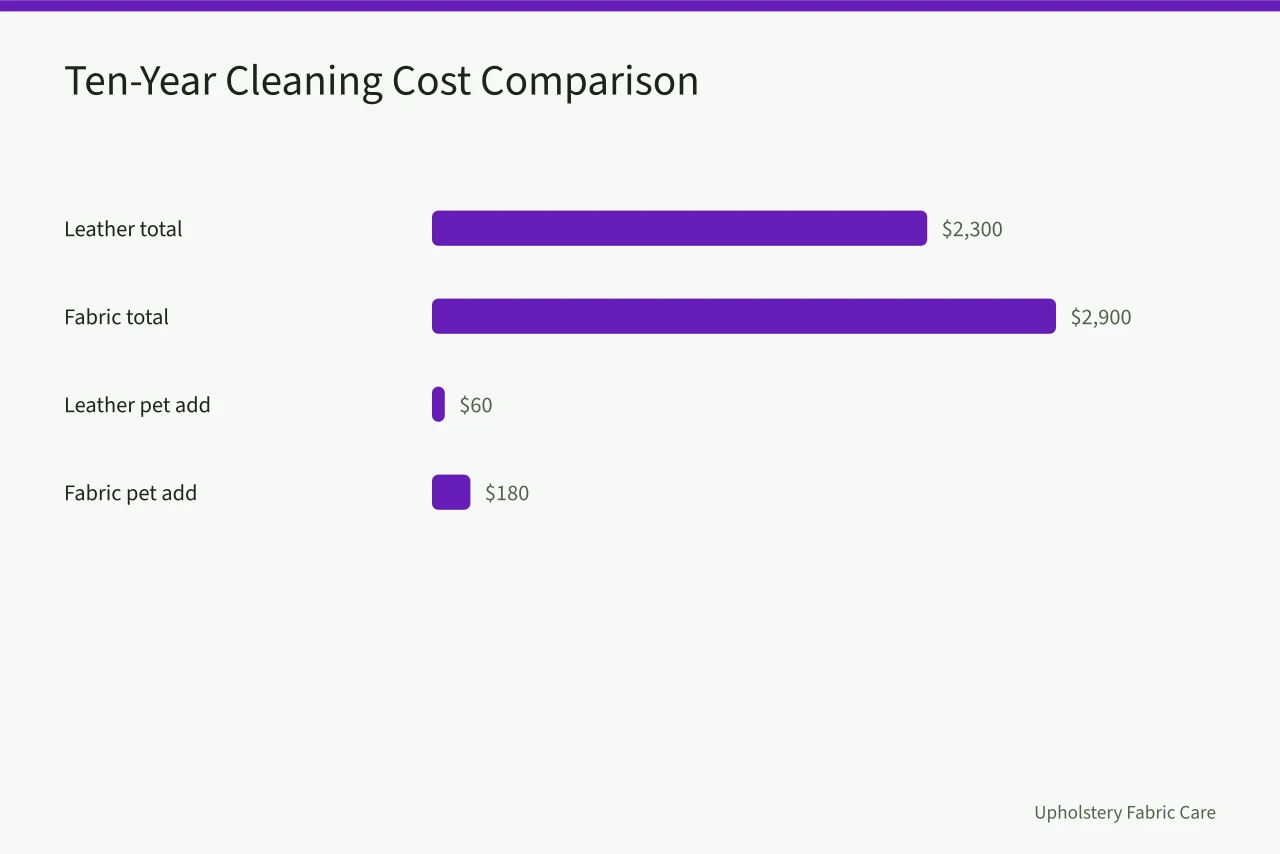
- Leather: ten cleans at $140 average, plus $40 in conditioner per year, plus a $500 panel repair. Total near $2,300.
- Fabric: ten cleans at $225 average, plus $40 in supplies per year, plus a $250 re-cover. Total near $2,900.
- Add one pet urine event to each. Leather adds about $60. Fabric adds about $180 if the core is soaked.
The gap is roughly $600 to $800 over ten years, which is real but not decisive. Purchase price and comfort usually outweigh it.
The cheapest couch is the one you clean on schedule. Deferred cleaning costs more than the material difference in almost every case.
What none of them solve
Both materials share one limit: cleaning cannot undo structural wear. Sagging frames, broken springs, and compressed foam are not cleaning problems, and no method fixes them. A $250 extraction on a couch with a cracked frame is money spent on a couch that still needs replacing.
Neither material resists sunlight, and neither survives a flooded room without help. If you are weighing a service against doing it yourself, the upholstery cleaning company vs DIY comparison walks through when paying is the better call.
What to check before you buy either
- Read the care code tag. W means water-based, S means solvent, WS means either, X means vacuum only.
- Ask the retailer which cleaning products void the warranty.
- Look for an EPA Safer Choice label on any cleaner you buy, since it flags lower-risk formulations.
- Budget one professional clean per year for either material.
- For pets, price a protector spray before the accident, not after.
If pets are in the house, the protector sprays for pet owners guide covers what actually repels liquid and what just smells like it does.
Common questions
Is leather always cheaper to clean than fabric? No. Leather wins on routine cleaning but loses badly on repair. One torn panel can erase several years of savings.
How often should each be cleaned? Every 6 to 12 months for both. Fabric in a pet household may need it twice a year, which widens leather's advantage.
Do I need a professional for either one? Leather rarely needs one if you condition it. Fabric usually does, because extraction reaches soil that surface cleaning misses.
Does a protector spray change the math? It can. A $30 to $60 spray applied yearly reduces stain severity, though it does not stop spills from soaking in if you wait.