Guides
A training checklist for carpet cleaning staff, explained
A working checklist for training carpet cleaning staff, covering fiber and code recognition, pre-spray dwell, wand technique, drying and callback causes.
What to take away
- A new technician is not ready until they can name the fiber and the cleaning code before the machine comes off the van.
- Bleed testing on a hidden area comes before any wet method, every time, on every fabric with any doubt.
- Pre-spray dwell time is a recorded step, not a pause that happens while you set up.
- Callbacks trace back to four causes: over-wetting, wicking, browning, and skipped protector.
- Training records belong in the same file as the job record, with a date and a name against each sign-off.
What the first week has to cover
Fiber identification is the first skill because it decides the method. Wool, nylon and polyester tolerate most wet cleaning, while olefin has low melting resistance and dislikes heat.
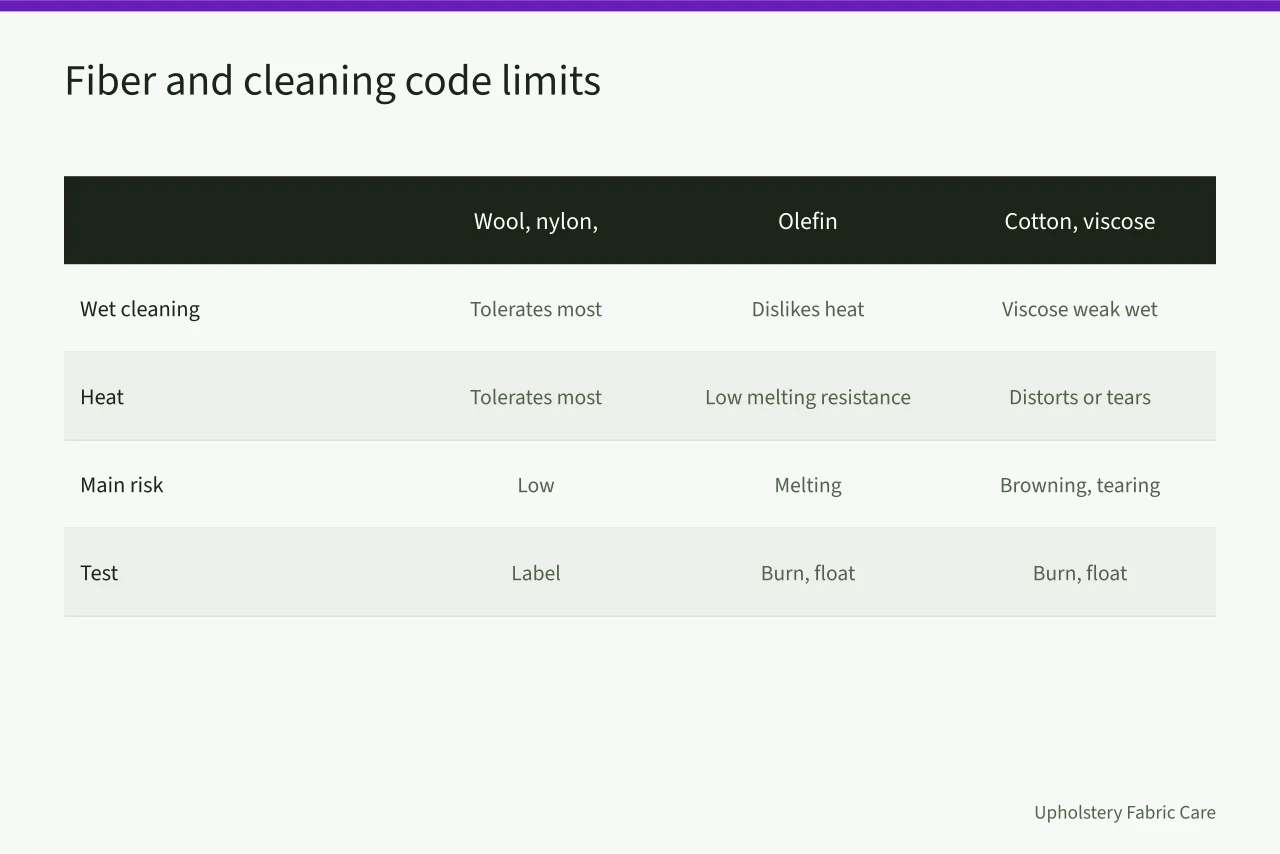
Cotton and viscose are the problem pair: viscose loses strength when wet, so a fiber that cleans well dry can distort or tear under hot water extraction. Teach the burn and float tests alongside the label. Teach when to stop and call the customer.
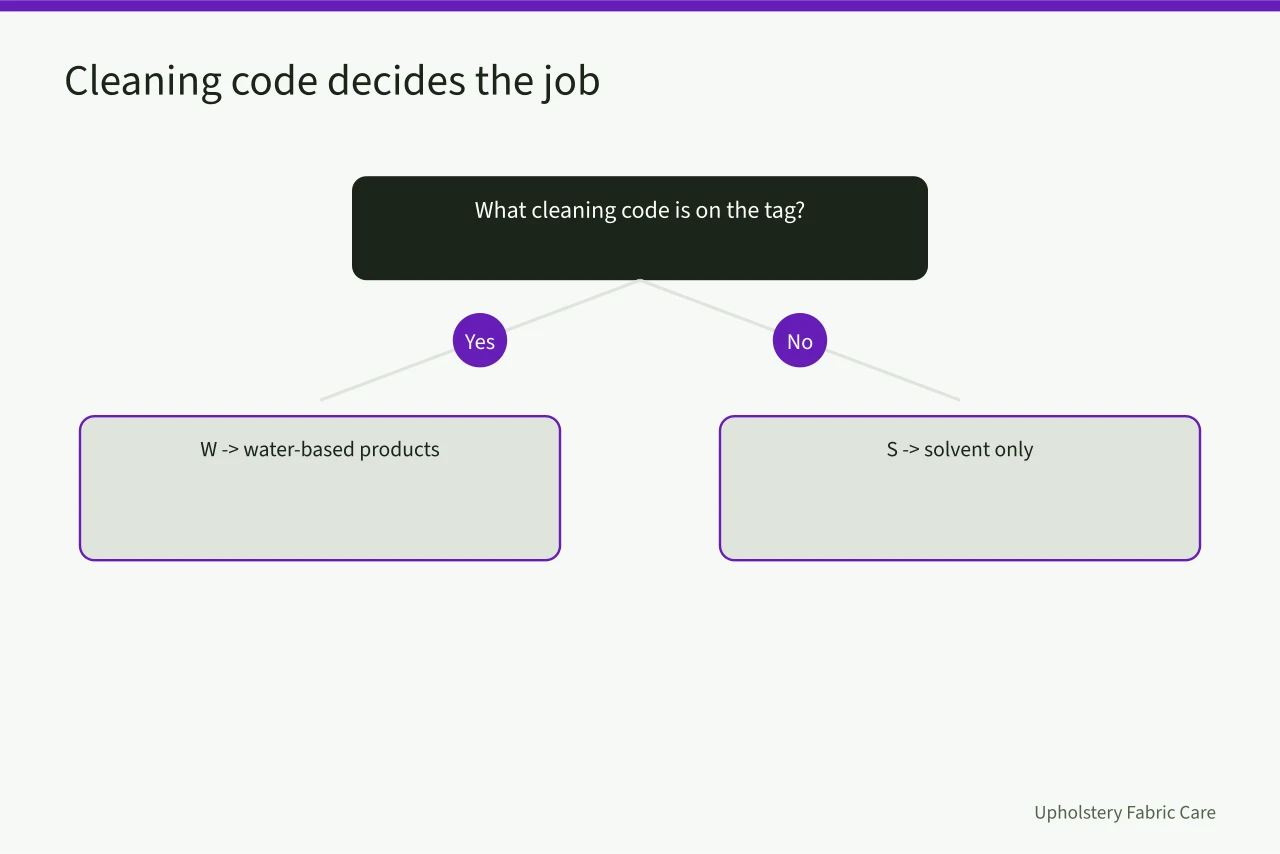
The cleaning code sits on the furniture tag: W for water-based products, S for solvent only, WS for either, X for vacuum only. A code of S or X changes the job before you quote it. Code X furniture is not cleaned, it is vacuumed, and the customer needs to hear that from the technician, not from the invoice.
Before any wet method
- Identify the fiber and read the cleaning code
- Test colorfastness on a hidden area with the product you intend to use
- Check for cellulosic backing and note browning risk
- Confirm the customer has moved what they need to move
- Record the pre-spray product and the dwell time you will run
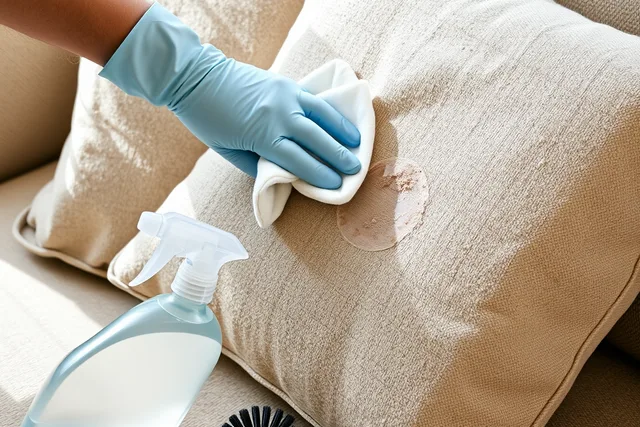
Colorfastness testing is where a trainee learns caution. Apply the product to a hidden seam or under a cushion, wait the dwell time, and blot. Dye transfer onto the white towel means the method changes or the job is declined. A technician who tests every time is worth more than one who is fast.
Pre-spray dwell time is written on the product label and repeated in your job record. Trainees rush it because it looks like waiting. Time it, and put the number in the file.
Wand technique and drying
Over-wetting is the most common trainee error and the most expensive. Slow dry strokes, overlapping passes, and a wand that is not pushed too fast leave the carpet damp for a day instead of hours. Air movers placed at the wall, not in the middle of the room, cut drying time. Humidity decides the rest.
Wicking and browning are callback causes, not mysteries. Wicking pulls soil up the fiber as it dries; browning is a cellulosic backing staining through. Both are managed with controlled drying and a post-cleaning check before the van leaves.
Protector reapplication is a sold line item, so the technician has to know it was sold and apply it after the carpet is dry, not before.
Scheduling and the small-job problem
A truck-mount reaches further and cleans faster, so it decides which jobs are worth taking. A portable opens apartments and upper floors but slows the day. Route density matters more than job count: four jobs on one street beat six spread across a county. Drive time is unpaid production time.
Set a minimum charge that covers setup, dwell and pack-down, and teach staff to quote it without apology. The hiring guide covers how to build a team that can hold those standards.
New employer wage and hour duties are in the Department of Labor small business guidance. Fair hiring and recordkeeping are in the EEOC small business resource center. Local pay evidence is in the BLS wage tables.
Fiber care comes from the carpet or furniture manufacturer and the cleaning code. Licensing and wastewater disposal vary by state and municipality.
Common questions
How long before a trainee works alone?
That is a judgment about competence, not a calendar. Sign off when they can identify fiber, read the code, run a bleed test, and explain a callback cause without prompting.
What if the cleaning code is missing or worn off?
Treat it as unknown and test on a hidden area. If the test is inconclusive, clean by the most conservative method or decline the piece, and tell the customer why.
Do we need to record dwell time on every job?
Record it where the label specifies one and where the job had any risk. The record is what answers a callback three weeks later.
Who decides if wastewater can go to the drain?
Your state or municipal authority, not this article. Ask before the first job and keep the answer in the file.