Guides
Procedures that keep a carpet cleaning business consistent every day, explained
Method choice, dwell time and drying records decide whether a carpet cleaning day runs clean, and which jobs a small operator should refer out.
What to take away
- The cleaning code on the manufacturer's tag decides the method: W is water-based, S is solvent only, WS takes either, X is vacuum only.
- Test colorfastness on a hidden area before any wet method. Wool, cotton and viscose bleed; viscose can also shrink or lose pile texture when wet.
- Pre-spray dwell time is a recorded step. The product label sets it, and the technician writes down what was actually done.
- Most callbacks are browning, wicking or slow drying, and all three trace back to over-wetting or weak airflow.
- A job you cannot clean safely is worth more referred out than ruined. Know your fallback before the van is loaded.
Match the method to the fiber and the code
Three methods cover nearly all residential and light commercial work, and each one decides how much water the fiber sees.
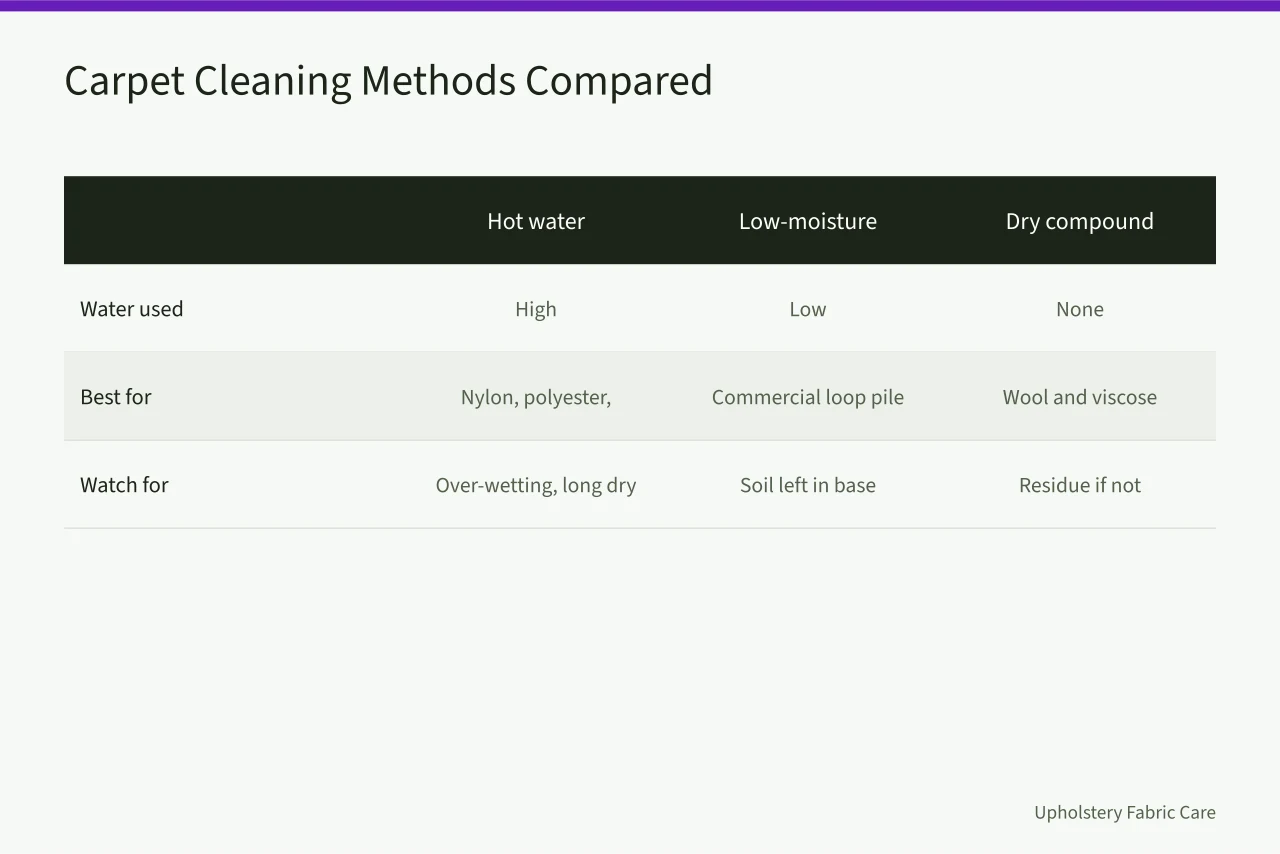
Read the tag before the pre-spray goes on. The code tells you what the fiber allows, and fiber-care guidance comes from the carpet or furniture manufacturer, not a general rule. When the tag is missing or worn, clean a hidden area first and check the result after it dries, not while it is still wet.
A truck-mount reaches higher water temperature and stronger vacuum, which shortens drying. A portable gets you into buildings with no parking or no hose run. That choice decides which jobs you can accept, and it belongs in the cleaning business plan before you buy either machine.
The fallback: referring a job out
Some jobs should never enter your schedule. Viscose that has already bled, a wool rug with no test area, a piece the code marks X, or a fabric you cannot identify all belong to someone else.
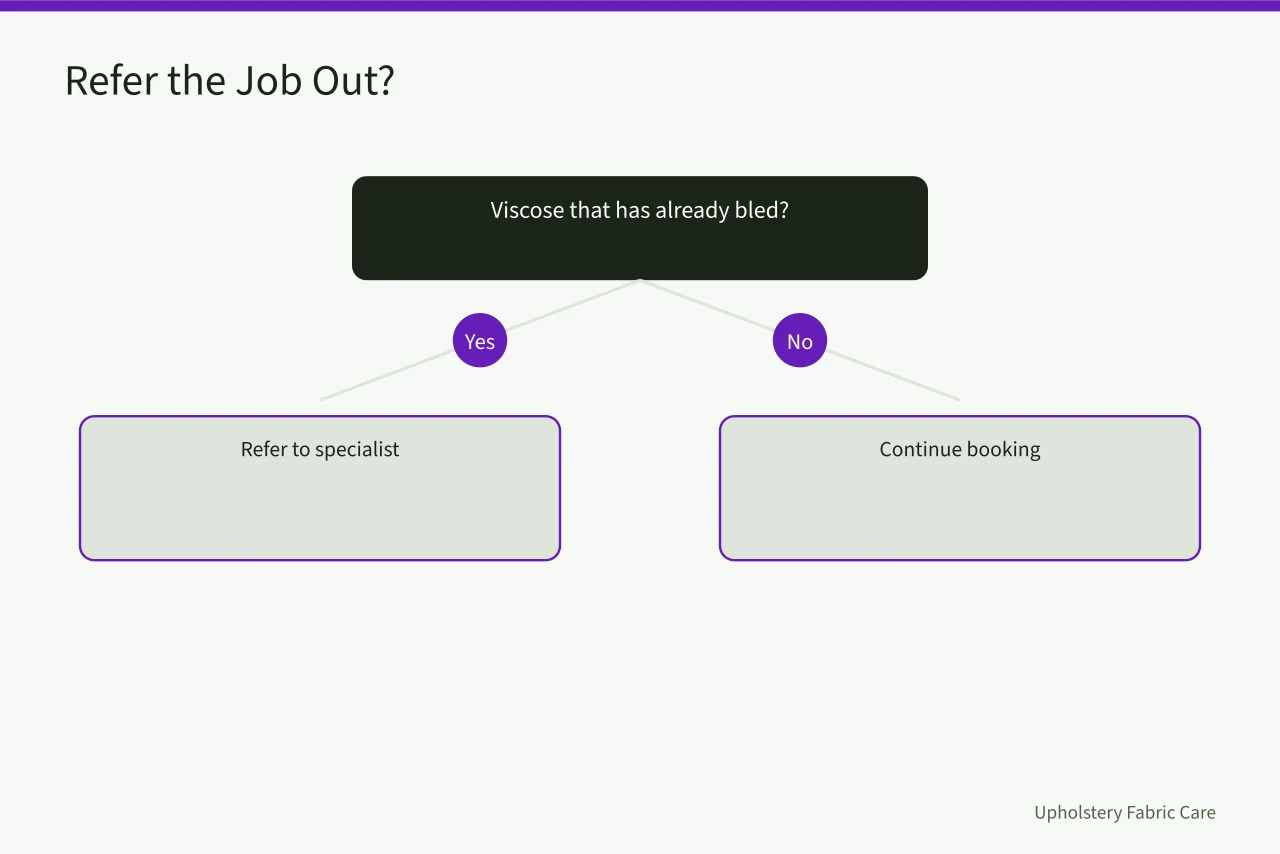
Say so on the phone, before the visit. Give the customer the reason and the name of a specialist who handles it. You lose one invoice and keep the reputation that brings the next ten.
Write the referral into your intake questions, so the decision happens at booking rather than in the customer's living room. That is cheaper than a claim, and far cheaper than a replacement.
Steps that prevent callbacks
- Pre-vacuum the whole area. Dry soil comes out now or it turns into mud later.
- Pre-spray and let it dwell for the time the label states. Write the dwell time on the job sheet.
- Agitate only where the fiber and code allow it.
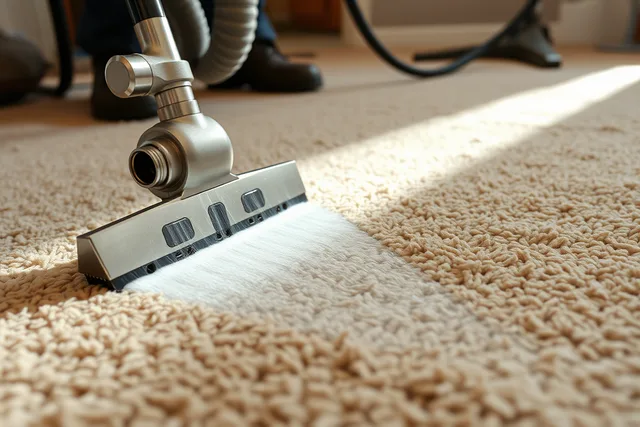
- Rinse with the wand in overlapping passes. Slow, even strokes pull water out; fast strokes leave it in.
- Dry the room with airflow and record the start time. Drying time is the number that predicts a callback.
- Reapply protector only after the carpet is dry, following the label.
Browning appears when the backing wicks dye and soil to the surface as it dries. Wicking is the same movement from the base of the pile. Both come from too much water left behind, and both mean a return trip.
Waste water disposal is set by your state and municipality, so confirm where it goes before the tank is full. Insurance coverage for a cleaning business should be confirmed before the first job, not after a spill.
Route density and the small-job problem
Group work by area, not by call order. Two jobs on one street beat three across a county. Drive time is unpaid, and that cost quietly eats a day.
Set a minimum charge that covers the drive, setup and tear-down. Then decide which small jobs you still take because they lead to repeat work. Drive time decides which jobs are worth taking at all.
Job sheets carry fiber, code, test result, dwell time and drying time. The IRS guidance on business records covers what to keep and for how long.
Chemical labels and safety data sheets stay on the vehicle, and their duties appear in the OSHA hazard communication standard. The OSHA cleaning industry guidance describes the work's physical hazards.
Common questions
What if the tag has no cleaning code?
Test a hidden area with the mildest method first and check it after it dries. If the result is unclear, refer the job out rather than risk the fiber.
Why did the carpet come back brown after it dried?
That is browning or wicking, and it means water and soil moved up through the backing as the carpet dried. It usually traces to over-wetting or too little airflow.
How long should drying take?
It depends on the method, the humidity and the airflow you set up. Record the actual time on every job so you can compare, and treat a slow dry as a warning rather than a finish.
Can I skip the pre-vacuum on a lightly soiled carpet?
No. Dry soil left in the pile turns into mud when the pre-spray hits it, and it settles deeper than it started.