Guides
How to be the carpet cleaning business people recommend for new owners
Referrals come from jobs that dry right, not from asking. Build the record that makes a customer's recommendation easy to give and easy to trust.
What to take away
- Referrals start at the pre-inspection, not the ask. Fiber, cleaning code and a bleed test decide whether the job can be done wet at all.
- A customer recommends a business that left the carpet dry, flat and the same color it arrived.
- Ask for the review after the carpet has dried and the customer has looked at it, not while the wand is still running.
- Track which jobs produce referrals by source, so you know which channel is worth feeding.
The job that gets talked about
Most referrals in this trade are earned in the first twenty minutes on site. Identify the fiber. Read the cleaning code on the manufacturer's tag.
Test colorfastness in a closet corner before any wet method touches the field. A wool or viscose upholstery panel that bleeds under a wet pass turns a referral into a claim.
The customer tells that story to the same neighbors who would have heard the good one.
The code system is the manufacturer speaking to you. W means water-based products only. S means solvent only. WS takes either. X means vacuum only, no liquid. The tag is the authority. If it is missing, treat the piece as the least forgiving fiber you can identify and say so on the work order.
Method follows the fiber
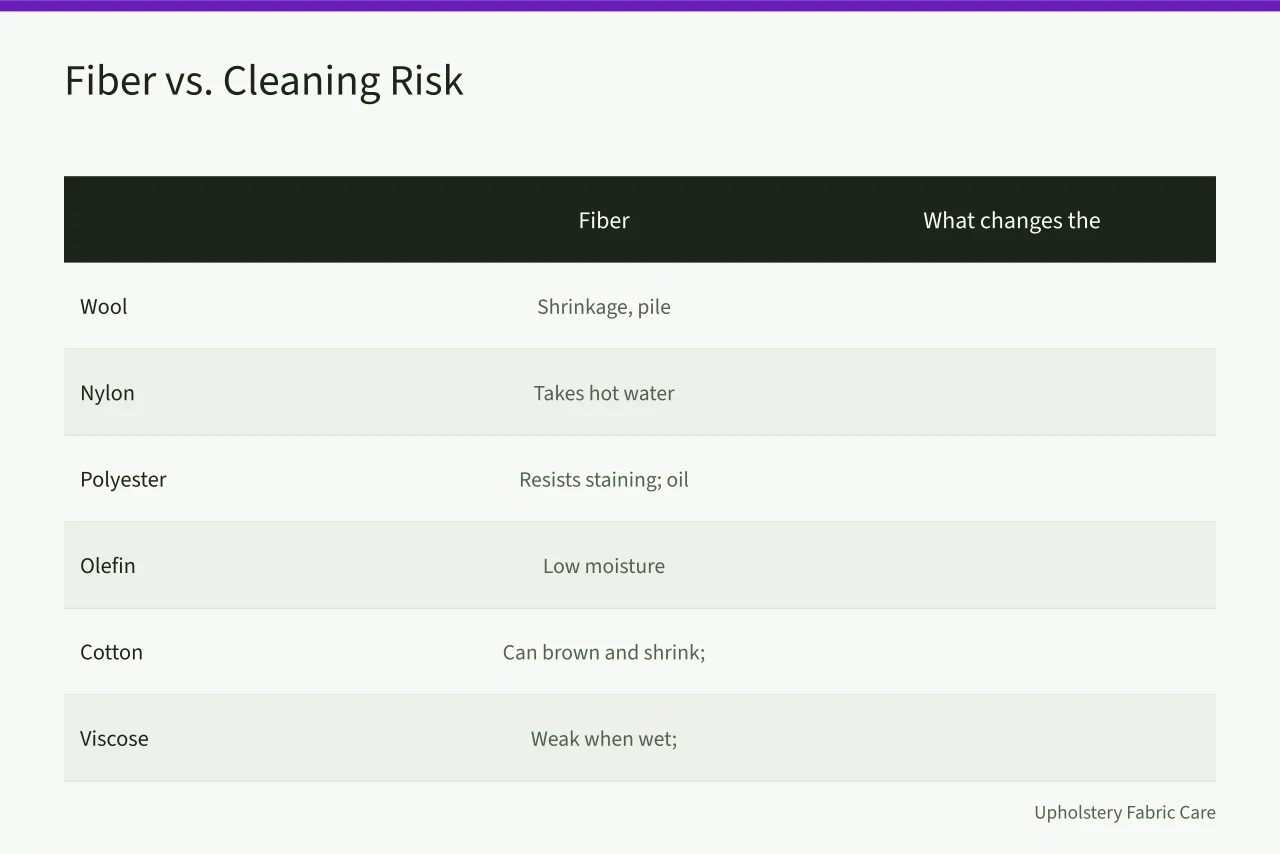
| Fiber | What changes the job |
|---|---|
| Wool | Wet cleaning risks shrinkage and pile distortion; test first |
| Nylon | Takes hot water extraction well, holds protector |
| Polyester | Resists staining, but oil-based soil clings |
| Olefin | Low moisture tolerance, prone to wicking |
| Cotton | Can brown and shrink; dry time matters |
| Viscose | Weak when wet; often the reason a job goes low-moisture or dry |
Hot water extraction is the default for most residential nylon and polyester. Low-moisture encapsulation and dry compound are the fallback when the fiber, backing or schedule will not tolerate a wet pass.
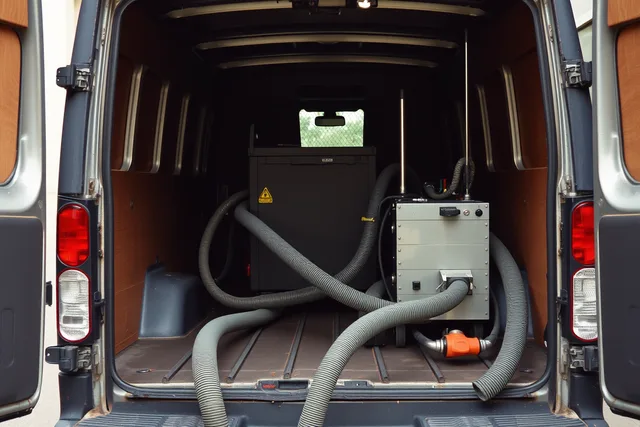
A truck-mount supplies heat, vacuum and water on site, deciding what you can accept. A portable decides which floors you can reach and how long the job takes.
Dwell, wand, dry
Pre-spray goes down and dwells for the time the product label states. Record the time. It is a step, not a habit.
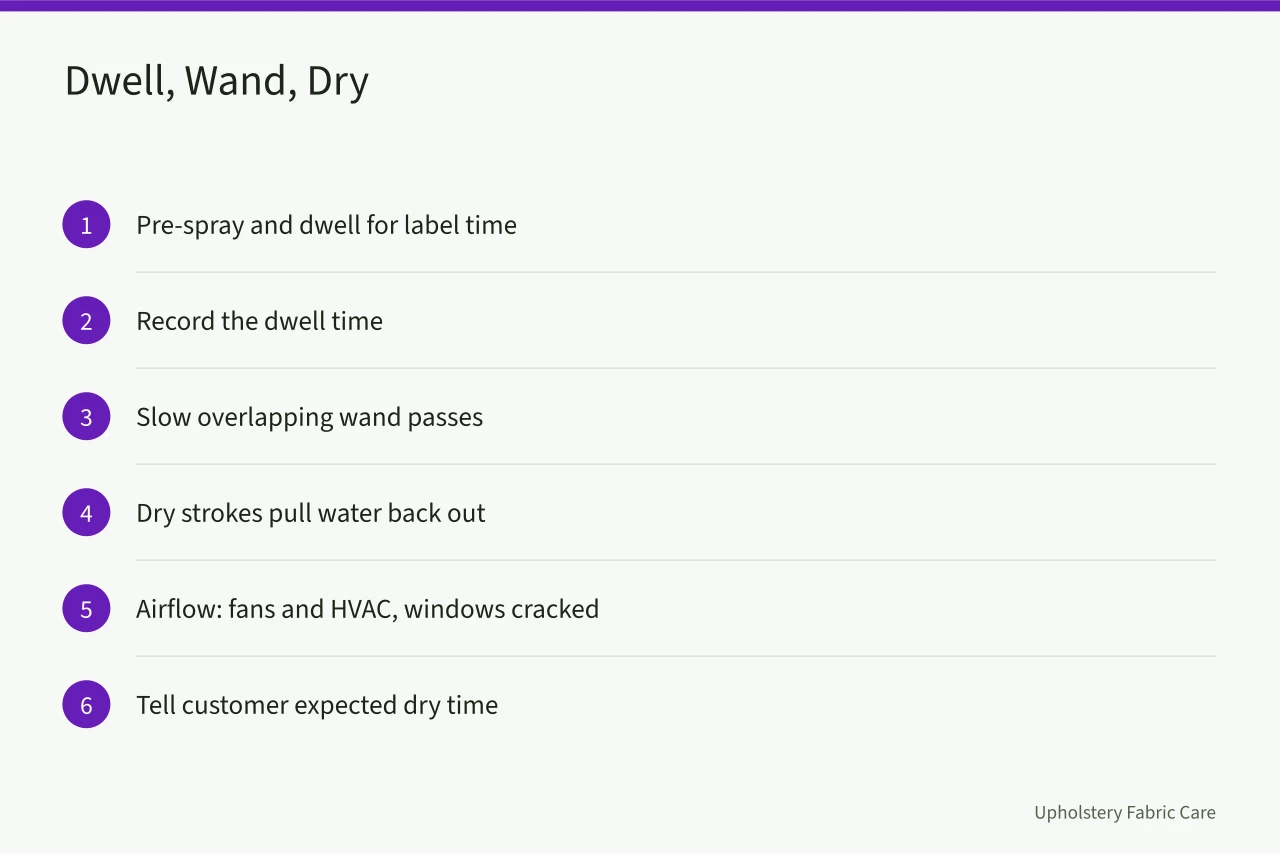
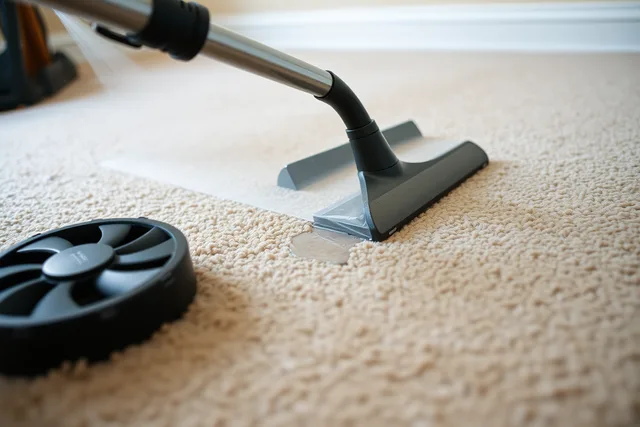
Wand technique is where callbacks are made. Slow passes, overlapping, and dry strokes at the end pull the water back out. Over-wetting pushes moisture into the backing and pad, which is how browning and wicking show up two days later as a customer complaint.
Airflow finishes the job. Fans and the HVAC set to run, windows cracked where the weather allows. Tell the customer the expected dry time and what they should avoid walking on until then.
Protector and the callback
Protector goes back on after the carpet is dry, and the customer should know it was applied. Skipping it is a quiet way to lose the next job, because soil returns faster and the customer blames the cleaning.
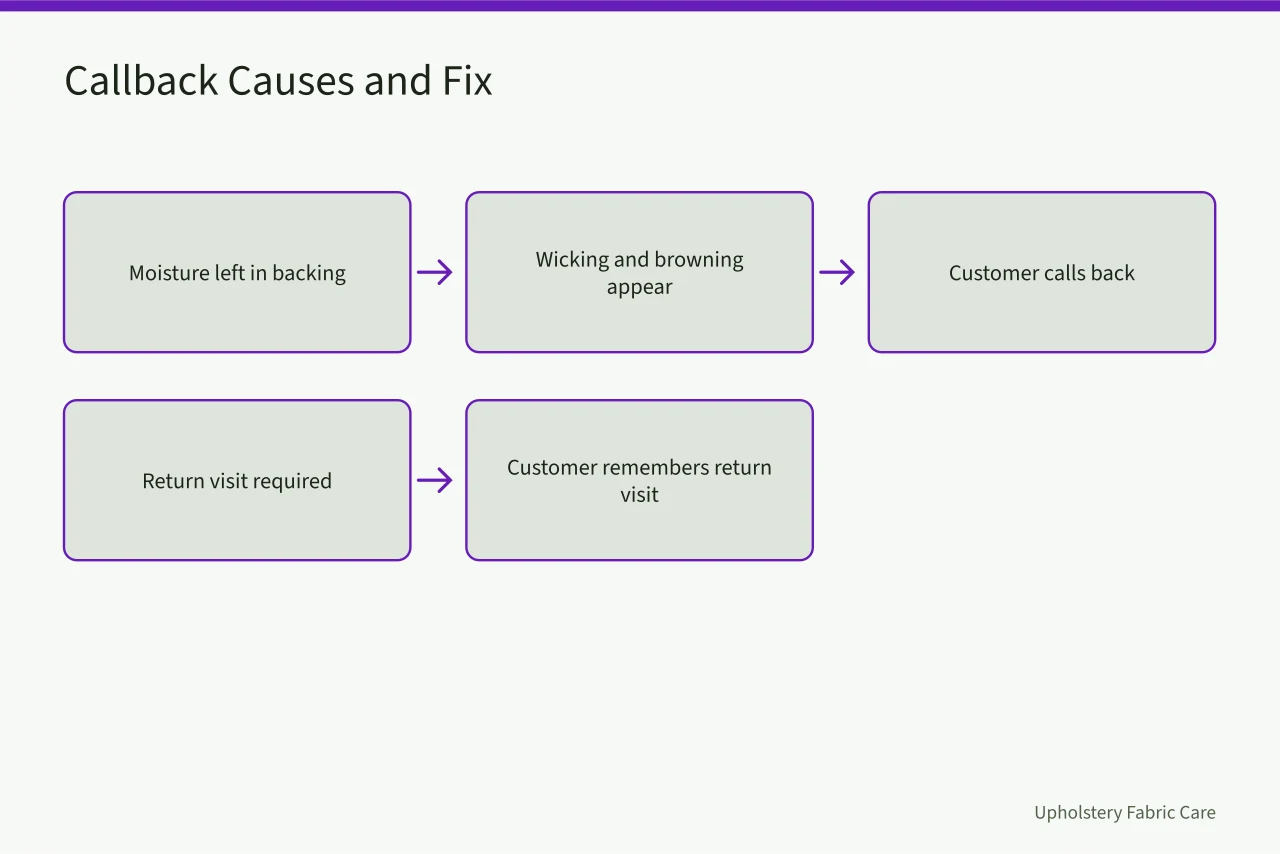
Wicking and browning are the two callbacks that cost you the referral. Both trace back to moisture left in the backing. The fix is a return visit, and the customer remembers the return visit longer than they remember the original clean.
Where the customers come from
| Channel | Fits when | Weak point |
|---|---|---|
| Word of mouth | Each job leaves a result the homeowner can point to | Slow to start |
| Property manager and realtor referrals | The partner sees the need before the owner does | Tied to one relationship |
| Maps and local listings | The search happens when the need is urgent | One bad review month is public |
| Repeat reminders | The reminder arrives before the customer notices the soil | Discounts train waiting |
Your Google Business Profile is the first thing a referred customer checks. Keep hours, service area and photos current, because a referral that lands on an out-of-date profile stalls before the call. A local search checklist keeps that profile aligned with the jobs you actually want.
Asking for the review
Ask after the carpet has dried and the customer has walked on it. A request sent while the van is still in the driveway gets a polite yes and no review.
The FTC's guide to soliciting and paying for online reviews sets the line: ask genuine customers, do not cherry-pick only the happy ones, and never let an incentive or a connection create a misleading picture. A review you had to buy is not a referral.
Deciding which work to chase
Route density decides whether a small job pays. A minimum charge covers the drive, the setup and the dry time. It is set from your own numbers. These are drive time in hours, setup in minutes, product cost per job and the hourly rate you need to clear. Substitute your figures and the minimum falls out.
Truck-mount or portable, distance or density, residential or commercial: those choices decide which jobs you can accept, which is the same question as which customers you can keep. The markets worth building in and the work of winning customers directly are the two halves of that decision.
Common questions
Should I offer a discount for referrals?
Only if the discount does not change what the customer says. Paying for a review, or rewarding only positive ones, runs against the FTC guidance above. A thank-you credit on a future clean is easier to defend than a payment tied to a rating.
What do I do when the tag is missing?
Treat the piece as the least forgiving fiber you can identify, test in an inconspicuous spot, and note the missing tag on the work order. The manufacturer's care instructions and the cleaning code are the authority, not your experience with a similar-looking carpet.
How long should drying take?
It depends on the fiber, the backing, the humidity and the airflow you set up. Give the customer a range and the conditions that shorten it, then check back. A carpet still damp on day three is a callback waiting to happen.
Who decides what I can discharge?
Your state and municipal wastewater authority, and the answer varies by location. Ask before you assume the driveway or the storm drain is an option.