Guides
What is changing in carpet cleaning demand for 2027
Carpet cleaning demand in 2027 shifts with fiber mix, cleaning codes and route density, not a national trend, as synthetic and glued-down construction decide method.
What to take away
- The job mix is shifting toward synthetic fiber and glued-down construction, which decides method more than any market forecast does.
- Viscose and rayon upholstery is the call that most often turns a booked job into a callback. Test it before any wet method.
- The cleaning code on the furniture tag (W, S, WS or X) outranks your usual method. Photograph the tag before you start.
- Route density, not lead volume, decides whether a small job is worth taking.
- Every number below is a variable you fill in from your own records.
The fiber mix is the real trend
Demand does not change in the abstract. It changes because the carpet under your wand changes. Wall-to-wall nylon and polyester still dominate, olefin shows up in basements and rentals, and wool survives in older homes and better upholstery.
Viscose is the one to watch. It shows up in rugs and upholstery sold as a soft, affordable silk alternative. It loses strength when wet, so a low-moisture method is often the only safe option.
That fiber decides whether you send a truck-mount or a portable, and whether the job takes two hours or four. Viscose jobs also change what you can charge, so review carpet cleaning pricing and profit before quoting one.
Read the cleaning code before you quote
The code is on the furniture tag, and it is the manufacturer's instruction, not a suggestion. W means water-based products. S means solvent only. WS means either. X means vacuum only, no liquid.
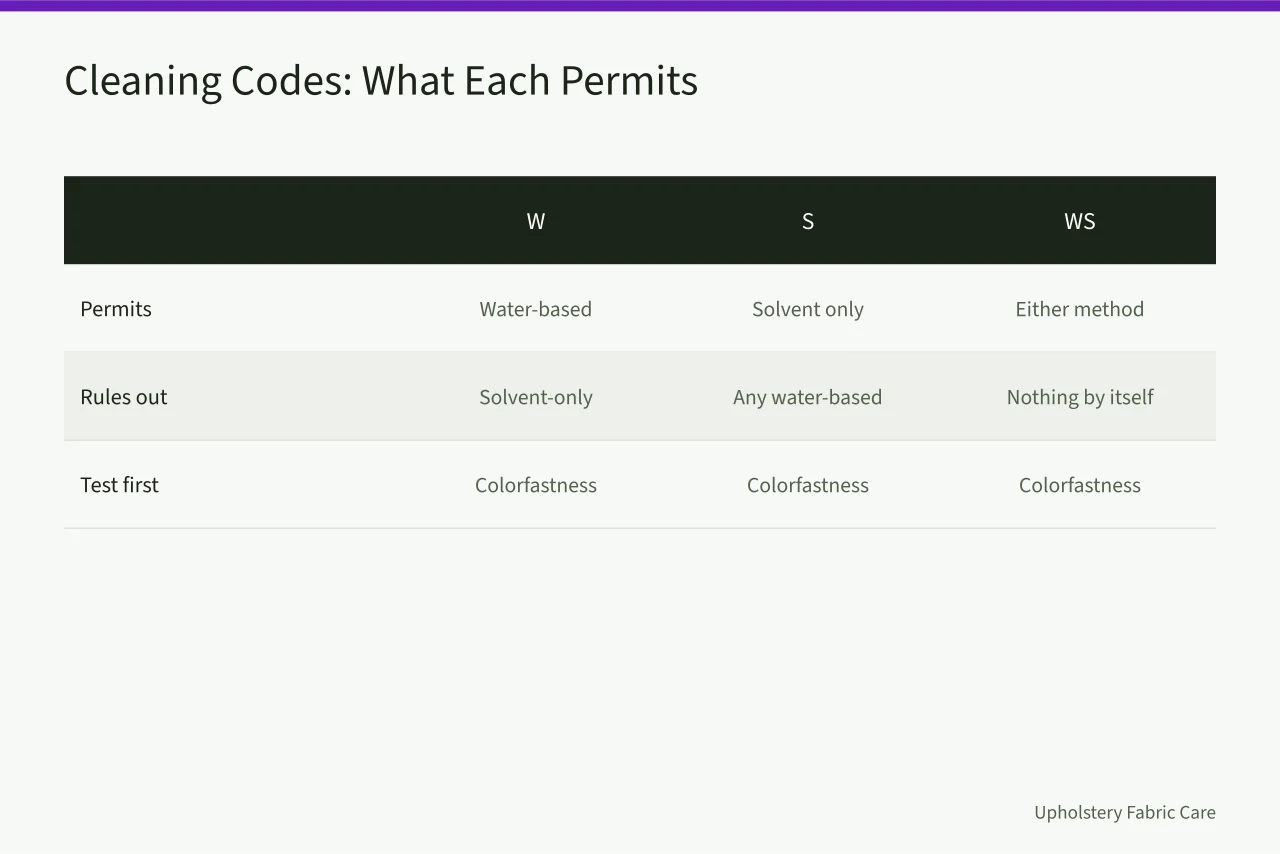
| Code | What it permits | What it rules out |
|---|---|---|
| W | Water-based cleaning | Solvent-only products |
| S | Solvent cleaning | Any water-based prespray or rinse |
| WS | Either method | Nothing by itself, but test first |
| X | Vacuuming only | All liquids |
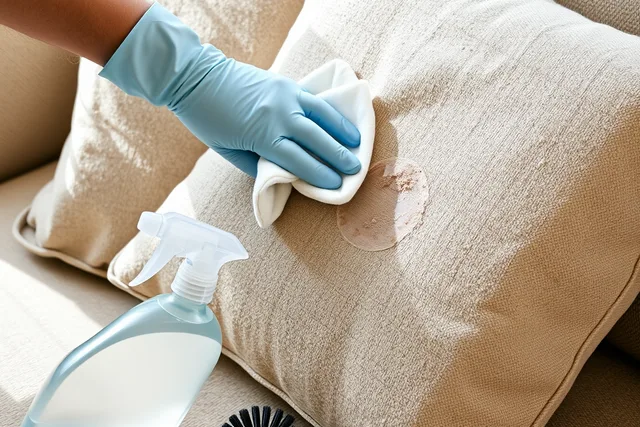
Test for colorfastness before any wet method, on a hidden area, and record the result on the work order. Bleed shows up an hour later, on the customer's white sofa, after you have left.
Methods and what each decides
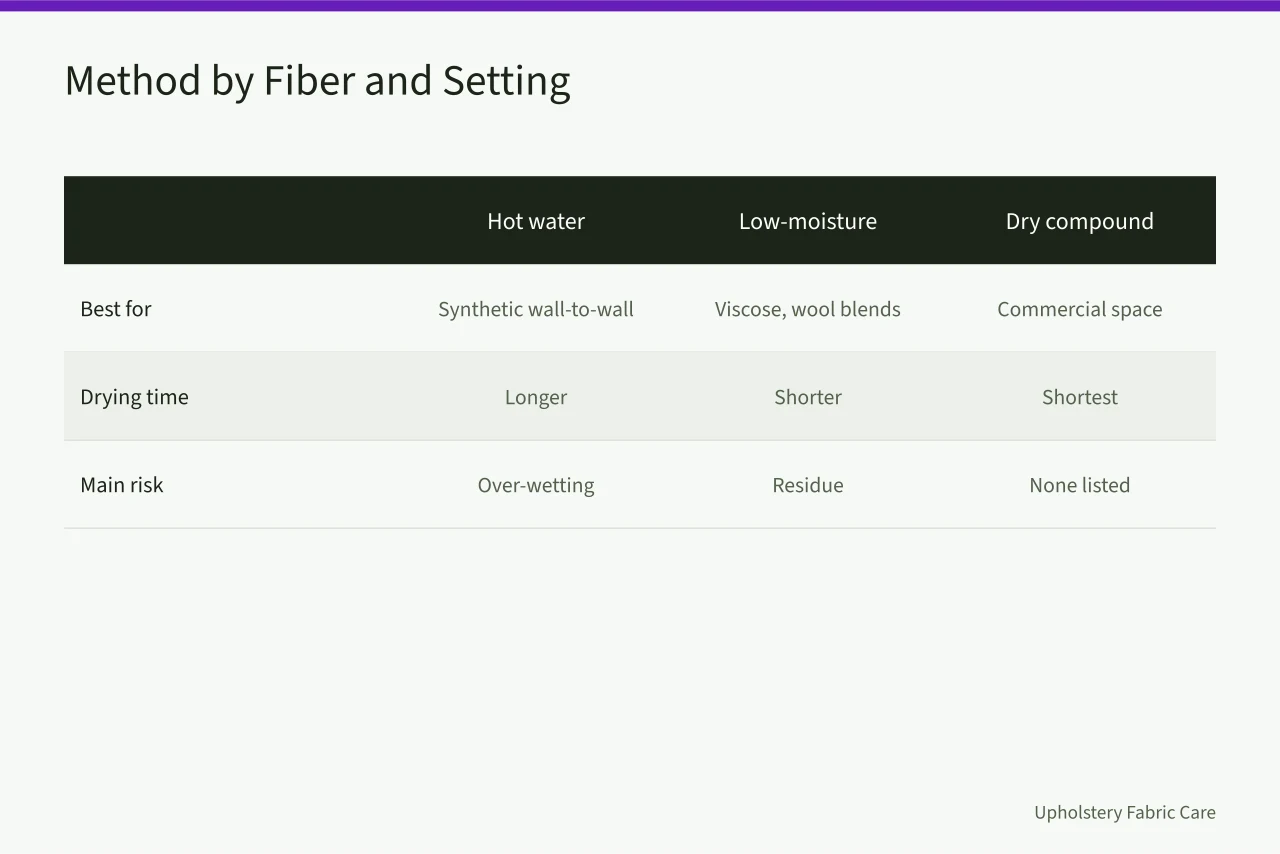
Hot water extraction is still the workhorse for synthetic wall-to-wall. Low-moisture encapsulation and dry compound suit viscose, wool blends and commercial space where drying time matters. A services and packages guide shows how fiber and method decide which jobs you can bundle into one visit.
Prespray dwell time is a documented step, not a guess. Write the product, the dwell time and the rinse on the ticket. Follow the label and the manufacturer's instructions; they are the authority on the product, and your record is the evidence you followed them.
Over-wetting is the callback engine. It causes browning, wicking and a floor that stays damp for two days. Wand passes, airflow and drying time are the controls. Tell the customer the expected drying window and what they should run in the room.
What decides job selection
A truck-mount reaches further and cleans faster, but it needs parking and a hose run. A portable gets into high-rises and tight rooms and takes longer per room. That choice sets your minimum charge and which calls you accept.
Route density is the quieter constraint. Two small jobs on one street beat four spread across a county, because drive time is unpaid and the second job pays for the first one's travel.
The small-job problem is arithmetic, not attitude. Take your minimum charge, subtract drive time, setup, consumables and the share of fixed cost the visit carries. If the remainder is below what an hour of your day is worth, the job is a scheduling decision, not a pricing one.
Where that arithmetic points over a year is the subject of best markets for a carpet cleaning business, which treats territory as a density question rather than a map.
Where the rules come from
Fiber-care guidance comes from the carpet or furniture manufacturer and the cleaning code on the tag. Licensing, wastewater disposal and chemical handling vary by state and municipality, so confirm with your state board and your sewer authority.
The SBA business guide covers planning and permitting. The BLS occupational wage tables give a local pay benchmark. The OSHA cleaning industry page lists the hazards of the work itself.
Common questions
Does a cleaning code override what the customer asks for?
No. It sets the limit. If the code says S and the customer wants a wet clean, the answer is that the label forbids it. Offer the solvent method or decline the job.
How do I know a viscose piece will bleed before I start?
You do not know until you test. Test a hidden area with the product you intend to use, let it dry, and check the result. Record it either way.
What causes a brown stain to appear after cleaning?
Browning and wicking are usually over-wetting or a slow dry. More airflow and a longer drying window fix most of them. Recleaning without changing either repeats the callback.
Should I take every small job while building a route?
Only if it sits inside a route you already run. A lone small job across the county costs you the next booking, not just the drive.