Guides
How to Clean Water Stains Off a Microfiber Couch
How to clean microfiber couch stains starts with the care code, then blotting with water-based cleaners. Steps, checks and the point to call a pro.
What to take away
- Read the care code first. A W code takes water-based cleaner, an S code does not, and WS takes either. X means vacuum only.
- Water stains on microfiber usually come from rings left by a wet cloth, not from the spill itself. Even wetting and even drying prevents them.
- Distilled water plus a drop of clear dish soap handles most fresh marks. Bissell and Resolve make upholstery-safe versions sold in the US for about $8 to $20.
- Blot, never scrub. Scrubbing crushes the microfiber pile and leaves a permanent shiny patch.
- If the stain covers a whole cushion, has been there for months, or the fabric is viscose or rayon, stop and call a professional.
What has to be true before the first step
Microfiber is polyester or a polyester-polyamide blend, and the fibers are finer than silk. That structure is why it grabs liquid fast and why it holds a mark once the pile is disturbed. Background on the material sits in the Wikipedia article on microfiber.
Find the care code tag, usually under the seat cushion or stapled to the deck. W means water-based cleaner is allowed. S means solvent only. WS means both. X means vacuum or light brush only, no liquid. The codes are standardized, and the Wikipedia page on care labels explains each one.
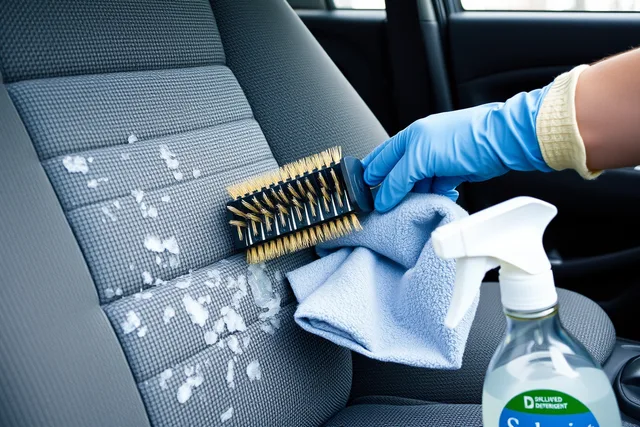
Gather four things: distilled water, a mild clear dish soap or an upholstery cleaner, two white microfiber cloths, and a soft brush. Skip paper towels, which shed and leave lint in the pile.
The sequence
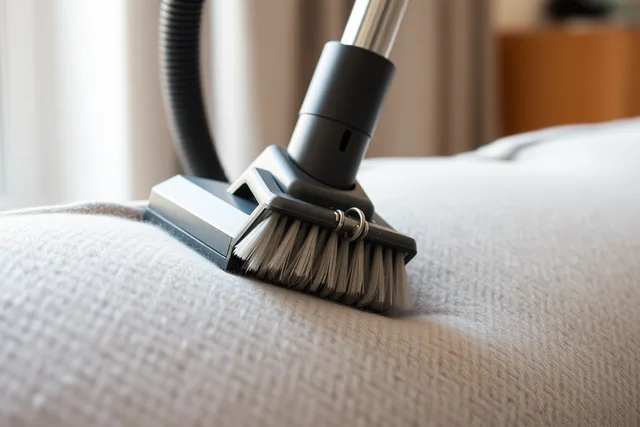
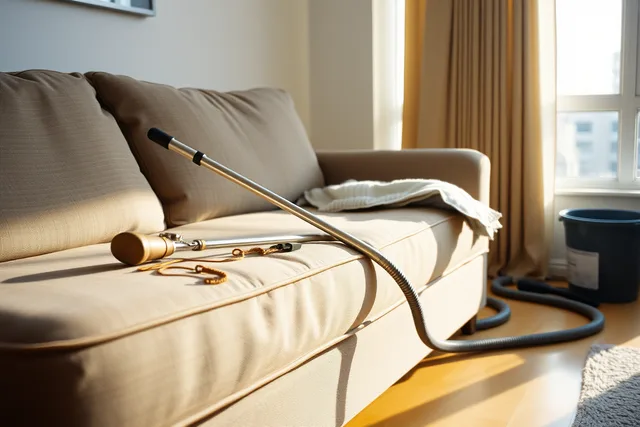
- Vacuum the cushion on both sides with a brush attachment. Loose soil turns into mud the moment water touches it.
- Test the cleaner on the back or underside of the cushion. Wait a few minutes and check for color lift or a stiff patch.
- Mix one cup of distilled water with two or three drops of clear dish soap, or use a ready-made upholstery cleaner such as Bissell SpotClean formula or Resolve Upholstery Cleaner.
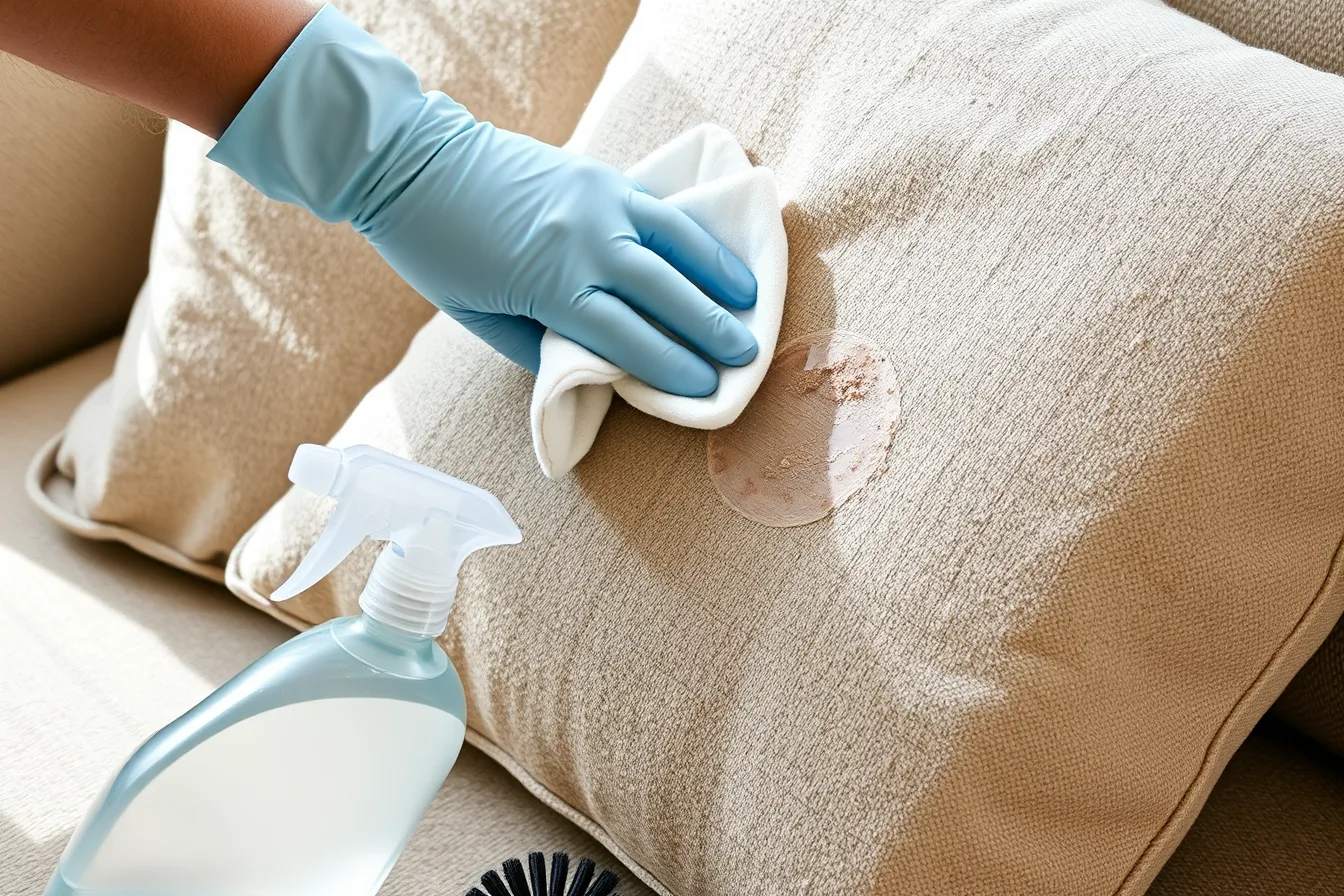
- Dampen a white cloth, wring it until it stops dripping, and blot the stain from the outside edge toward the center.
- Rinse with a second cloth dampened with plain distilled water, then blot dry with a dry towel.
- Brush the pile back up with a soft brush while the fabric is still slightly damp.
- Let the cushion air dry away from direct sun and heat. Run a fan if the room is humid.
The step that decides the result
Drying is the step that decides whether you get a clean cushion or a new water ring. Water carries dissolved soil to the edge of the wet area, and it dries there. That is the ring you see. An even, fast dry is what stops it.
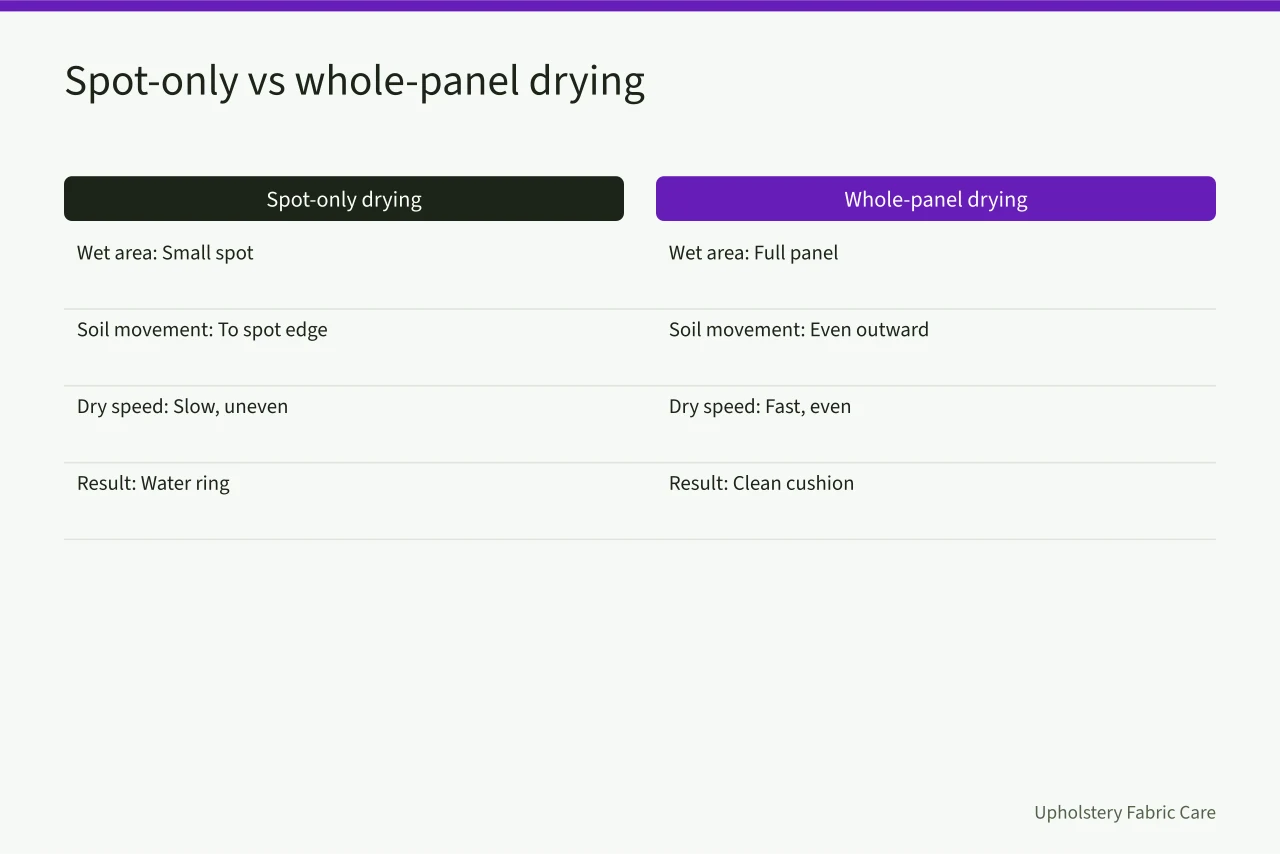
Work the whole panel, not just the spot. Feather the damp cloth outward past the stain so the moisture fades gradually. Then dry the entire panel with a fan or a hair dryer on the cool setting. Uneven drying is the single most common cause of the rings people blame on the cleaner.
How to check each step came out right
- After vacuuming, the brush attachment shows no visible grit when you tap it on a hard floor.
- The test patch is the same color and texture as the surrounding fabric after it dries.
- The cloth you blot with lifts color from the stain, not dye from the fabric.
- The cushion is dry to the touch across the whole panel, with no cool damp patch in the middle.
- Under a lamp at an angle, the pile shows no flattened or shiny spot.
What to do when a step goes wrong
If a ring appears anyway, the recovery is to rewet the whole panel evenly with distilled water and dry it fast with a fan. A second pass with a 50/50 mix of distilled water and white vinegar helps on stubborn rings, but test it first on light colors.
If the fabric turns stiff, you used too much soap and did not rinse enough. Rewet with plain distilled water and blot, then dry.
If a shiny patch shows up, the pile is crushed. A soft brush and a little steam from a handheld steamer can lift some of it, but crushed microfiber rarely returns to new. That damage is permanent, which is why blotting matters more than any product choice.
When to stop and hand it to a professional
Call a professional when the stain covers more than one cushion, when it has been set for weeks, or when the care code is S or X and you do not own solvent cleaner. Viscose and rayon blends also belong with a pro, because water alone can leave a permanent mark on them.
A second condition: if a pet accident soaked into the foam, surface cleaning will not reach it. The Wikipedia article on urine explains why the salts stay behind and keep releasing odor. Enzymatic cleaners are the usual fix, and the guide on how to remove dog urine smell walks through the process.
For a whole couch, expect a professional to charge by the piece or by the room. The breakdown of upholstery steam cleaning cost per room shows how shops in the US price that work, and comparing it against a DIY kit is the honest way to decide.
Common questions
Can I use a steam cleaner on microfiber? Only if the care code allows water. Steam adds heat and moisture, and microfiber dries slowly, so keep the head moving and dry the panel right away. On an S-coded fabric, steam will set the stain.
Why did my couch get a water ring from plain water? Because the water dried unevenly and pulled soil to the edge. Rewet the whole panel, then dry it fast with a fan to blend the mark out.
Does rubbing alcohol work on microfiber water stains? It can help on ink and grease, not on water rings. Alcohol evaporates fast and may dull some dyes, so test it on the underside first.
How do I keep the cushions from staining again? A fabric protector sold for upholstery adds a water-repellent layer. The comparison of upholstery protector sprays covers which ones hold up around pets.