Guides
How to Remove Salt Stains from Fabric Car Seats (Canadian Winter Guide)
Remove salt stains from car upholstery in Canada without wrecking the fabric. A winter-specific method for dry, salty interiors and road salt crust.
What to take away
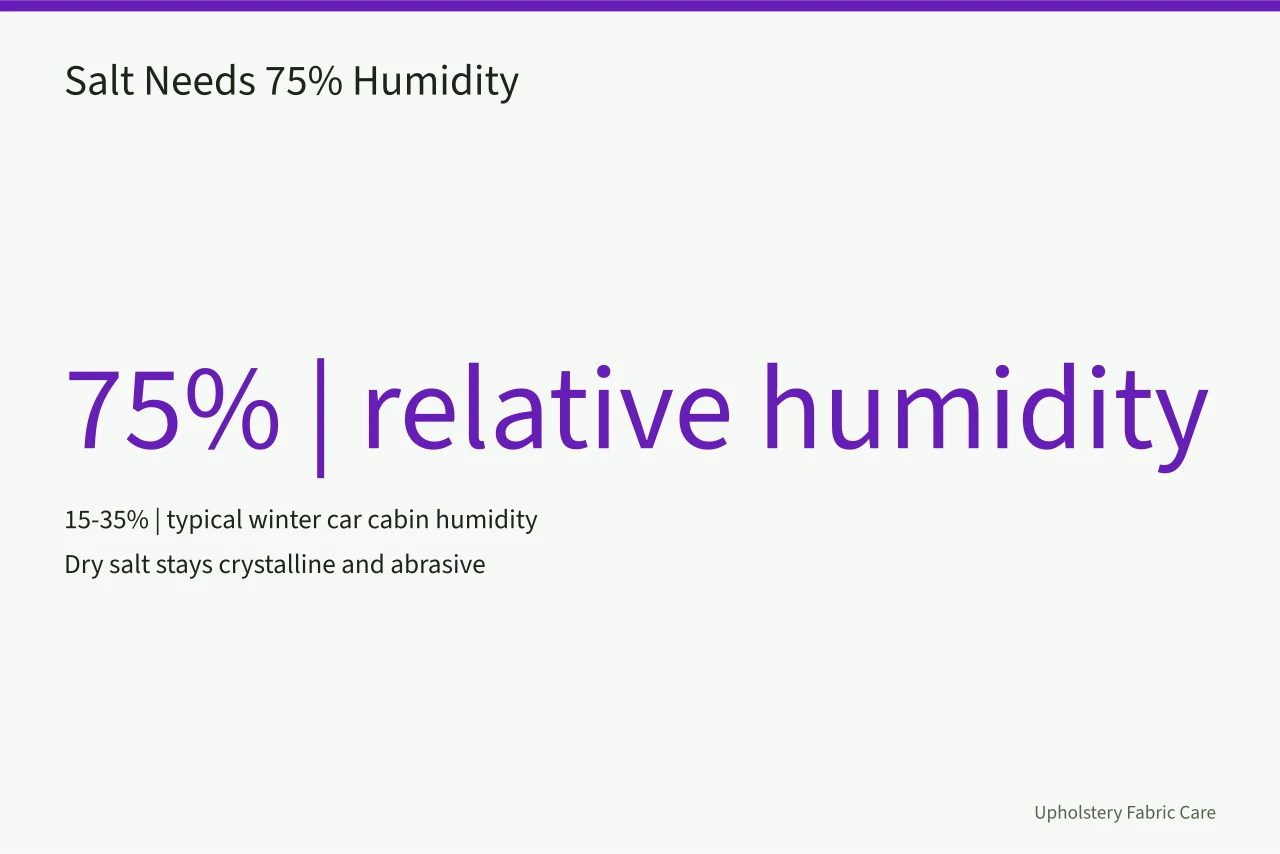
- Road salt on car seats stays crystalline in most Canadian winter cabins because interior relative humidity rarely reaches the 75 percent deliquescence point. Dry vacuuming cannot remove bonded crust alone.
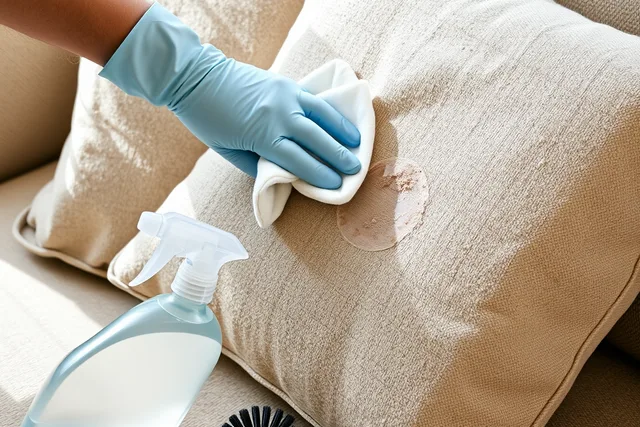
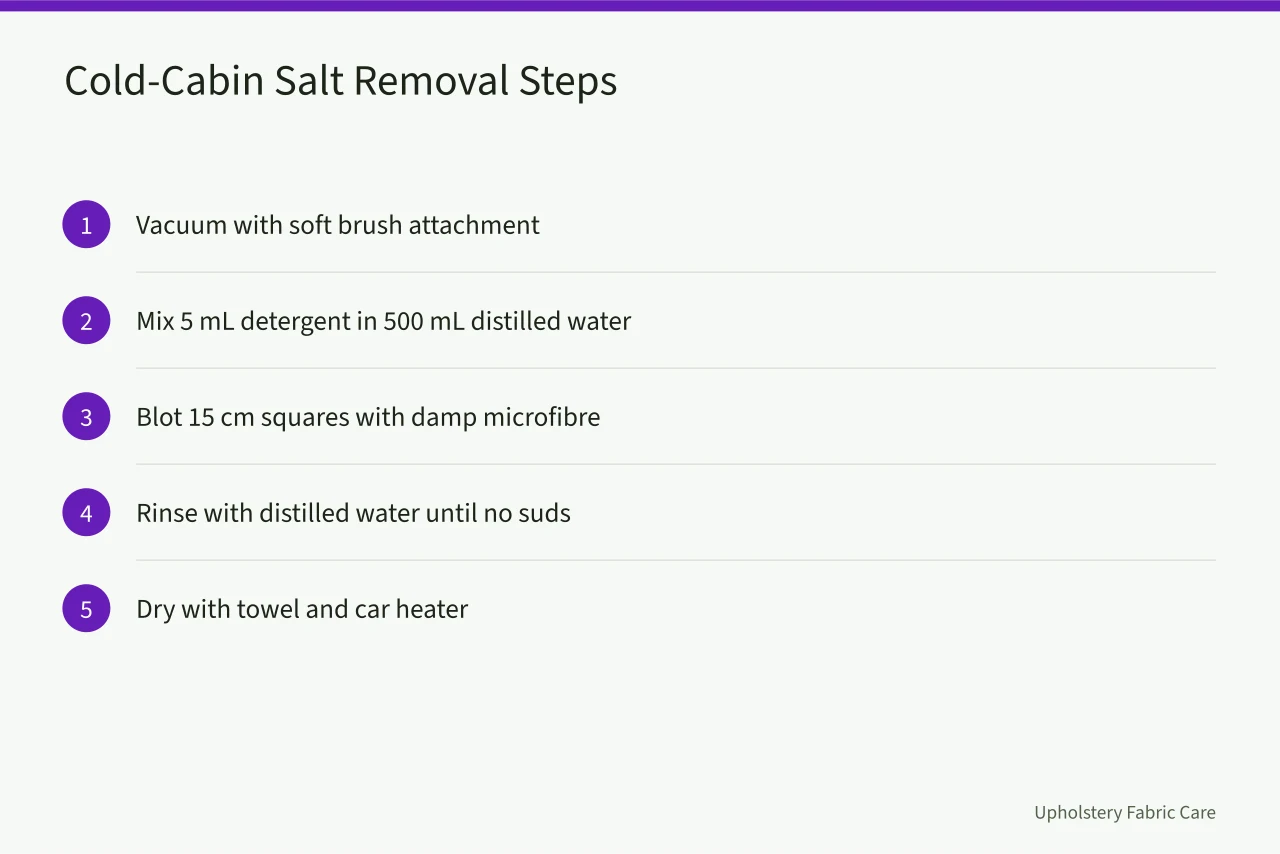
- A cool-water blot-and-rinse method works on fabric code W or WS if you keep total liquid under about 400 mL per seat.
- The hard climate rules out hot steam cleaning in a closed, cold car: rapid evaporation leaves salt behind and can soak the foam.
- Stop the workaround when white crust is thicker than 3 mm or covers more than half the cushion; professional extraction with a drying bay is the honest fix.
The winter-dry constraint and what it removes
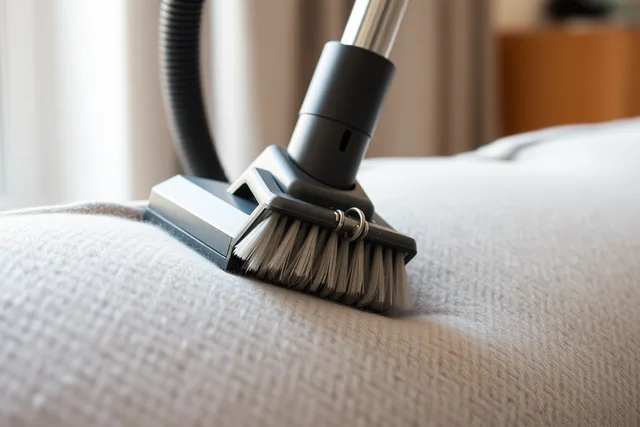
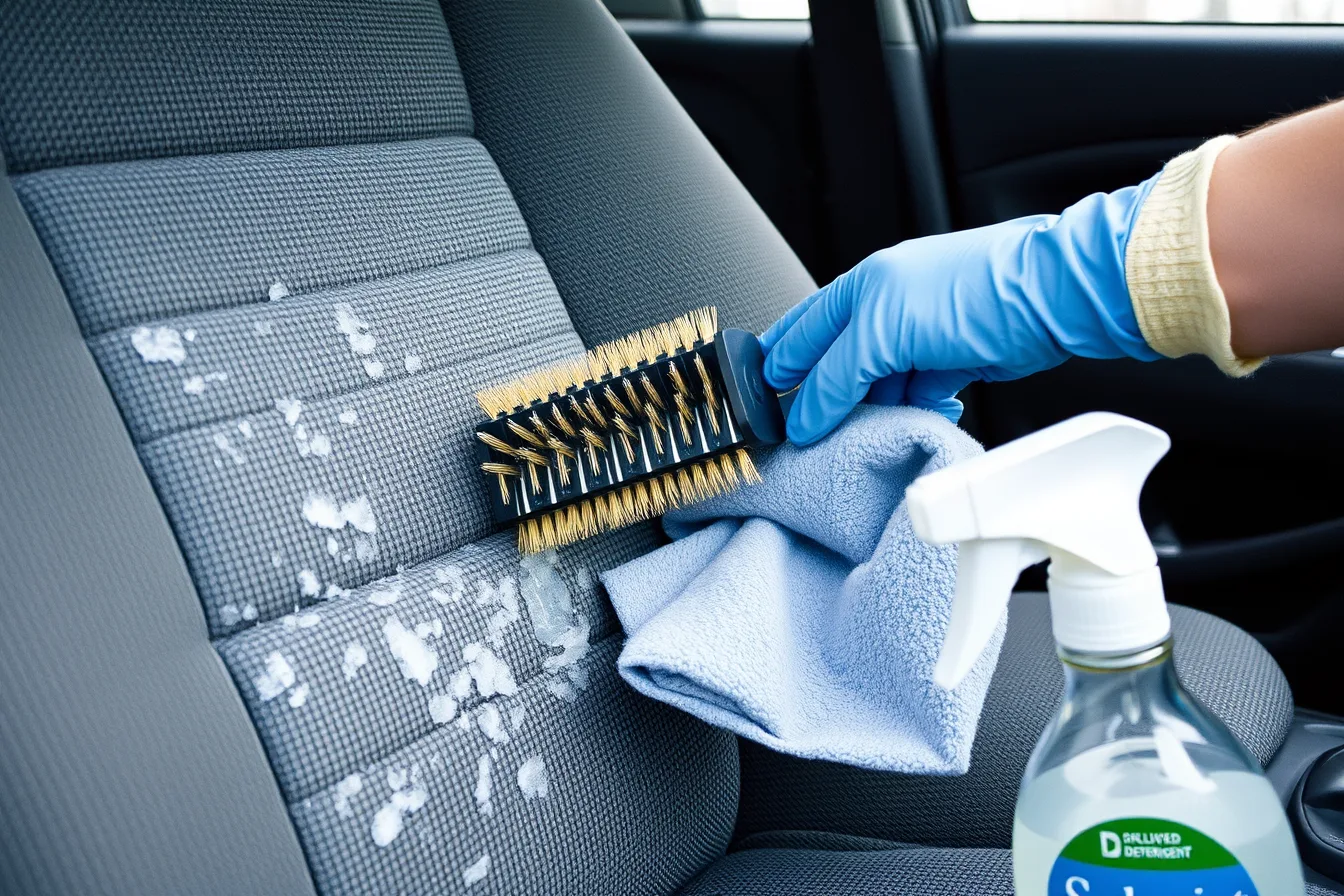
Canadian winter road salt is mostly sodium chloride, with added calcium chloride or magnesium chloride in provinces such as Ontario and Quebec. Inside a parked car, cabin air often sits between 15 and 35 percent relative humidity for weeks. That matters because sodium chloride does not dissolve until relative humidity approaches 75 percent. The salt stays dry, crystalline, and abrasive. It catches in woven polyester or nylon and resists removal by brushing or normal vacuuming.
What still works in a cold, dry cabin
Check the seat's care label first. Codes W and WS allow water-based cleaning; code S means solvent only, and code X means vacuum only. Most fabric car seats in Canada are polyester or nylon with a W or WS tag, but imported models vary. Care labels use standardized codes that keep you from ruining the fabric.
Compromises worth making
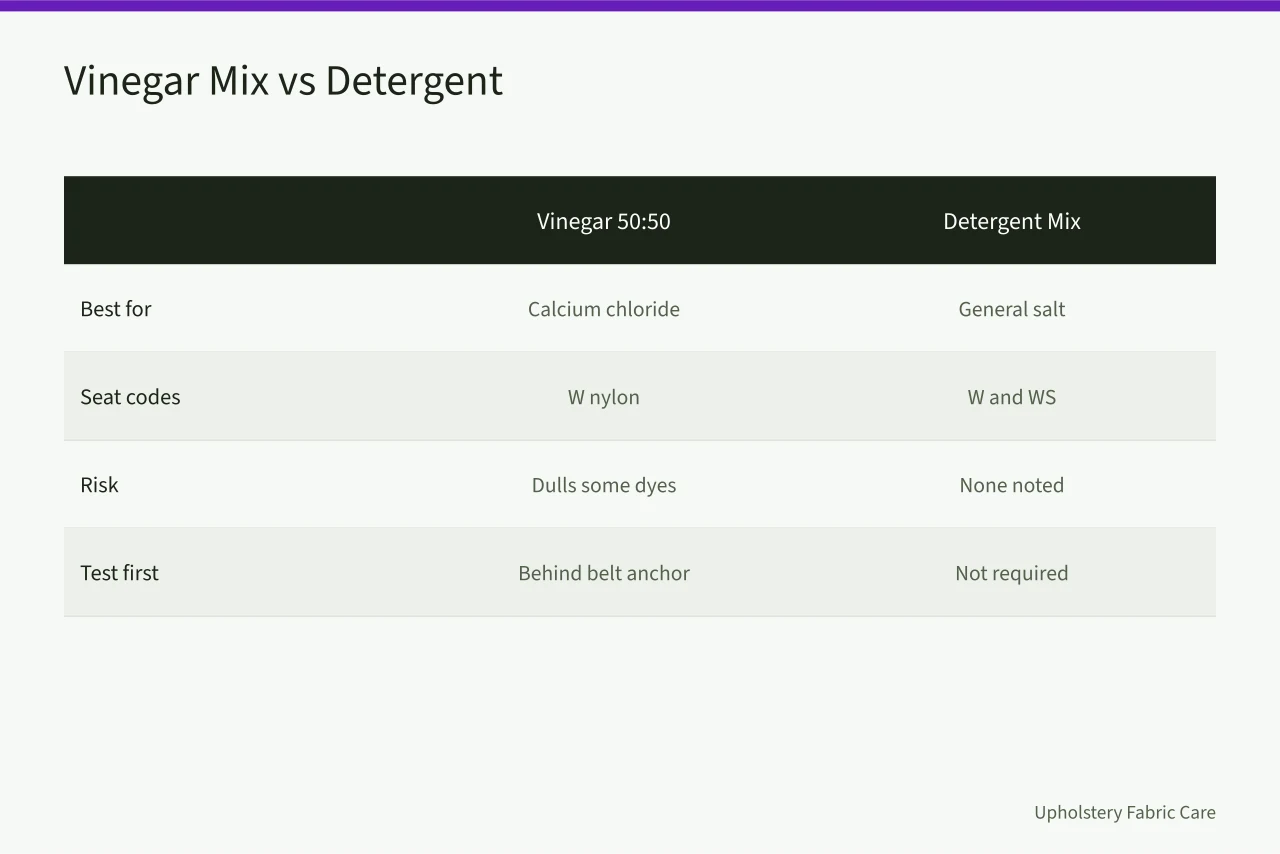
A 50:50 mix of white vinegar and cool distilled water can lift light salt haze on W-coded nylon seats when detergent alone is not enough. Test it behind a seat belt anchor first, because vinegar can dull some automotive dyes. The vinegar works best on calcium chloride brine, which some municipalities in Quebec use instead of rock salt.
Compromises that are not worth it
Skip dish soap as the main cleaner. In the concentrations people use to cut road salt, it leaves a sticky residue that attracts dust and more salt within days. Skip scrub sponges and melamine foam blocks. They tear automotive upholstery fibres, leaving a dull patch that no amount of rinsing fixes. Skip WD-40, rubbing alcohol, and glass cleaner. These solvents can break down the foam backing or the adhesive that bonds the fabric to the cushion.
When to stop and do it properly
Set a measurable stop threshold before you start. If the white crust is thicker than 3 mm, covers more than half the cushion, or has been there longer than six weeks, do not wet it.
Stop the DIY method if the crust is thicker than 3 mm or covers more than half the seat. At that point, any home extraction pushes salt deeper into the foam. For that job, a professional with hot-water extraction and a heated drying bay is the honest next step. They can flush salt out of the foam and dry the seat fast enough to avoid mould in a cold garage. Our Toronto comparison of Cleaning Company vs DIY explains when the pro route makes sense. A professional drying bay matters because salt stains often hide a soaked foam core. In a cold garage, DIY drying can take days, and mould grows long before the seat feels dry. The professional route also lets you document the work for a warranty claim if the seat fabric fails later.
Common questions
Will vinegar damage fabric car seats? Test a hidden spot first. Vinegar can dull some automotive dyes, so use it only on W-coded nylon or polyester when detergent alone fails. Can I use a carpet cleaner machine with a hand tool? Only if the fabric code is W or WS and the machine has a low-pressure hand tool. Keep total water under about 400 mL per seat and dry the cabin with heat and ventilation. When should I stop and call a professional? If the crust is thicker than 3 mm, covers more than half the cushion, or has sat for over six weeks. Before you book, check what Upholstery Steam Cleaning Costs so you understand the price range.