Guides
How a carpet cleaning business finds customers
How a carpet cleaning business finds customers: the fiber, code and soil facts a quote needs, and the route density that decides which jobs pay.
What to take away
- Marketing starts at the inspection, not the advert. Fiber, backing and cleaning code decide the method, the time on site and whether you can quote at all.
- A job is worth quoting only if the round trip fits the day's route. Drive time is the cost that eats a small ticket.
- Viscose and other cellulosic fibers shrink and brown when wetted. Test first, then choose the method the test allows.
- The carpet or furniture manufacturer and the cleaning code are the authority on fiber care. Licensing and wastewater disposal belong to your state and municipality.
- Reviews must come from real customers, asked without filtering, and paid placement must be disclosed.
The facts a quote is built on
A price given over the phone before anyone has seen the carpet is a guess. The facts that decide the job are collected at the door: fiber, backing, cleaning code, soil type, and the result of a test patch. Fiber comes first, because it decides which methods are open to you at all.
Wool takes water and releases soil well, but it felts under heat and agitation. Nylon and polyester are the workhorses of residential carpet and tolerate hot water extraction. Olefin is solution-dyed and stain-resistant, so it forgives spills and not heat, because it can distort. Cotton is absorbent and slow to dry.
Viscose changes the job, appearing as rayon, viscose, art silk, or viscose blend, and it is often the face fiber on a sofa or rug rather than a fitted carpet.
Wetted viscose can shrink, distort and brown. The damage may not show until the piece dries. A viscose piece goes to a low-moisture method or it does not go at all, and the customer is told why before the machine comes off the van.
The cleaning code is printed on the furniture's law label. W means water-based products only. S means solvent-based only. WS means either. X means vacuum only, no liquid. The code is the manufacturer's instruction and it outranks your usual method. Where the label is missing or illegible, ask the manufacturer or the retailer, not the technician's memory.
Test before any wet method
Colorfastness and bleed testing come before a wet method on any piece with more than one color, any viscose, and any upholstery you have not cleaned before. The test is small, in an inconspicuous place, and it is recorded on the job sheet with the result.
- Fiber and backing identified, by name, on the job sheet
- Cleaning code read from the law label and copied down
- Colorfastness checked on a hidden area and left to dry
- Test patch dried and compared against the surrounding pile
- Method chosen, with the reason written next to it
- Customer told what the test found before work starts
A test that fails is not a problem. It is the cheapest result of the day, because it moves the job to a method that will not ruin the piece. A test that is skipped is the one that produces the callback.
Methods, and what each decides
Hot water extraction, low-moisture encapsulation and dry compound are the three families. Each one decides how long the customer stays off the carpet, how long the piece takes to dry, and how much of the day the job consumes.
| Method | Water used | Typical dry time | Where it fits |
|---|---|---|---|
| Hot water extraction | High | 6 to 12 hours with airflow | Nylon and polyester carpet in good condition |
| Low-moisture encapsulation | Low | 1 to 2 hours | Commercial carpet, light soil, viscose blends |
| Dry compound | None | Immediate | Viscose, delicate upholstery, quick reoccupation |
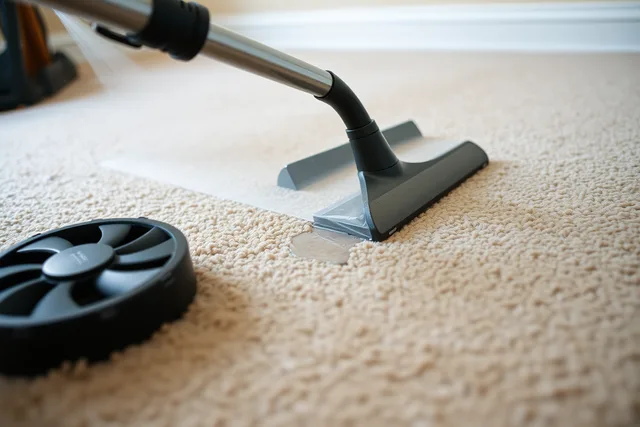
Dry time is not a detail. A carpet still damp at the end of the day is a callback, and a callback is an unpaid return trip. Airflow decides drying more than any product does, so a blower or a fan left on site is part of the job, not an extra.
Two failures cause most callbacks. Browning is the brown discoloration that appears as cellulosic fiber or jute backing dries. Treat it with a browning treatment while the carpet is still damp.
Wicking is soil traveling up the pile with the moisture and reappearing at the surface as it dries. Both are reasons to control how wet the carpet gets.
Pre-spray dwell time is a documented step. The label and manufacturer set the time and dilution. Write the time on the job sheet, start the clock, and never shorten it for a tight schedule.
Reapply protector after cleaning on carpet that had it, following label and manufacturer guidance, and tell the customer it was done.
Truck-mount or portable
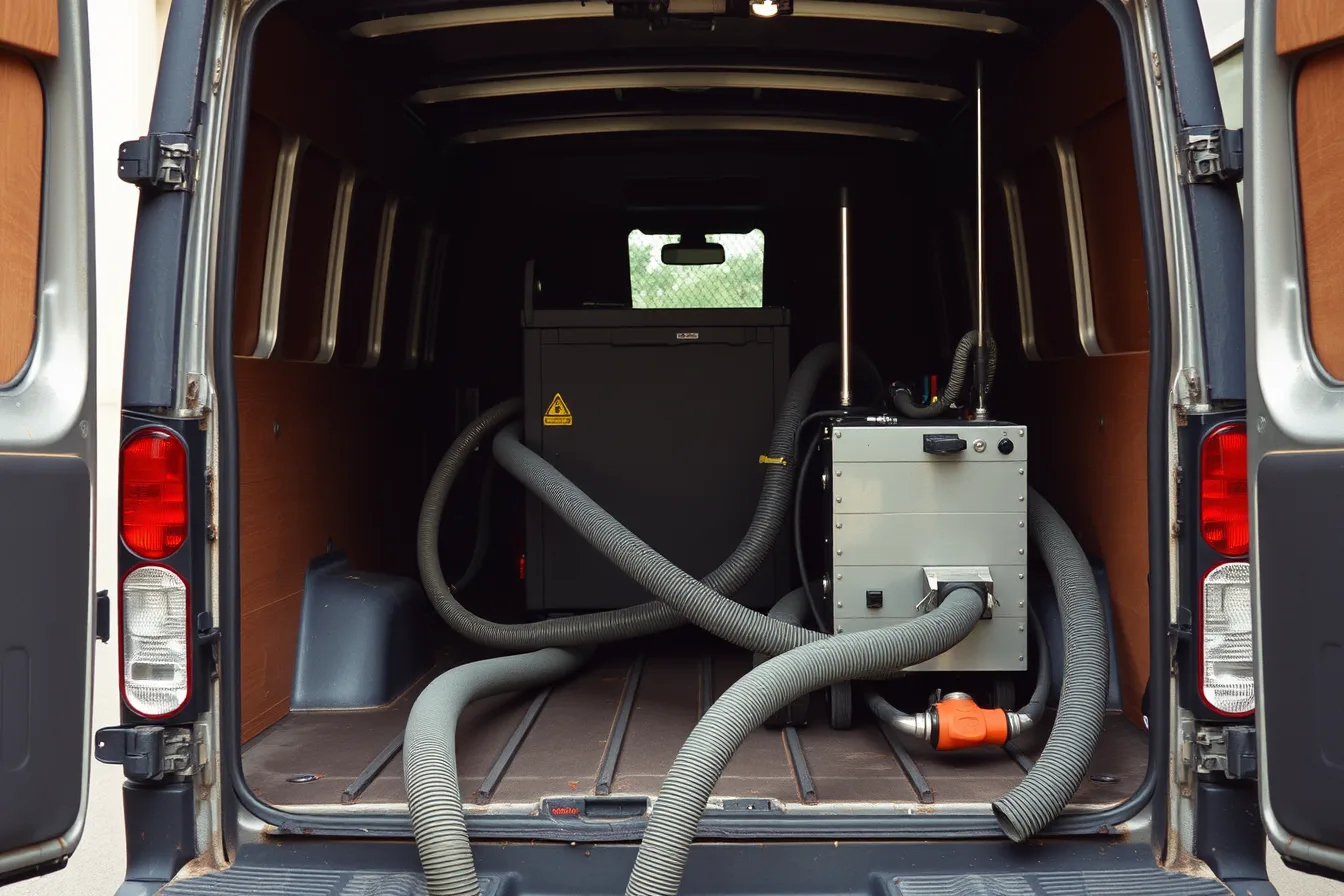
A truck-mount brings heat and vacuum power, cleans faster, and reaches further into a large room. It needs the van close to the door, deciding which properties you can serve at all.
A portable goes up stairs, into a high-rise, and into a building with no parking at the entrance. It is slower, so price that job for its time.
The machine decides job selection before any advert does. A business with a truck-mount and no hose reach past the second floor is not a business that cleans fourth-floor apartments, however well it markets them.
Route density decides which jobs pay
Every job carries a drive there and a drive back. A small ticket at the far edge of the territory can cost more in time than it earns, and the same ticket on a street where three other jobs sit is profitable. Route density is the marketing constraint most owners discover last.
Use your own figures: let R be round-trip drive time in hours, L the hourly labor rate you pay yourself and your technician, and T the ticket.
The job covers its drive when T is greater than R multiplied by L. If not, the job is a loss unless it fills a gap in a route you were already driving.
That is the small-job problem, and it has two honest answers. One is a minimum charge that reflects the drive, quoted before booking so the customer can decide. The other is holding the small job until a day when the route already passes that address. Neither answer is a discount.
Finding the customers
Local search is where most residential work starts. A complete profile with the real business name, service area, hours, phone number and current photos is the entry point, and the categories and services listed have to match the work you actually accept.
Reviews are the second source and most often mishandled, so ask every customer after a completed job, not just those you expect to please.
Offer nothing in exchange and do not filter who gets asked. The FTC guide on soliciting and paying for online reviews explains why selective asking and incentives mislead.
Anything you publish about your own work has to be true and supportable. The FTC advertising FAQs for small business covers claims and endorsements.
Referral partners are the third. Property managers, furniture retailers, restoration firms and moving companies all meet people at the moment a carpet needs cleaning. A referral relationship needs a defined scope, a named contact, and a written note of what is paid or disclosed. Accepting a referral outside your method or your insurance is a loss dressed as revenue.
Common questions
Can I quote a price over the phone?
For a standard room of known fiber, yes, with a stated range and the conditions that change it. For viscose, upholstery, or anything with a cleaning code you have not read, no. Quote after the test, and tell the customer why the test comes first.
What if the customer's furniture has no cleaning code?
The manufacturer or the retailer is the authority. Ask them, and record the answer. Where no answer is available, treat the piece as the most delicate fiber it could be and test before any wet method.
How do I handle a job outside my route?
Price the drive into the quote, or hold the job for a day when the route already passes that address. Both are honest. Booking it at the local rate and absorbing the drive is how a full week produces no profit.
Does cleaning the carpet help with allergies or air quality?
That is not a claim this article makes, and it is not a claim to put in your advertising. Clean the carpet to the fiber and the code, describe what you did, and leave health outcomes to the people qualified to speak about them.