Guides
How a carpet cleaning business hires and trains
Hire and train carpet cleaning technicians on fiber, cleaning codes and drying, with pay evidence, a work preview and sign-off before solo jobs.
What to take away
- A technician is not ready until they can name the fiber and the cleaning code before the wand comes out.
- Pay from your own market: pull the metro estimate, then price the driving, the evenings and the truck you hand over.
- Show the work before you sell it. Nobody should meet their first soiled wool sofa on a live job alone.
- Keep the authorization list current. Anyone on a truck is handling labeled chemicals and someone's property.
- Fix the training gap you can see in your own callbacks before you write another job description.
What the job actually is
Two people can hold the same title and do different work. One runs a truck alone, reads the code tag, tests for bleed and decides the method. The other carries hose, moves furniture and pre-sprays under direction. Write the difference down before you advertise, because it decides who you can hire and what you can pay.
The first skill is identification. Wool, nylon, polyester and olefin behave one way under water. Cotton and viscose behave differently. Viscose is the one that changes the job. Some constructions lose strength when wet, so a wet method may be off the table entirely. A technician who cannot tell viscose from nylon will find out on a customer's stair runner.
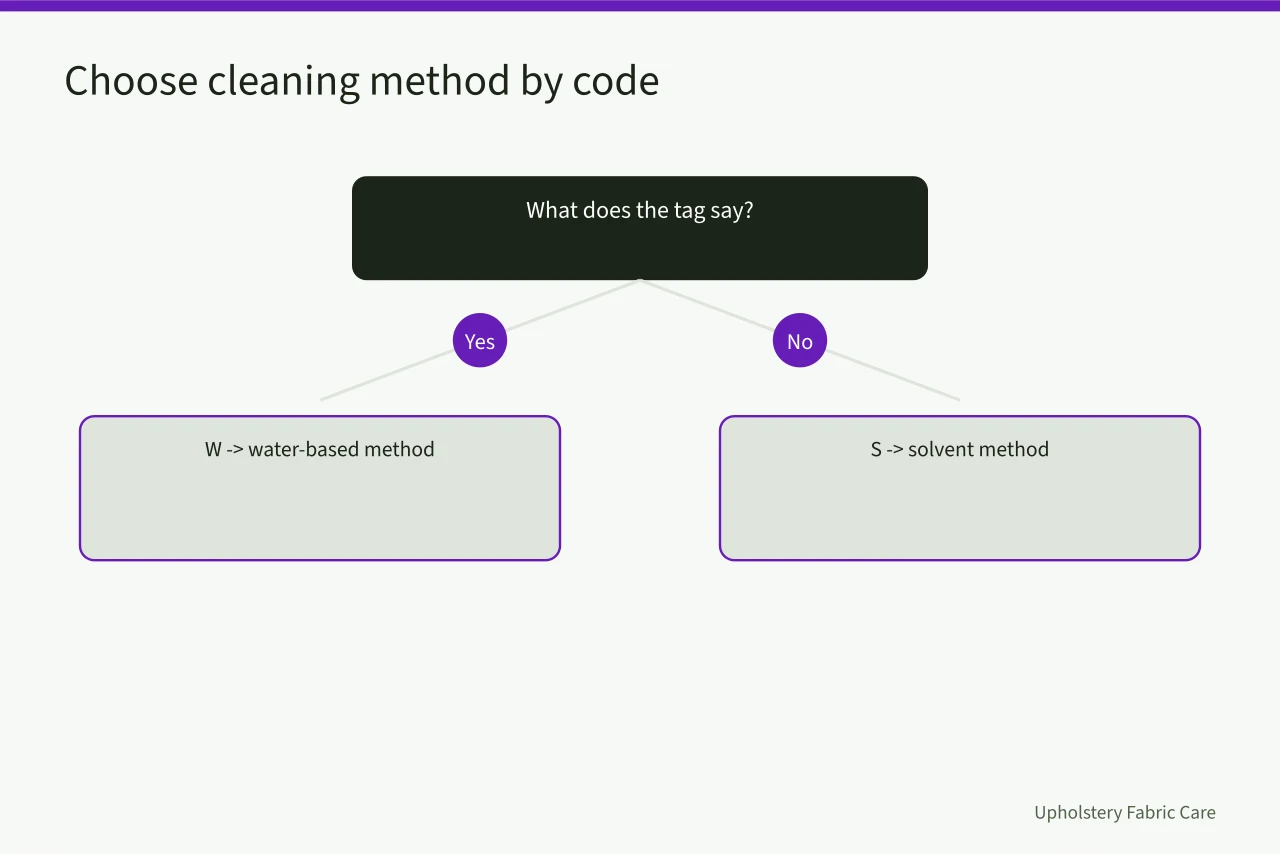
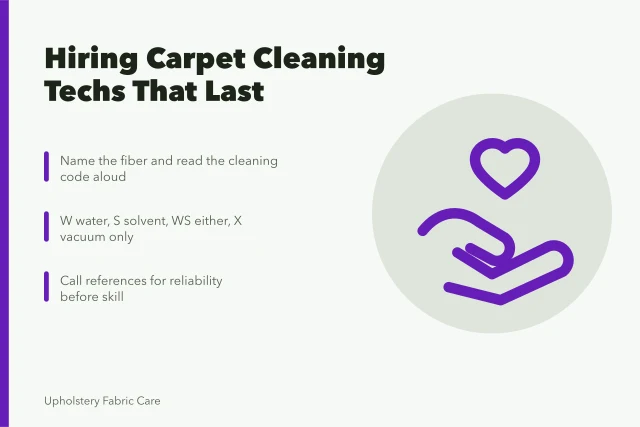
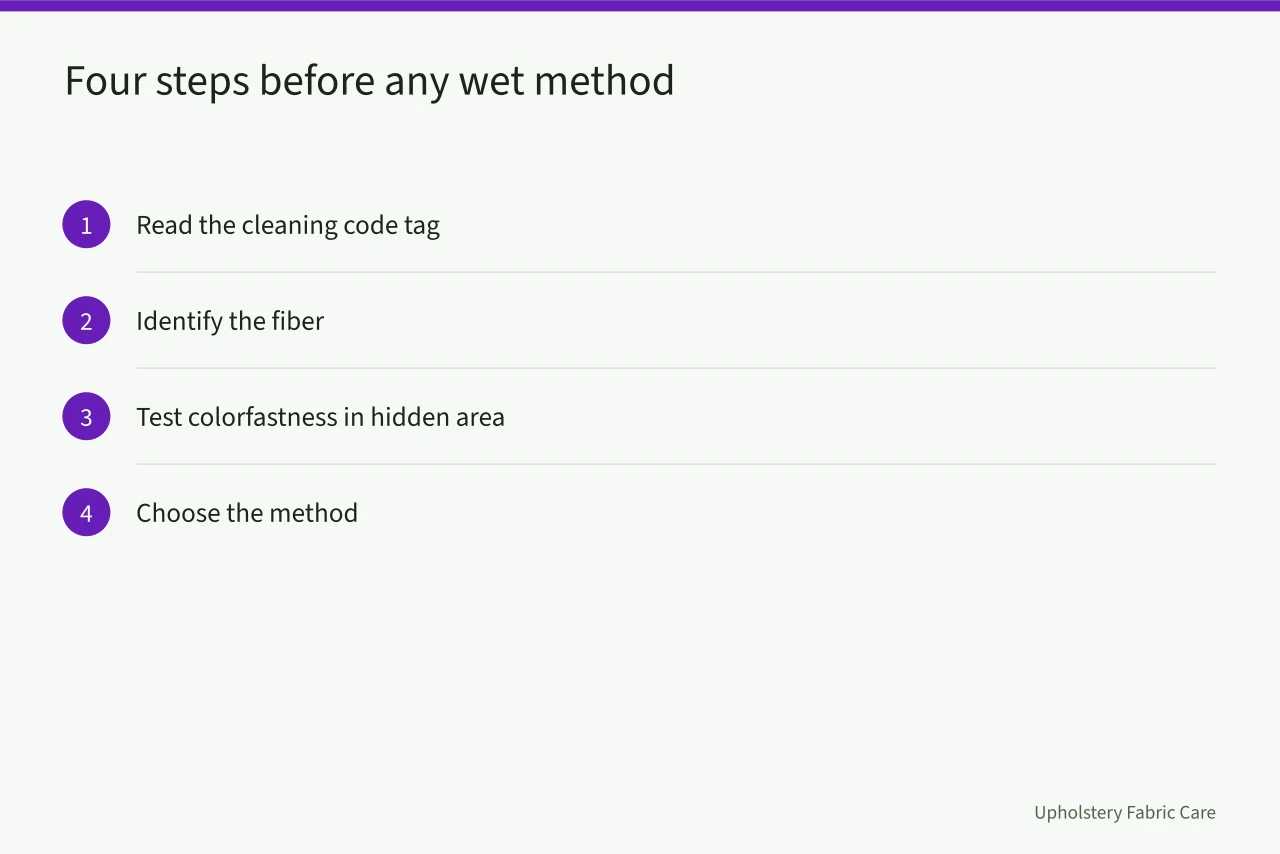
The code is on the furniture tag; without a tag, the fiber and furniture manufacturer decide, not the technician's habit. Teach this sequence: read the tag, identify the fiber, test colorfastness in a hidden area, then choose the method.
Pay from evidence, not from a national average
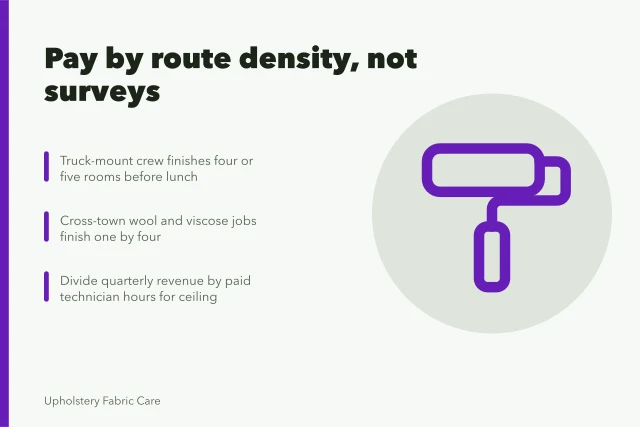
The Bureau of Labor Statistics occupational employment and wage tables publish estimates by occupation, industry and metro area. Start there for your own metro, then adjust for what the estimate cannot see: a commercial driver's licence, evening and weekend work, a truck the technician takes home, and the years it takes to read a fiber by hand.

Write the pay range before the interview and keep it. A range invented mid-conversation tells the applicant the number is negotiable and the job is not defined.
Federal wage, overtime, timekeeping and recordkeeping duties for a new employer are set out in the Department of Labor small business compliance guidance. Classification of a helper as an employee or contractor follows the published tests, not the contract you signed. Your state labor office decides the rest.
The work preview
Give the applicant the bad half of the job in the interview, not in week three: kneeling on concrete for six hours, a customer following you room to room, and a dog that must be shut away.
A sofa comes back wet because airflow was poor. A day ends at nine because a restaurant can only be cleaned after close.
Then let them ride along for a half day. Paid, if they are doing work. They watch a pre-spray dwell, a wand pass and a drying setup, and they decide whether they want it. You watch whether they ask why you tested the cushion before you touched it.
Training that ends in a sign-off
- Read the cleaning code tag aloud and say what it rules out
- Identify the fiber on three samples without help
- Run a colorfastness test and record where it was done
- Mix nothing without the product label open, and record what was used and at what strength
- Set airflow and give the customer a realistic dry time
- Recognize wicking and browning and explain what causes each
- Complete a pre-inspection form with fiber, code, test result and any pre-existing damage
- Handle a complaint without promising an outcome
The chemical side is not optional. The OSHA hazard communication standard requires a written program, labels, safety data sheets and training for everyone who works with the products. Keep the sheets in the truck where they are used.
The label and the manufacturer's instructions govern dilution. Follow them and record what you did.
Hiring itself is regulated. The EEOC small business resource center covers nondiscrimination, accommodations and employment records. Ask every applicant the same job-related questions, score the answers against the same list, and keep the notes. A question about childcare or a back injury is not a question about this job.
Where the callbacks come from
Most returns trace to a decision made in the first ten minutes. Over-wetting a carpet that will not dry in the time the customer has. Skipping the bleed test on a fabric that was going to run. Leaving a protector off a high-traffic walkway. A technician who has been told these things once will still do them.
So the coaching record should point at the job, not the person. Pull the last month of callbacks and read them for the decision that caused each one. Then train that decision, and check it on the next five jobs. If the same fault appears in three technicians, the fault is in the process, not in the hiring.
Authorization needs the same treatment. Keep a current list of who may run a truck alone, who may handle a customer complaint, who may approve a refund, and who may work on a commercial site without a lead present. Tenure is not authorization. Neither is a good week.
Common questions
How long before a new technician works alone?
Long enough to have done the checklist above on real jobs with someone watching, and to have made a mistake that was caught. There is no fixed number of weeks. The sign-off is the gate, and it should be signed by the person who will take the complaint if it goes wrong.
Do I need to pay for a ride-along?
If the person is doing work that benefits the business, treat it as work and pay it. A pure observation visit with no productive output is a different question, and your state labor office is the authority on where that line sits.
What if the applicant has years of experience elsewhere?
Experience shortens the training, not the sign-off. Methods, products and drying equipment differ between companies, and a technician trained on one system will carry habits that may not fit yours. Test the skills you care about rather than trusting the years.
Who decides whether a fabric can be wet cleaned?
The cleaning code and the fiber or furniture manufacturer decide. Where the code is missing, the manufacturer's care instructions and a colorfastness test guide the choice. If neither is available, the honest answer to the customer is that the risk is not worth taking.