Guides
The labour bill in a carpet cleaning business
Pay in carpet cleaning is set by route density, job mix and what a technician can finish alone, not by a national average copied from a survey.
What to take away
- A technician's wage is decided by the work you send them: fiber, method, and how far apart the jobs sit.
- Two vans doing the same hours can cost very different money per clean room, because drive time is paid and unbilled.
- Write the pay model before you advertise, so a slow week still reconciles to the wage floor.
- Use the Bureau of Labor Statistics tables as one input, never as the offer.
- Recheck the model when you change method, territory, or the smallest job you will accept.
The job decides the wage, not the market
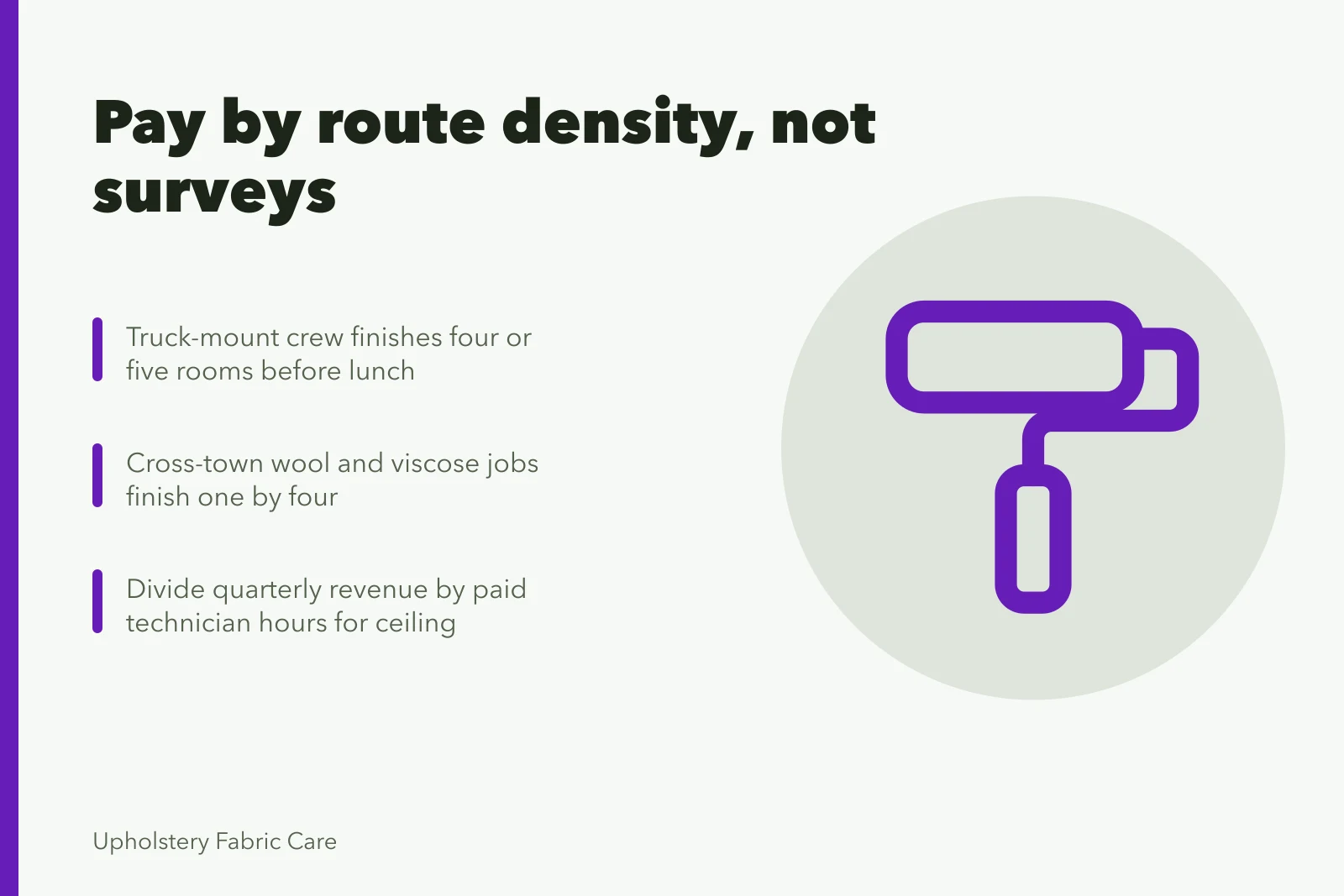
A two-technician crew running a truck-mount on nylon cut pile in one subdivision can finish four or five rooms before lunch. The same crew sent across three towns to clean wool rugs and a viscose-blend sofa may finish one job by four o'clock. Both are carpet cleaners. Only one is cheap to employ.
The first input into pay is not the survey but the work you actually sell. Write down the mix: what share of your week is residential extraction, what share is upholstery, what share is rug work or commercial.
A business that has drifted into viscose and wool asks for slower hands, more test patches, and a longer dwell before the wand moves. That time is real, and it lands on the wage line.
Where the money leaks
Three costs sit under the hourly rate and rarely appear in a pay comparison.
| Cost | What drives it | What it changes about pay |
|---|---|---|
| Drive time | Route density, territory size | Paid hours with no invoice behind them |
| Callbacks | Browning, wicking, over-wetting | Unbilled return trips, often the same technician |
| Small jobs | Minimum charge and setup | A one-room job can cost more in setup than it earns |
Route density is the one owners underrate. Two technicians who each drive forty minutes between jobs lose more than an hour of billable time a day, and that hour is paid either way. The fix is scheduling, not a lower wage.
Setting the number
Work from your own records, not a benchmark. Take last quarter's revenue. Subtract product, fuel, insurance, and equipment. Divide by the paid technician hours that produced it. That gives you the ceiling a wage has to fit under. Then check it against current local evidence.
The Bureau of Labor Statistics occupational wage tables publish estimates by occupation, industry, state, and metro area. Use the entry for your area as a sanity check on your own arithmetic, not as the offer. A national average describes a national labor market; your applicants live within driving distance of your van.
Two duties sit alongside the rate. Federal wage, overtime, timekeeping, and recordkeeping rules for a new employer are set out in the Department of Labor small business compliance guidance. Hiring and record practices are covered in the EEOC small business resource center. Your state decides the rest, including the wage floor and how overtime is calculated.
Pay shapes who you can hire
A rate built for fast production work will not hold a technician you want on wool and viscose. Those jobs need someone who tests for colorfastness before wetting, reads the cleaning code on the tag, and knows when to stop and call the customer. That is a different skill set, and it is priced differently.
Decide which business you are running before you write the ad. If you accept whatever comes in, you need generalists who can follow a code and refuse a job. If you specialize, you need fewer, better-paid people and a schedule that keeps their vans full. The hiring guide covers what to check before either hire is made.
Common questions
Should pay differ between a technician and a crew lead?
Usually yes, and the difference should be written down before anyone is promoted. A lead carries the callback, the customer conversation, and the decision to stop work on a fiber they do not trust. That responsibility is the reason for the gap, not seniority.
How do I pay for drive time between jobs?
However your state requires it, and assume it is paid. Build the cost into your pricing and your route planning rather than trying to shave it off the wage. A schedule that keeps jobs close together is worth more than a rate that ignores the road.
What if a technician is slow on viscose and wool?
Slow is often correct on those fibers, because the work includes testing and a longer dwell. Pay for the outcome and the judgment, not the room count. If the pace is genuinely a training gap, fix it with supervised jobs before you change the rate.