Guides
The compliance side of a carpet cleaning business
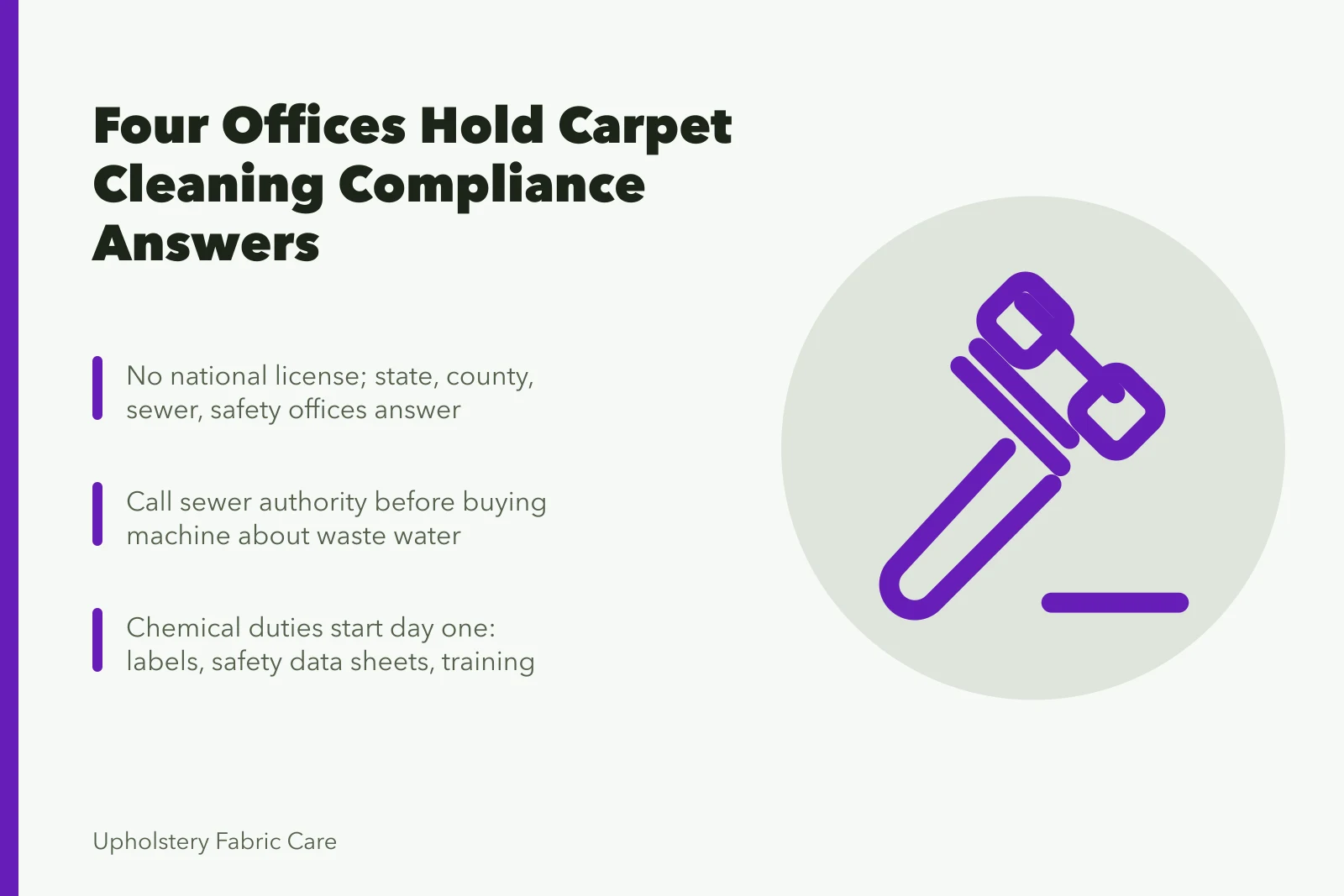
Carpet cleaning licensing is answered by four offices, not one. Here is which office holds which answer, and what to write down when they give it.
What to take away
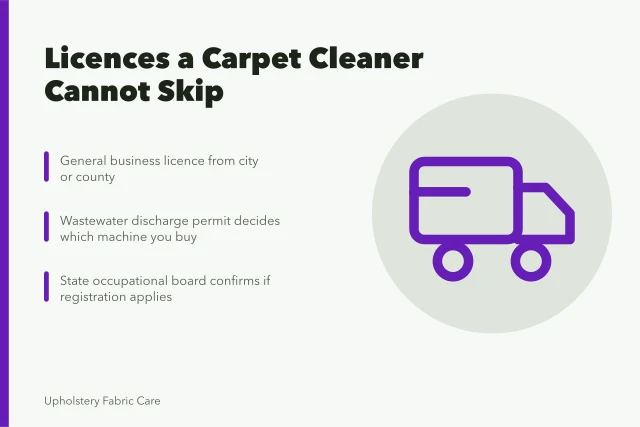
- There is no national carpet cleaning license. There is a stack of local answers, and the work is finding out which office holds each one.
- Waste water disposal is the question most new owners never ask, and the one most likely to stop a truck.
- Chemical information duties attach the day you put a bottle in a vehicle, not the day you hire someone.
- Every compliance answer should end as a note with a date, an office and a name. An undated answer expires without telling you.
Carpet cleaning is not licensed the way plumbing or electrical work is in most places. That is why owners assume there is nothing to do, and why the first surprise arrives from a direction nobody was watching.
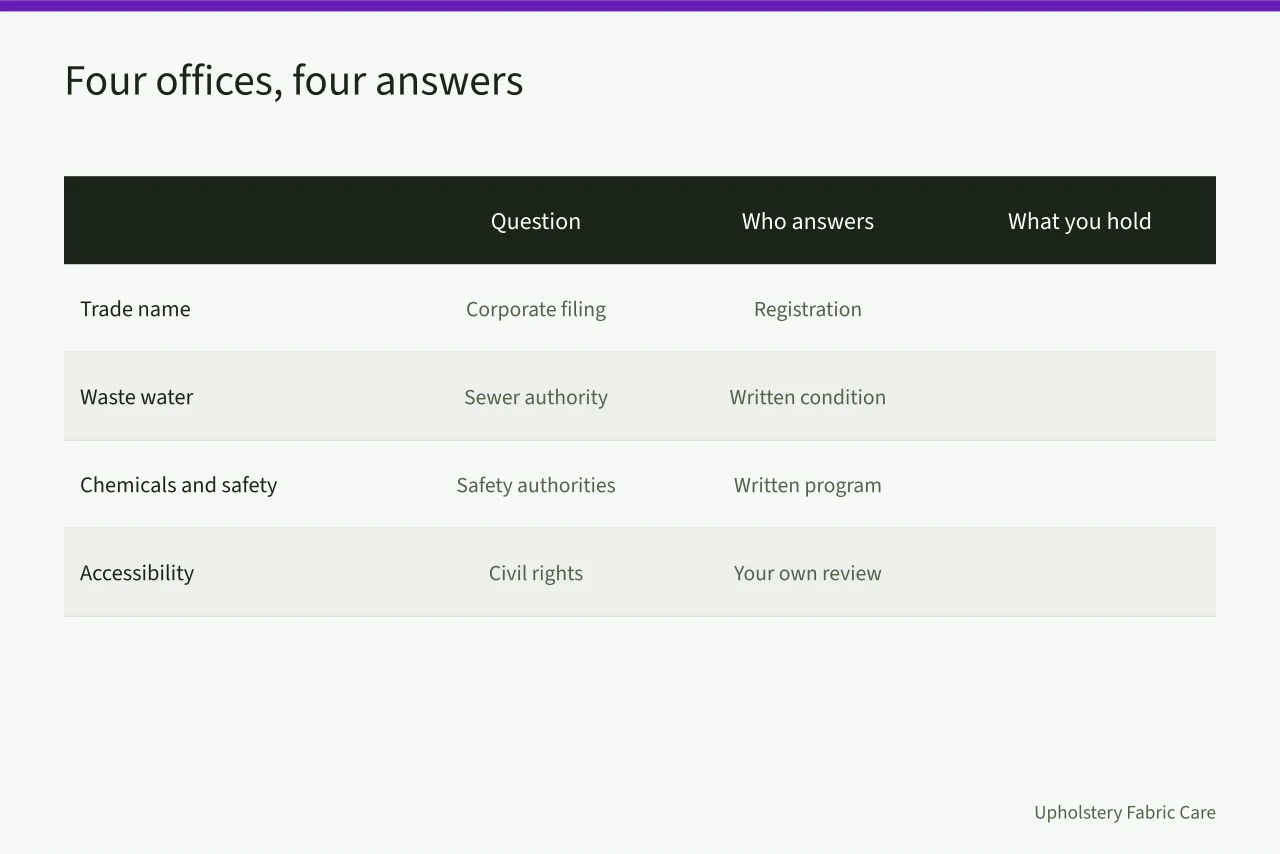
The four offices that hold the answers
| Question | Who answers it | What you should end up holding |
|---|---|---|
| May I trade under this name and structure | State corporate filing office, plus your county or city | A registration certificate and a tax account number |
| May I discharge waste water here, and where | Your sewer authority or municipal utility | A written condition, or a dated note of the call |
| What do I owe workers on chemicals and safety | Federal and state occupational safety authorities | A written program, labels, safety data sheets, training records |
| Must my premises and my selling be accessible | Federal and state civil rights authorities | Your own review against the published guidance |
Nobody at any of those offices will tell you about the other three. Work the row you are on, then start the next one.
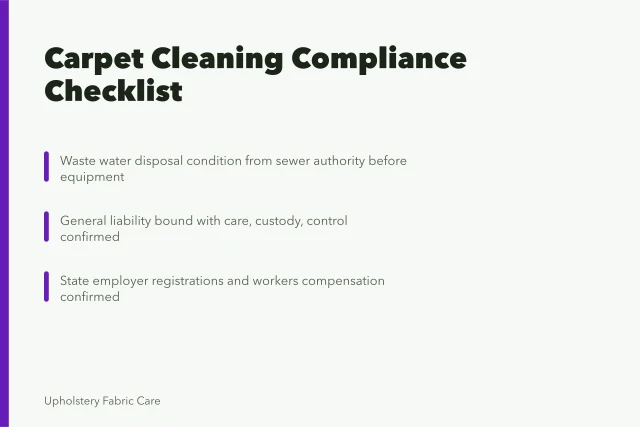
Waste water has a local answer
Extraction produces waste water carrying soil and cleaning product. Where it may go is decided by the authority that owns the sewer, and the answer differs between neighboring towns.
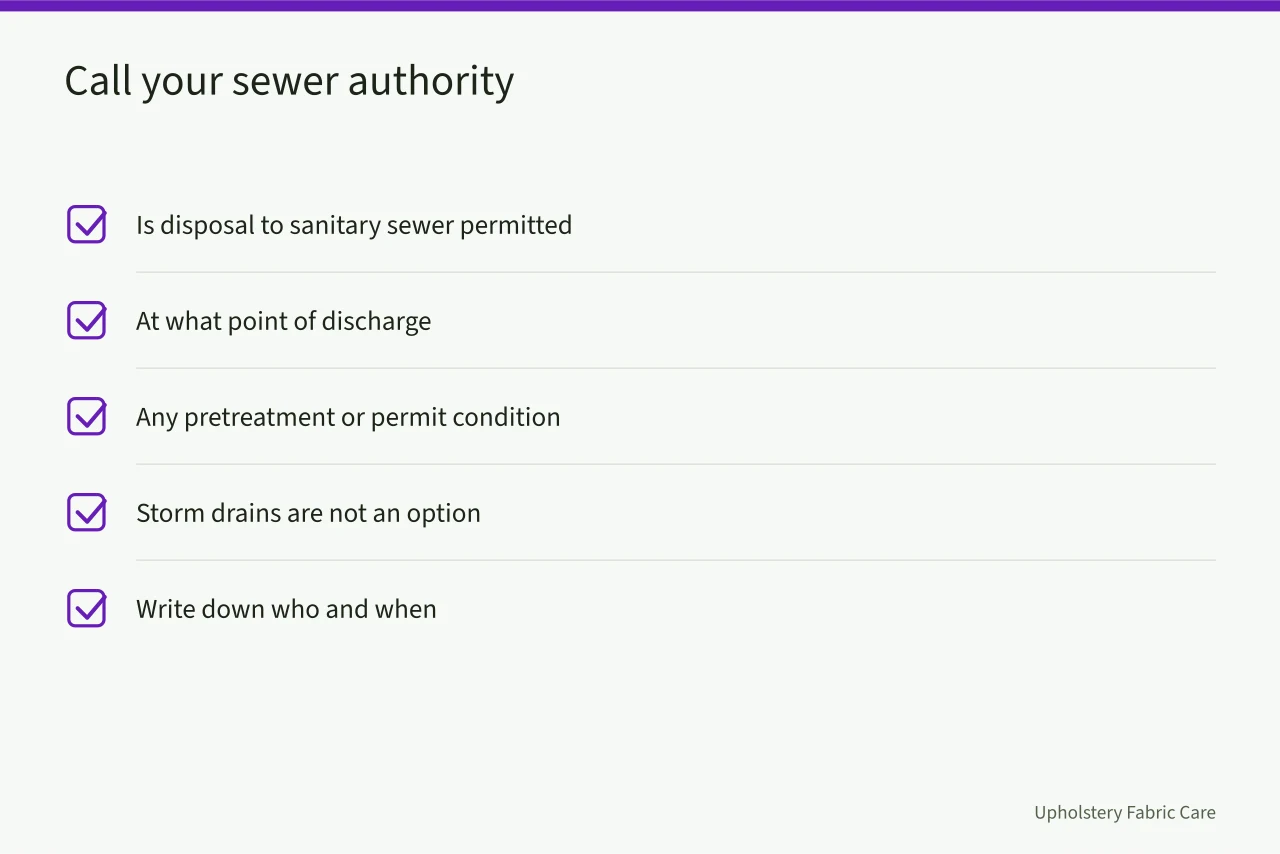
Call before you buy the machine. Ask three things: whether disposal to sanitary sewer is permitted for your work, at what point of discharge, and whether any pretreatment or permit condition applies. The federal permitting framework many local rules sit under is described in the EPA discharge permit basics, but the condition that binds you comes from your own utility.
Storm drains are not an option anywhere. Say that to technicians in writing, because a tired crew at the end of a long day will use the nearest grate if nobody has told them otherwise.
Write down who you spoke to and when. Rules change, staff change, and an undated note is worth little two years later.
Chemical information duties start on day one
The moment you carry cleaning products in a vehicle and someone other than you may handle them, employer duties attach. Labels have to stay legible, safety data sheets have to be reachable, and workers have to be trained on what they handle. The scope of that sits in the OSHA hazard communication standard.
None of it tells you how to mix anything. Preparation, dilution and use come from the product label and the manufacturer's instructions, and those are the only authority on the point. Your written procedure should point at the label rather than repeat it, because a label can change between batches.
The physical hazards of the work itself are described in the OSHA cleaning industry guidance. State plans may require more than the federal floor, so confirm which authority covers your state.
What changes when you hire
An employer picks up wage, hour, classification and recordkeeping obligations a sole operator does not have. Federal guidance for a new small employer is collected in the Department of Labor small business compliance guidance, and your state labor department sets the rest.
Two choices in this trade often go wrong. One is treating a technician as a contractor because the work is scheduled by job. Classification follows the agencies' published tests, not the label on an agreement.
The other is a percentage or piece-rate structure that does not reconcile to the wage floor in a slow week. Confirm both before the first paycheck.
Customer-facing obligations
Accessibility applies to how you sell, not only to where you work. If the public visits a premises you operate, the federal starting point is the ADA guide for small businesses, and your state may add to it.
What you may claim about a cleaning result is a compliance question too. Describe the work performed. Outcome claims about health, air or the elimination of anything must be substantiated before they are made, and that constraint shapes the whole menu, which is why the services and packages guide treats claim language as part of service design.
The compliance file
Keep one folder, on paper or on a drive, with a page per question. Each page holds the office, the date, the person, the answer and the review date.
That file does three jobs. It answers a commercial customer's vendor questionnaire without a scramble. It shows a technician why a rule exists. And it tells you which answers are old enough to re-ask, which is the part everyone forgets.
A disposal condition can rule out a machine, so this file sits above the purchase rather than beside it, which the equipment and setup guide treats as a real constraint. The wider first-year sequence is in the startup and market guide.
Common questions
Do I need a specific carpet cleaning license?
In most places, no, but only your state and municipality can say. Some states register cleaning contractors. Some cities require a home occupation permit for a business run from a residence. Some commercial buildings impose vendor requirements that work like a license. Ask all three.
Does a certification substitute for a license?
No. A trade certification tells a customer something about training. It does not satisfy a registration, a permit or a tax obligation, and the body issuing it has authority over none of them.
What happens if a rule changes after I have complied?
You find out at the review date you set, or you find out from an inspector. Setting a review date is the cheaper of the two. Annual suits most lines, sooner where you were told a rule was under review.
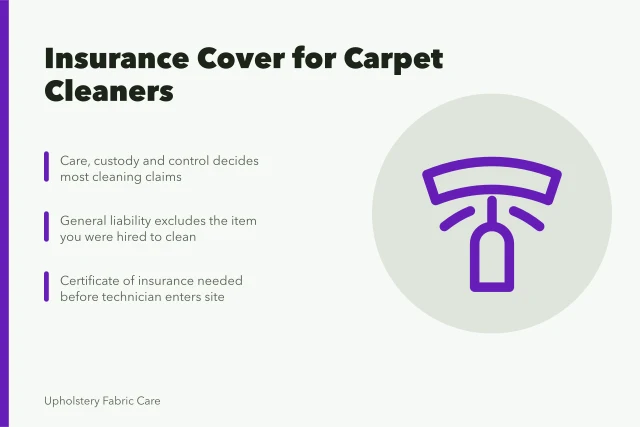
Who decides whether my insurance is adequate?
Your insurer describes what is covered and your customer's contract describes what they require. Neither is a legal opinion. Where a commercial contract sets limits or endorsements, take the contract to your broker rather than assuming a standard policy meets it.