Guides
Carpet cleaning sign-offs: the checks to close before your first job
A carpet cleaning compliance checklist to work through before job one, with the finish condition that shows when each line is genuinely closed.
What to take away
- Tick a line only when the finish condition next to it is true. A phone call you meant to make is not a tick.
- Four lines here have to close before a machine is bought, because their answers can change which machine is usable.
- Nothing on this list is a national requirement. Every line names the office that decides it for you.
- Re-run the whole list annually, and after any change of vehicle, method, territory or headcount.
Before you buy equipment
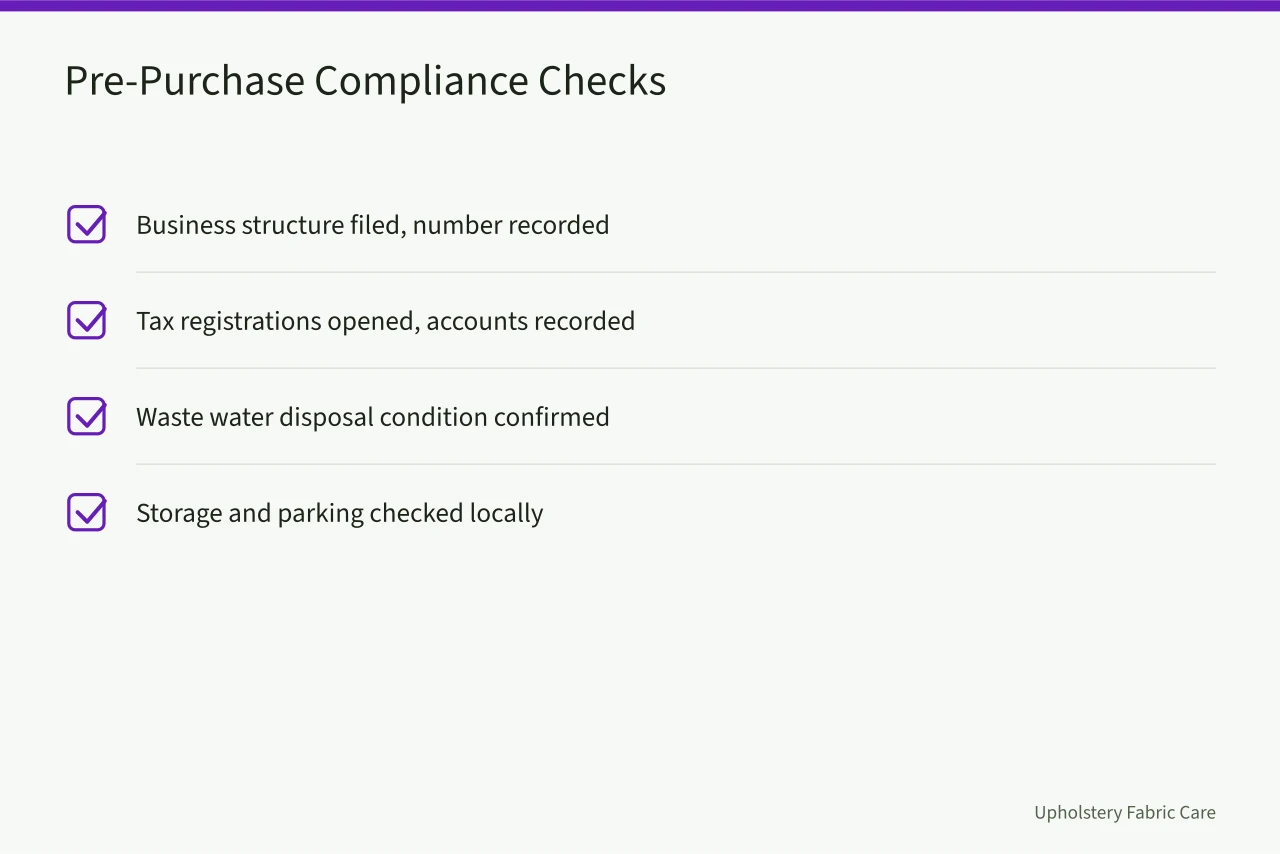
- Business structure filed with the state, and the filing number recorded
- Tax registrations opened, state and federal, with account numbers recorded
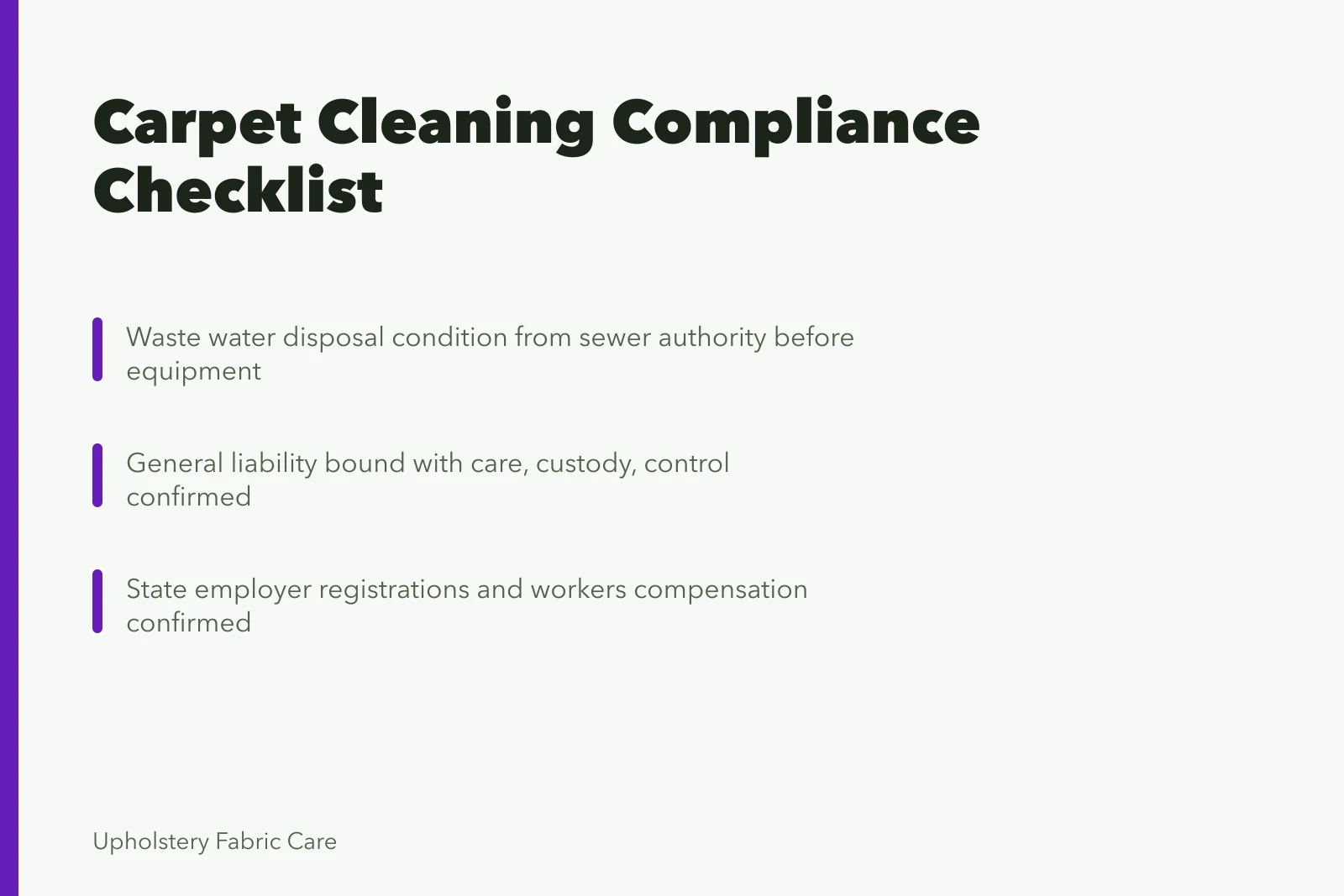
- Waste water disposal answered by your sewer authority, with the condition or a dated note in the file
- Storage and parking checked against local rules where the vehicle sits overnight
The disposal line is the one that ends purchases. A condition that rules out on-site discharge changes what a truck-mounted system can be used for, which the equipment and setup guide treats as a job-selection constraint rather than a formality.
Before the first paid job
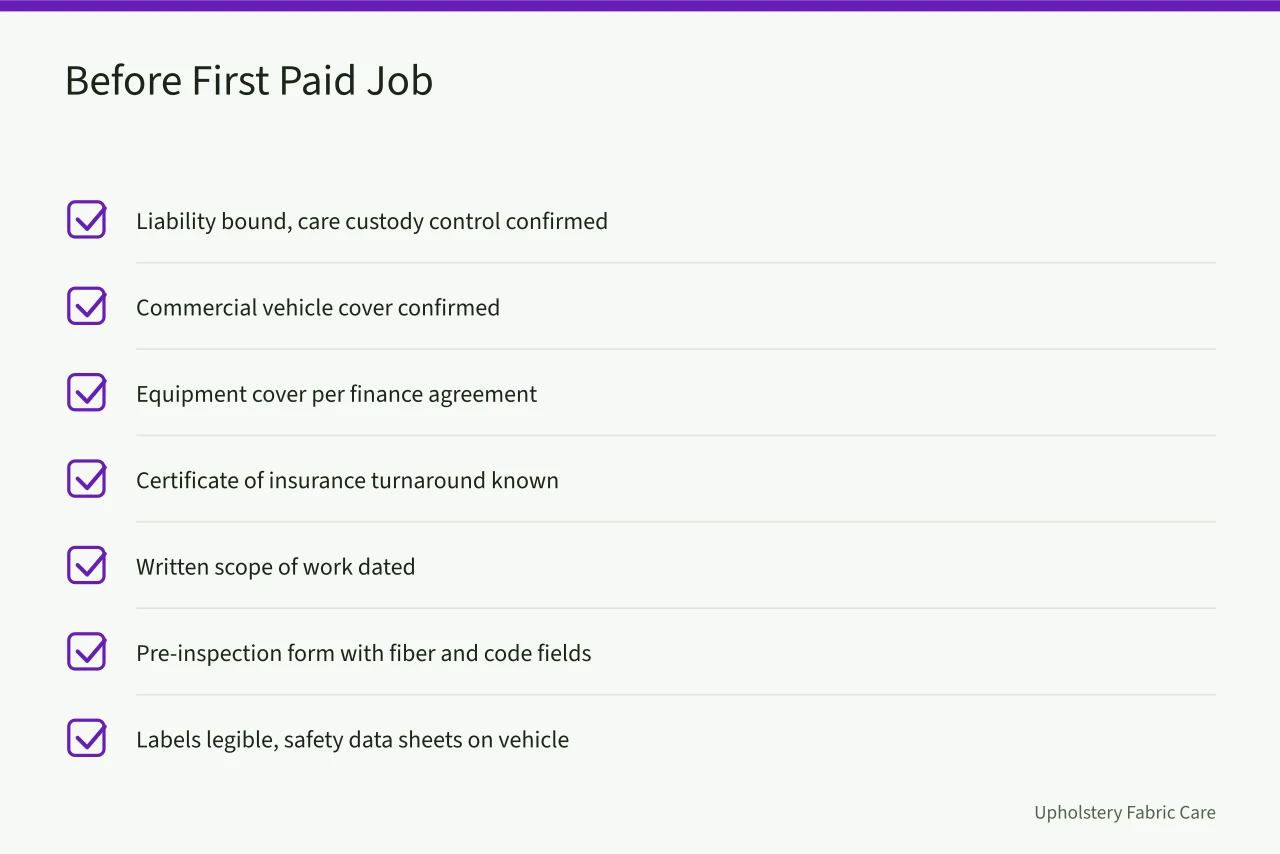
- General liability bound, with the care, custody and control position confirmed in writing
- Commercial vehicle cover confirmed for business use
- Equipment cover in place where a finance agreement requires it
- Certificate of insurance obtainable, with the issuing turnaround known
- Written scope of accepted, referred and refused work, dated
- Pre-inspection form in use, with fields for fiber, cleaning code and test result
- Product labels legible and safety data sheets accessible on the vehicle
- Personal protective equipment on board as the labels and your safety program require
- Advertising reviewed so no claim is made that you cannot substantiate
What each of those insurance lines actually responds to is set out in the insurance costs and coverage piece.
Before the first employee
- State employer registrations opened and notices posted
- Classification of the role confirmed against the published tests, not assumed from the contract
- Pay structure checked so that a slow week still reconciles to the wage floor
- Written hazard communication program in place, with training recorded per person
- Workers compensation position confirmed with your state
Federal guidance for a new small employer sits in the Department of Labor small business compliance guidance, and the chemical training duty is defined in the OSHA hazard communication standard.
Before a commercial contract
- Vendor agreement read for insurance limits and endorsements, and taken to your broker
- Access, badge and escort conditions understood and staffable
- Invoicing terms understood, including how long payment actually takes
- Site-specific safety requirements collected before the first visit
The annual re-run
Set a date. On it, re-ask any answer more than a year old, confirm insurance still matches the contracts you now hold, and re-read the written scope against the work you have actually been accepting.
Scope drift is the most common finding. A business that quietly started accepting rugs, or working above ground level, or cleaning after hours, is carrying exposures its file does not describe.
| Trigger | What to re-check the same week |
|---|---|
| New machine or method | Disposal condition, equipment cover, technician training records |
| New territory | Local business licence, disposal point, drive-time assumptions |
| First employee | Employer registrations, classification, training records |
| New service accepted | Written scope, insurance description, what your advertising now claims |
Where the answers come from
An office, not an article, decides every line above. The licensing and compliance guide maps which office owns which question. The what licenses a carpet cleaning business needs piece gives the call sequence that produces the answers.
The OSHA cleaning industry guidance describes the physical hazards your safety program must address.
Common questions
Can I open while a registration is still pending?
That is a question for the office that has it pending, and the answer differs by registration. Ask, and write down what you are told. Assuming yes is how a first invoice becomes a problem.
How much of this applies to a one-person operation?
Everything except the employee section, and the chemical duties partially: the training obligation attaches to employees, but labeling and safety data sheets are how you use the products correctly either way.
What if my municipality gives a different answer than my county?
Both can be right, because they regulate different things. Where they genuinely conflict on the same point, get both answers in writing and ask each office about the other.
Does this list ever finish?
The opening pass finishes. The annual pass does not, and that is the point. A compliance file with no review dates in it describes a business that existed a year ago.