Guides
The margin math behind a carpet cleaning business for new owners
Carpet cleaning margins are set before the wand starts, by route density, drying time and job selection rather than any percentage copied from another company.
What to take away
- Margin is decided before the wand starts: which jobs you accept, how close together they sit, and how many you finish in a day.
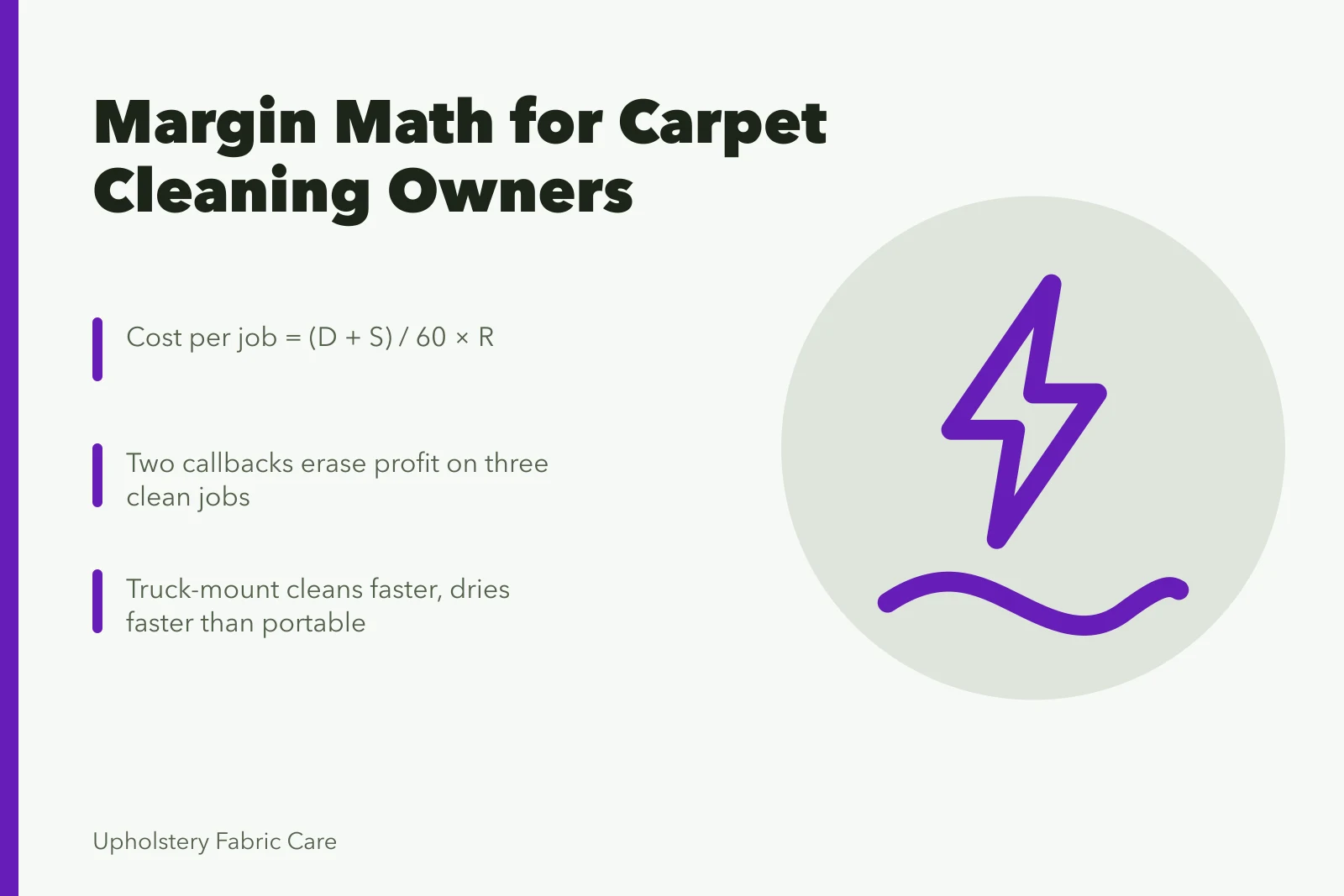
- A truck-mount cleans faster and dries faster than a portable, so it changes which jobs are worth quoting.
- Two callbacks from wicking or browning erase the profit on three clean jobs at the same price.
- Your minimum charge is a route decision, not a pricing opinion. It sets the smallest job worth the drive.
- Track contribution per van-hour, not revenue per invoice. A full schedule of small jobs can lose money.
Route density decides more than price
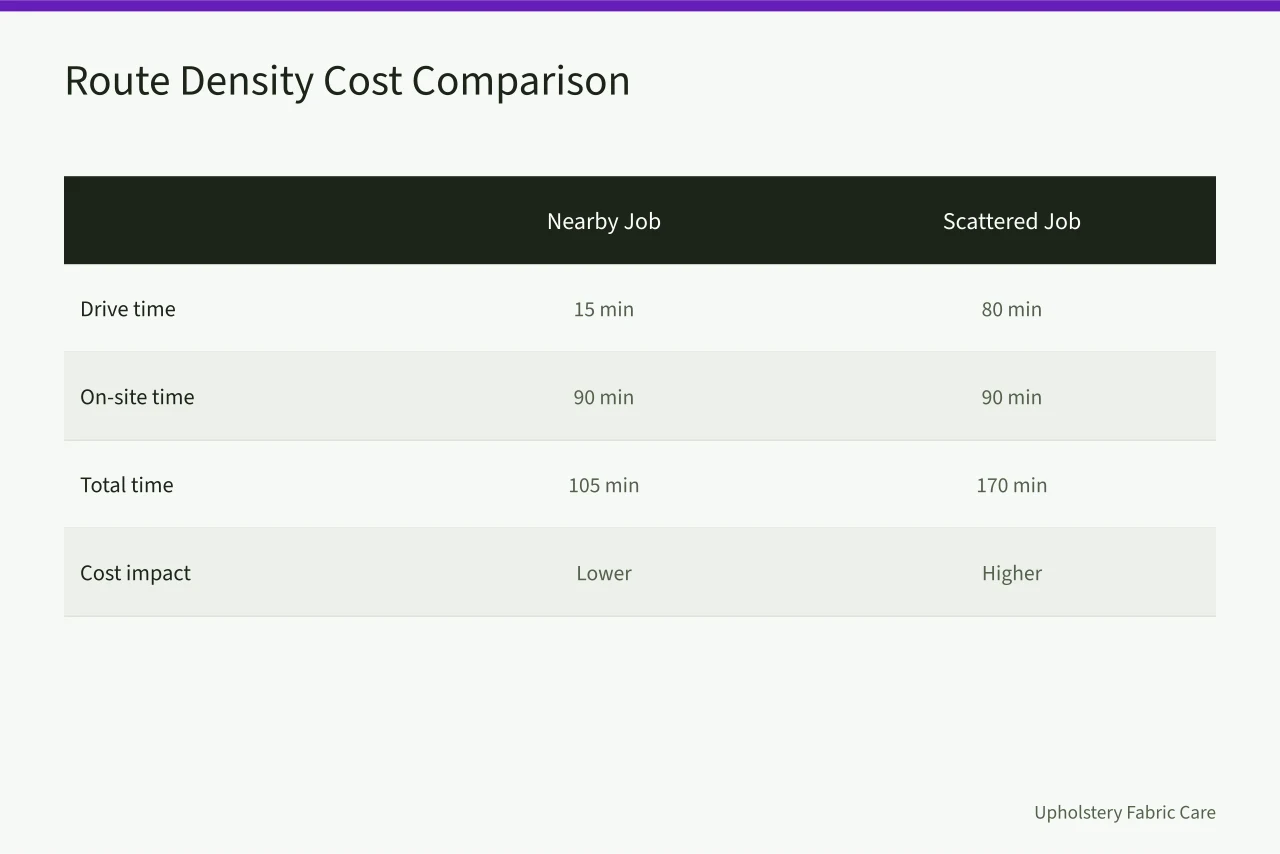
Two jobs at the same price are not the same job. One sits eight minutes from the last stop; the other is a forty-minute drive each way. Drive time is unpaid, and it is the largest single variable a new owner controls.
Work the math with your own numbers. Let D be round-trip drive minutes, S be on-site minutes, and R be your hourly operating cost: fuel, insurance, machine wear, and your time. Cost per job is (D + S) / 60 x R.
A job with 90 minutes on site and 15 minutes driving costs far less than the same job behind 80 minutes of driving.
That is why a minimum charge exists. Set it at the point where a job stops paying for the drive, then hold it. Discounting the minimum to win a small job teaches the neighborhood your minimum is negotiable.
Cluster the calendar instead. Three jobs on one street beat five scattered across the county at identical prices. The carpet cleaning business plan is where route assumptions belong, because they drive the van count and the hiring date.
Fiber and code change the time on site
Pre-inspection decides the method, and the method decides the clock. Identify the fiber, read the cleaning code, and test for colorfastness before any wet pass.
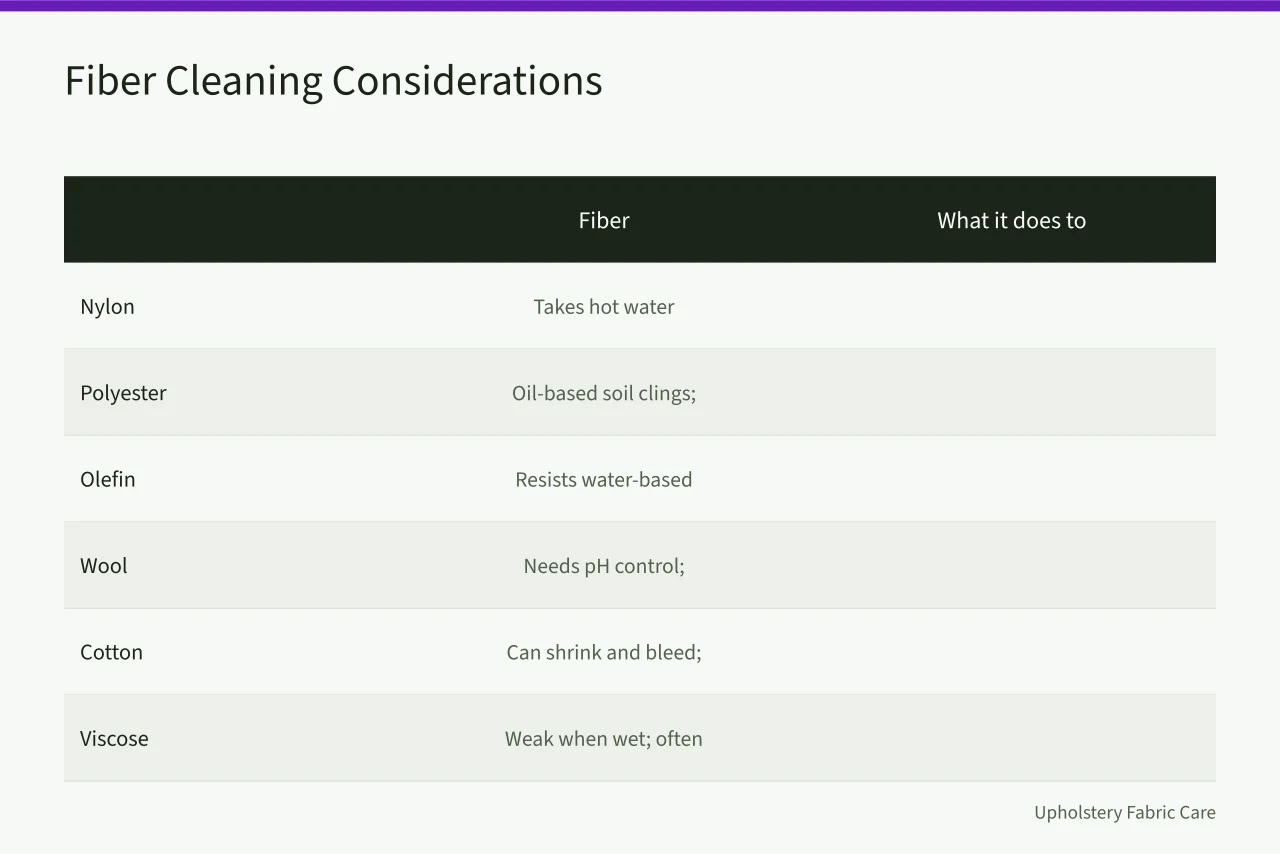
Codes sit on the manufacturer tag. W means water-based products only, S means solvent only, WS takes either, X means vacuum only and no liquid at all. A viscose or X-coded piece is a different quote, a different method, or a polite no.
Pre-spray dwell time is a documented step, not a habit. The product label sets it. Write the start and finish time on the job sheet so a technician can repeat the result.
Wet methods, dry methods, and the callback
Hot water extraction leaves the most water in the backing. Low-moisture encapsulation and dry compound leave far less and shorten drying, but they lift less deeply set soil.
Over-wetting is the expensive mistake. It slows drying, and slow drying produces wicking, where soil migrates back up the fiber as the carpet dries, and browning, where jute backing dye travels to the face. Both are callbacks, and callbacks are unpaid return trips with a machine running.
Air movers and open windows cut drying time more than any additive. Tell the customer the expected drying window and what they must do: leave airflow running, keep foot traffic off until dry.
Protector reapplication is a separate line on the estimate. It is optional, it is priced, and the customer decides before the work starts.
Truck-mount or portable
A truck-mount supplies heat and vacuum from the vehicle. It cleans faster, dries faster and handles commercial square footage. It also needs parking near the door and a water source or tank.
A portable goes where the van cannot: upper floors, tight parking, high-rise apartments. It is slower and leaves more moisture. A business running one portable should quote smaller jobs and expect fewer per day.
The choice is a job-selection constraint, not a prestige purchase. Match the machine to the work you intend to accept.
What the records have to show
Keep the numbers that let you reprice. Log drive time, on-site time, method, drying result and any callback per job. The Internal Revenue Service recordkeeping guidance describes what supports income and expense claims; the same file answers your costing questions.
Wage assumptions are yours to check locally. The Bureau of Labor Statistics wage tables publish estimates by occupation and metro area.
Any advertising claim about your results has to be truthful and supported. The Federal Trade Commission advertising guide sets out what that means for a small business.
Worked example: the small-job trap
A van runs eight jobs in a day at a low flat rate. Each job is 45 minutes on site and 25 minutes of driving. That is 560 minutes, or 9.3 hours, before setup and breaks. The day is full and the margin is thin.
Move four of those jobs to one street: 45 minutes on site, 8 minutes of driving. The same eight jobs now take 424 minutes. The van finishes before 4pm, or takes two more jobs. Nothing about the price changed. Only the map did.
Common questions
Why not just copy a competitor's margin?
Because their margin reflects their routes, their machine and their mix of work. Yours will differ. Build the number from your own drive times and job durations.
How do I price the first job at a new address?
Quote it as a one-off with the drive built in, then decide whether that area can support a route. A single distant job is a test, not a territory.
When should I refuse a job?
When the fiber, the code or the condition puts the outcome beyond what you can promise. Viscose, X-coded pieces and heavily worn carpet are the usual candidates. A refusal costs nothing; a callback costs a day.
Does a higher price fix a thin margin?
Only if the work stays. Raising price on a route that is already too scattered usually loses the jobs that were paying for the drive. Fix density first, then price. The pricing method covers how to build the number.