Guides
How Vancouver damp and mould change upholstery cleaning methods
Vancouver damp and salt air keep upholstery wet longer, so mildew checks, airflow and localized drying checks decide the cleaning method and products.
What to take away
- Vancouver suites hold moisture in the air, so foam and batting stay wet long after the surface feels dry.
- Smell, sight, touch and a moisture meter, in that order, find mildew before you add any liquid.
- Moving air dries a piece faster than heat, and a return visit with a meter proves the core is dry.
- Low-moisture methods suit damp jobs; every litre you add has to leave through air that is already wet.
- Strata buildings set noise hours, elevator bookings and hose rules, so confirm them before you set up.
Why coastal air changes the job
Vancouver rain runs for most of the year. Indoor humidity stays high, and salt air drifts in from the Strait of Georgia and Burrard Inlet. Upholstery takes on that moisture from the air, not only from spills.
Salt is the part inland cleaners miss. It settles on the weave, holds a little moisture against the fibre and traps dust. A sofa beside a balcony door can feel cool and clammy while looking perfectly clean.
The larger driver is indoor humidity. Cooking, showers and laundry push moisture into a closed suite, and closed windows in the rainy season keep it there. Foam and batting behave like a sponge, and once the core holds water, surface cleaning does nothing for it.
Strata buildings concentrate the problem. Shared walls, parkades and ventilation, plus limited cross-breeze, leave lower-floor suites near a parkade or shared laundry damper than a house on the same street.
Furniture placement decides where it starts. Pieces against exterior walls, under windows or over unheated parkade slabs sit in the coldest spot in the room, and condensation forms there first.
Rental turnover keeps those suites full. The 2025 Rental Market Report | CMHC tracks pressure in major centres, and in Vancouver it means a cleaner often meets damp furniture at a change of tenant.
Reading the cleaning code before anything wet
Every piece carries a code, usually on a tag under the seat cushion or on the deck: W for water-based cleaning, S for solvent only, WS for either, X for vacuum only. The code overrides what the fibre would normally allow.
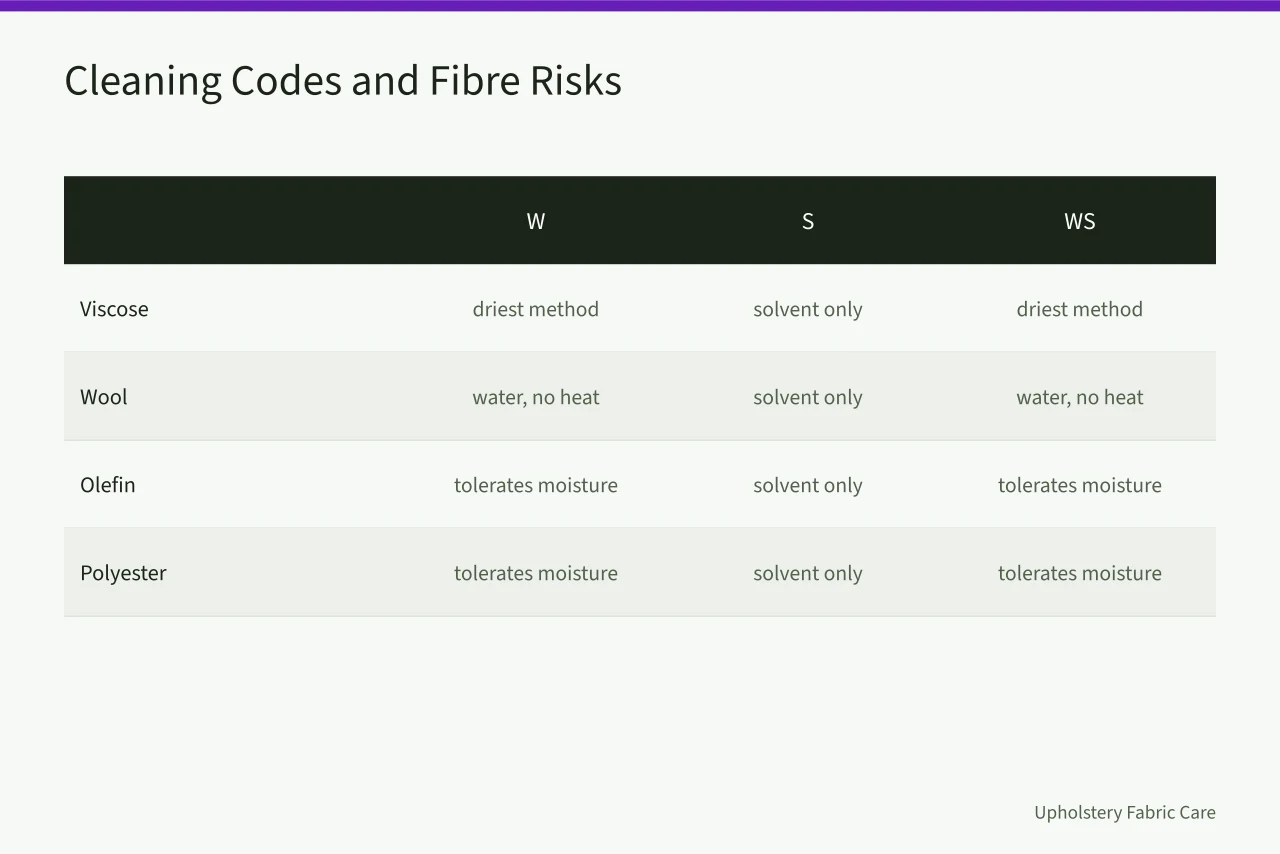
Viscose is the fibre that changes the job. It loses strength when wet, so a W code on a viscose blend still calls for the driest method that will lift the soil. Wool takes water but shifts and felts under heat and agitation. Olefin and polyester tolerate moisture better but hold odour.
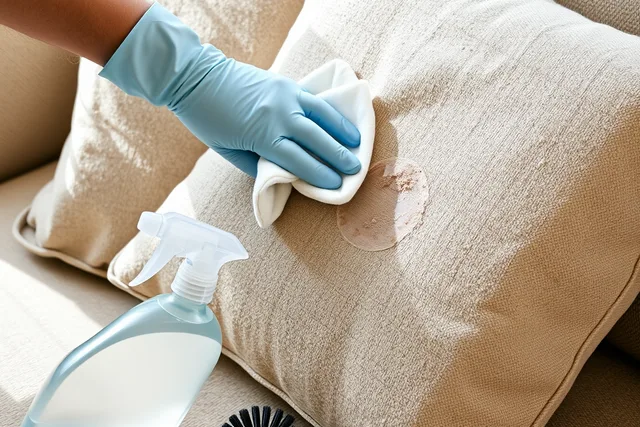
Test colourfastness before any wet method. Find a hidden area, apply your chosen product, blot with a white towel and watch for colour transfer. Bleed shows up on the towel before it shows up on the client's sofa.
Where the code is missing or the tag is unreadable, the fibre test and the manufacturer decide. Fiber-care guidance comes from the carpet or furniture manufacturer and the cleaning code, and neither is something you guess at on site.
Finding mildew before it reaches the foam
Run the same sequence on every job so nothing gets missed: smell, then sight, then touch, then a meter reading.
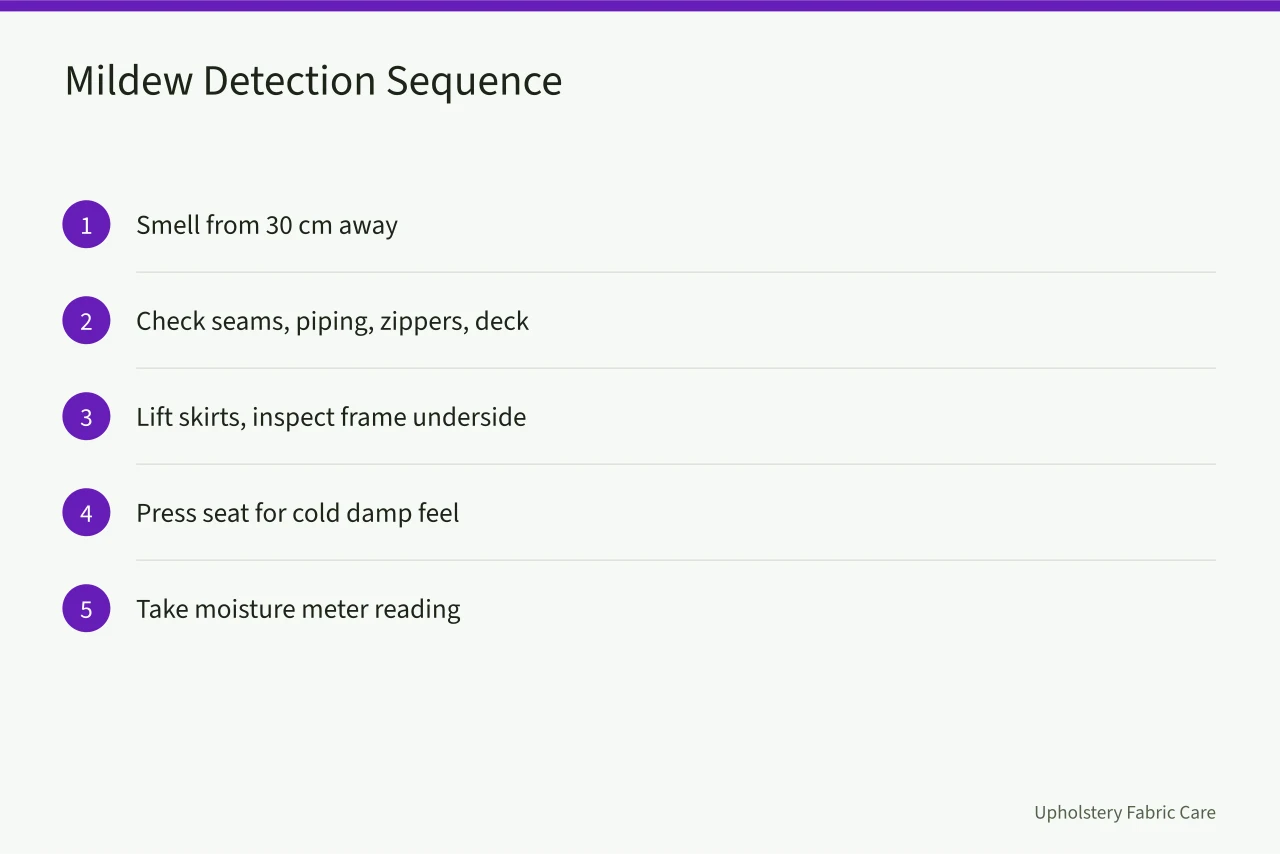
Smell first, because your nose works before you move anything. A musty or wet-cardboard odour near a sofa is the earliest sign. If the smell strengthens when you press a cushion, moisture is already inside the foam.
Then look where mildew hides. Check the deck under the seat cushions, the back panel, the frame underside, and the seams and piping. Lift the skirt and look at the fabric facing the floor. Unzip covers where they open.
Mildew appears as small dark specks, grey or black, clustered along stitching and in folds. On light fabric it reads as a faint shadow that will not brush off. On dark fabric, look for a dull patch or a change in texture.
Touch tells you about the core. Press your palm into the seat for a few seconds. A cold, damp feel after you lift your hand means the foam is holding water. Stitching that feels soft warns you too, because mildew weakens thread.
A moisture meter settles it. Compare the reading to a dry area of the same piece. A clear difference means the piece needs drying before any wet cleaning, not after.
- Smell the piece from 30 cm away before touching it
- Check seams, piping, zippers and the deck under the cushions
- Lift skirts and inspect the frame underside
- Press the seat for a cold, damp feel and soft stitching
- Take a moisture reading against a dry area of the same piece
- Photograph any mildew for the owner or strata manager
- Record findings so the next visit has a baseline
Drying a damp suite
Drying takes longer here than most cleaning guides suggest. Coastal humidity slows evaporation, and a suite with closed windows stays humid for days. In the wet season, plan on more than one visit.
Airflow does more work than heat. Moving air carries moisture off the fabric and reaches foam better than a warm room with still air. Aim a fan across the piece, not at it, so air moves through the weave and out of the room.
Open a window only when outdoor air is drier than indoor air. In a downpour, an open window adds moisture. In a dry cold snap, a cross-breeze beats any machine. Check the forecast before you decide.
The CCOHS: Industrial Ventilation guidance is written for workplaces, but the principle holds in a damp suite: replace moist air rather than stirring it. Set a fan at one end of the room and let air leave at the other.
Book the drying check as a second appointment before you leave the first one. The carpet cleaning operations guide on how work moves through a cleaning business treats that return visit as part of the job, not an extra favour.
A worked example
A ground-floor, north-facing two-bedroom strata unit in Kitsilano. The sofa sits against an exterior wall, and the tenant reports a musty smell after rain.
- Run the smell, sight, touch and meter sequence. Find mildew specks along the back seam and a damp foam core.
- Confirm the building's noise hours and elevator booking, then schedule the work.
- Treat the affected area with a fibre-safe mildew product, then extract with low moisture.
- Set two fans to move air across the piece and out through the room, running them inside allowed hours.
- Return the next day with a meter. If the core is still damp, run airflow again before the piece goes back into normal use.
Choosing products for damp conditions
One rule governs product choice here: add as little water as possible. Every extra litre has to come back out through air that is already wet.
Low-moisture methods carry most damp jobs. Encapsulation and dry compound leave many synthetic and wool blends nearly dry. Hot water extraction still has a place, but only with strong vacuum recovery and a drying plan behind it.
Match the mildew treatment to the fibre. A mild oxygen-based product handles light surface mildew on most fabrics. Chlorine bleach is a last resort on white cotton only, never on wool, silk or a colour you cannot replace. Test in a hidden spot every time.
Skip heavy fragrance. A strong perfume masks the musty smell for a day and hides the real problem. If the client wants a scent, use a light fibre-safe deodoriser after the piece is dry.
Follow the label. Health Canada sets consumer product and chemical safety labelling rules, so confirm the product carries the required warnings and instructions before it goes into a client's home. Dosing and dilution come from the manufacturer, and you record what you used.
Keep the kit consistent so product choice is not a guess on site. A carpet cleaning equipment checklist helps new owners stock the low-moisture tools, fans and meters these jobs need, and a carpet cleaning equipment review points to brands that hold up in wet coastal work.
Setting inspection intervals for coastal BC
Intervals on the coast should be shorter than in the rest of the province. Humidity, salt air and closed windows let mildew start in weeks rather than months. Set the schedule by season and by how the piece is used.
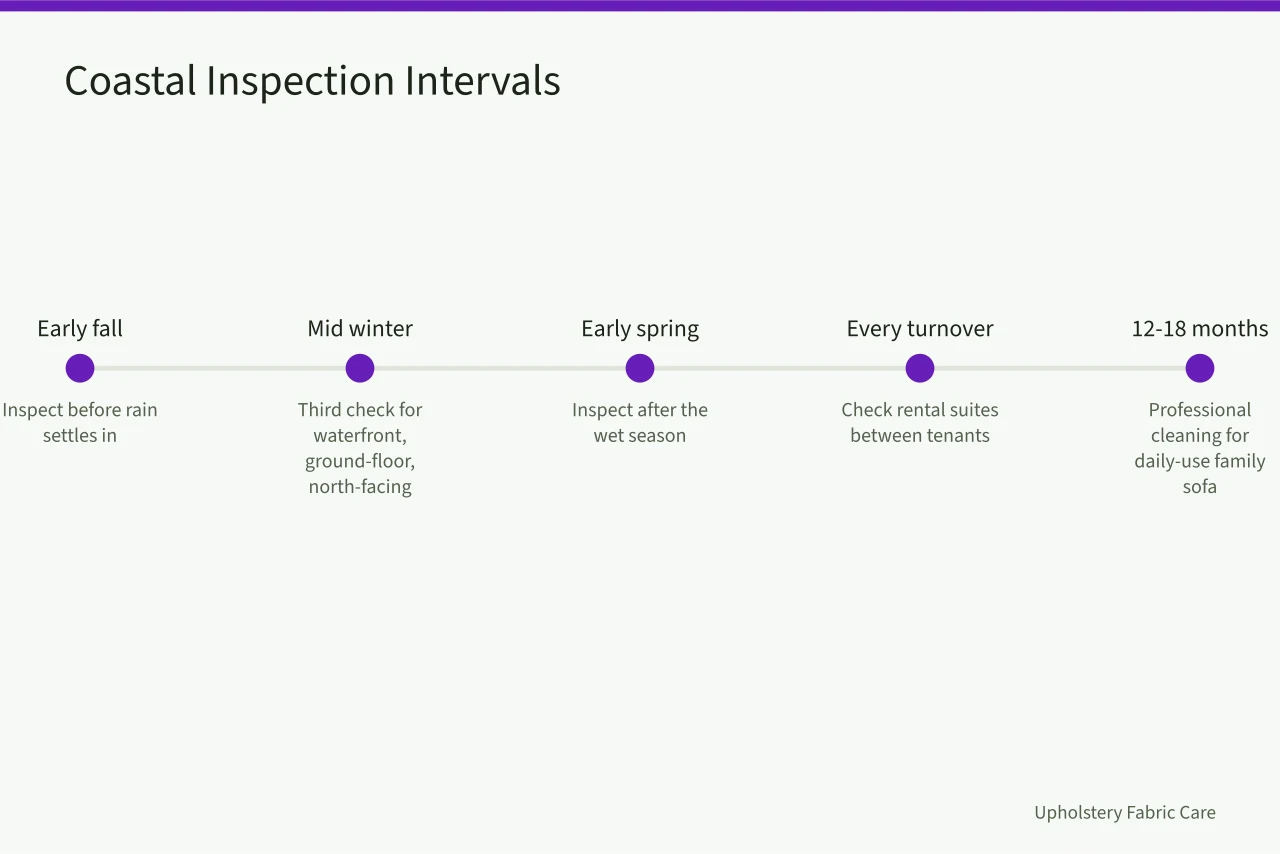
For most Vancouver strata suites, inspect upholstered furniture twice a year: early fall before the rain settles in, and early spring after the wet season. Waterfront, ground-floor and north-facing rooms want a third check in mid winter.
Clean on a schedule that matches use. A family sofa in daily use wants professional cleaning every 12 to 18 months. A guest room piece can go longer, but still needs the twice-yearly inspection, because damp air does not care whether anyone sits on it.
Rentals need a check at every turnover. With high tenant movement in Vancouver, a quick inspection between tenants catches damp cushions before they become a mould claim. Photograph what you find and send it to the owner or strata manager.
Keep a record per address: date, moisture readings, products used, drying time. Over a year it shows which suites run damp and which need a tighter interval.
The carpet cleaning quality control habit of checking your own work is what makes the next-day drying check standard.
Write the interval into your carpet cleaning sop checklist so every technician follows the same inspection and drying steps.
Strata rules, access and coverage
Strata buildings add constraints you plan around rather than argue with. Many restrict noise hours, so fans and extractors run only inside set times. Elevator bookings and move-in schedules decide when equipment comes in or furniture goes out.
Water is the second constraint. Some buildings meter water or restrict hose connections on balconies. Ask the building manager before you set up, and confirm where wastewater can be discharged. Licensing, wastewater disposal and building rules vary by municipality, so the building manager and your local authority are the ones to confirm with.
Coverage is part of the setup for any BC cleaning firm. The WorkSafeBC coverage requirements page sets out what employers in the province need, and a strata manager may ask for proof before a crew enters the building.
Wet work brings its own hazards: slips on damp floors, electrical safety around fans and extractors, and chemical handling. The Searchable OHS Regulation & related materials - WorkSafeBC covers those, and your own safe-work procedure should name who checks the setup.
Common questions
How do I tell mildew from a damp smell?
Smell alone is not proof. Look for dark specks along seams and piping, then press the seat for a cold, damp core. A moisture meter compared against a dry area of the same piece confirms it.
How long does damp upholstery take to dry in Vancouver?
Longer than inland guides suggest, often more than a day in the wet season. Book a return visit with a meter instead of promising a same-day finish.
Can I just open the windows to dry a suite?
Only when outdoor air is drier than indoor air. In a Vancouver rainstorm, open windows add moisture. Use fans to move air across the piece and out of the room.
Which products are safe on mildew in upholstery?
A mild oxygen-based product suits most fibres. Test in a hidden spot, keep chlorine bleach off wool and silk, and check the label against Health Canada labelling rules before use.