Guides
How to Read Upholstery Fabric Care Symbols on Furniture Tags
Furniture tag codes W, S, WS and X decoded into the exact solvent, method and drying routine a pro uses, plus how timing, season and job cost affect the bill.
What to take away
- A furniture tag code names the solvent, not the technique. W allows water-based cleaners, S allows solvent only, WS allows either, and X allows vacuum only.
- The code is printed on a tag under the seat cushion, on the deck, or behind the back panel.
- Water on an S fabric can set a ring. Solvent on a W fabric still needs airflow and low moisture.
- Wool and dry-clean-only labels need controlled moisture and a pro who tests a hidden seam first.
- Drying time and repeat visits drive the price, so book the work around your season.
Finding the Care Code on a Furniture Tag
The code is usually printed on a white tag stapled under the seat cushion, behind the back panel, or on the deck under a loose cushion. Sofa tags often pair the letter with a phrase such as clean with water-based shampoo. If the tag is gone, treat the piece as S until a fiber test says otherwise.
Furniture care labels follow the same letter logic as clothing care labels, and the Wikipedia entry on care labels lists the full system.
Reading W, S, WS, and X Codes
What it allows
- W
- Water-based cleaners
- S
- Solvent only, no water
- WS
- Water or solvent
- X
- Vacuum only
Typical fabrics
- W
- Polyester, olefin, cotton blends
- S
- Silk, rayon, some wool blends
- WS
- Most synthetic blends and microfiber
- X
- Delicate or unlabeled covers
Professional method
- W
- Hot water extraction or low moisture shampoo
- S
- Dry solvent or a volatile spotting agent
- WS
- Water first, solvent for oil-based spots
- X
- No liquids of any kind
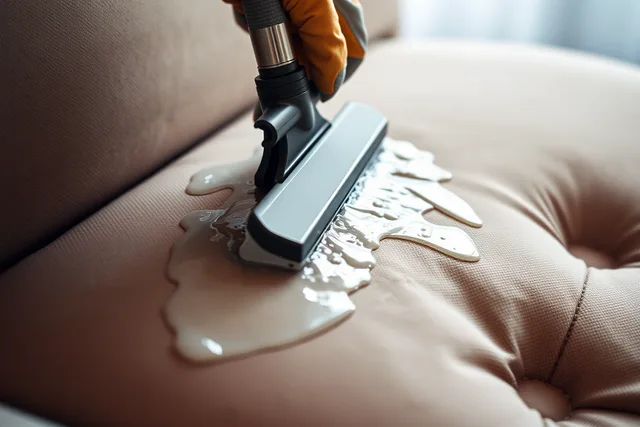
Code W suits polyester, olefin, and most cotton blends. Hot water extraction lifts soil, but the padding beneath the fabric has to dry or mildew follows. Code S suits silk, rayon, and some wool blends that water can stain or distort.
Code WS covers the largest share of modern couches. Start with water and switch to solvent only for oil-based spots. Code X means vacuum only, so a spill becomes a blotting job with a dry white towel.
Solvent cleaners for S fabrics are volatile dry solvents, not the water-based spotters sold in grocery aisles. Read the product label before you buy, because many retail sprays contain water and a surfactant.
A code tells you what the cleaner may contain, not how much moisture the fabric and its padding can hold.
Example: Building a Routine from a WS Tag
Building a Routine from a WS Tag
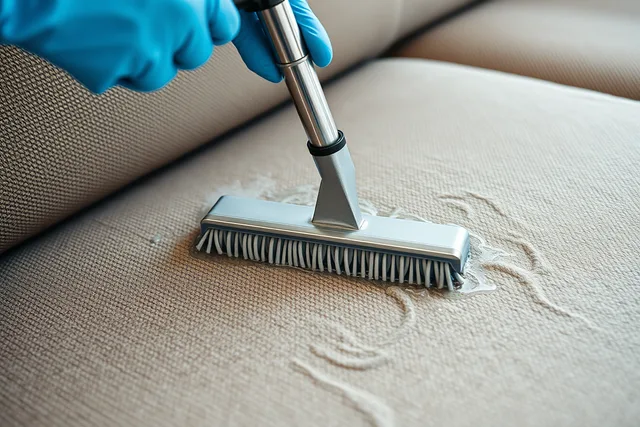
- Vacuum both sides of the cushion and the deck with a brush attachment.
- Test the cleaner on a hidden seam, then wait ten minutes for a ring.
- Pre-treat spots with a pH-appropriate agent and let it dwell.
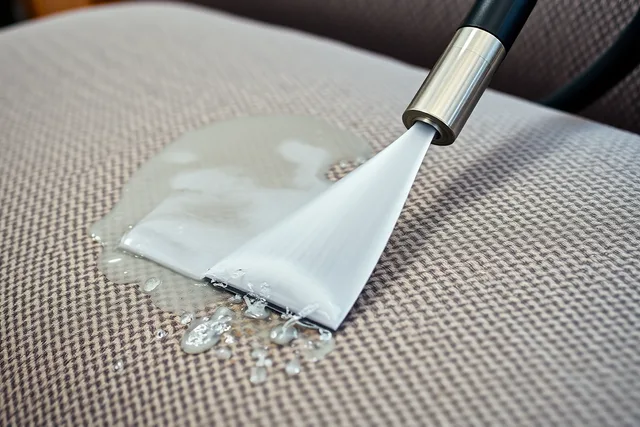
- Extract with low moisture, overlap the passes, then rinse.
- Dry with air movers and open windows until the seams feel dry.
- Record the date, product, and dilution for the next visit.
A WS couch cleaned this way dries in a few hours with good airflow, so a morning appointment leaves the room usable by evening. ASTM publishes guidance on upholstery fabric care that explains how these methods differ for labeled fabrics.
Wool, Microfiber, and Dry-Clean-Only Labels
Wool fibers felt and shrink under heat and agitation, as the Wikipedia article on wool explains.
Microfiber blends often carry WS because the fine fibers hold water in the weave. Use low moisture and blot instead of scrubbing. A dry-clean-only tag sends the piece to a solvent plant rather than proving the fabric cannot be cleaned.
Cotton and linen covers can usually take water, but they wrinkle and can shrink at the seams. Press covers back onto the frame while they are slightly damp.
Timing, Money, and Seasonal Planning
Cleaning cost tracks labor, moisture control, and travel, not only the fabric code. A two-visit job with drying checks costs more to run than a single pass, so quote the full routine.
Rooms that see winter road salt need extraction and a protectant before the season begins, and a winter salt and slush calendar sets that schedule by region.
Shops that track job cost, drive time, and receivables against a real week price this work correctly, as the carpet cleaning cash flow basics page explains.